Tokyo, with its 3-D billboards, five-pronged pedestrian crossings and robot restaurants, is like no other city in the world. A visit to the Japanese capital city is travel at its most exhilarating, but eventually, most everyone needs a breather from the noise and neon. And that’s the new 1 Hotel Tokyo’s time to shine.
“Tokyo can feel fast-paced and overwhelming,” says 1 Hotel Tokyo general manager Masato Kominami. “1 Hotel provides a serene nature-inspired retreat within the city [where] tradition and modernity coexist harmoniously.
Designed to slow guests down without disconnecting them from Tokyo’s energy, 1 Hotel mirrors this balance and becomes not just a place to stay, but a restorative, intentional experience that enhances their overall visit.”
Opened in March, it’s the brand’s first foray in Asia. Raul Leal, CEO of Starwood Hotels, which operates 1 Hotels, knew the country was “a natural next step in the brand’s global evolution strategically and philosophically.”
“Japan aligns deeply with 1 Hotels’ core ethos,” Leal says. “The brand is built around sustainability, a reverence for natural materials and a connection to place — all principles embedded in Japanese culture. Japan has long embraced living in harmony with nature, with a strong emphasis on craftsmanship, restraint and respect for materials.”
Leal continues, “Tokyo, in particular, was a strong fit. It is one of the world’s most dynamic cities, yet it also has a deeply ingrained appreciation for calm, ritual and detail. This made it an ideal market [to] express the brand’s philosophy in an elevated, authentic way [while] bringing a distinctly Japanese influence to the brand.”
Read on to see how the 1 Hotel brand put its organic design credo into practice.
The Design
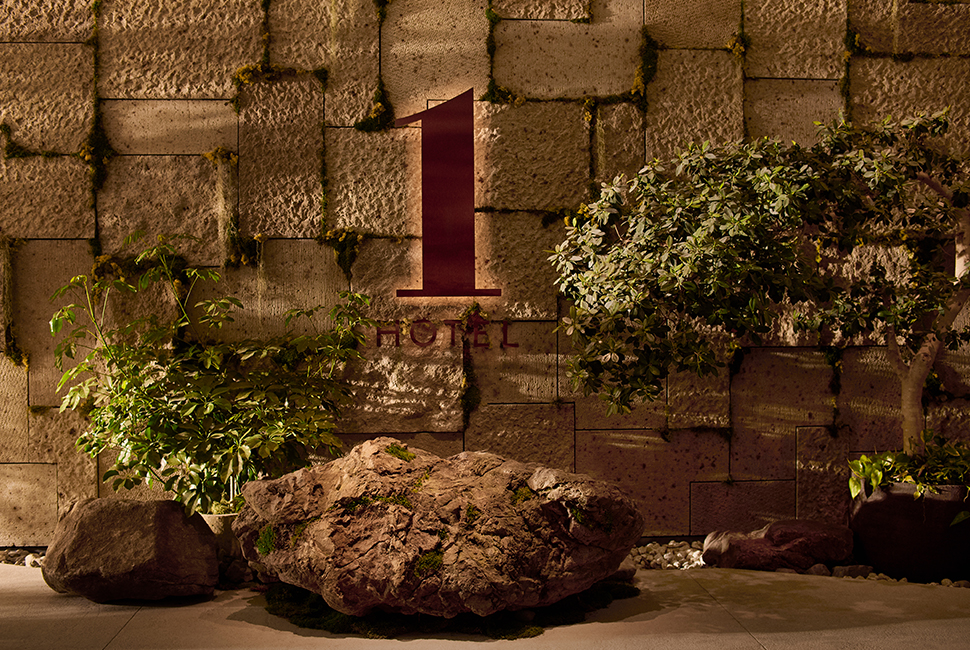
Decompression from the kinetic city begins on arrival in the ground-floor foyer, where guests catch their first glimpse of stone walls, neutral-colored uniforms and potted greenery. As with many luxury accommodations in Tokyo, 1 Hotel is tucked away on the upper floors of a mixed-use high-rise. The public spaces are centralized on the 38th floor, including the front desk, all restaurants and bars, event/meeting spaces, the gym and the spa.
According to Starwood’s vice president of design, Kerrie Murphy, the overall approach to the interiors was twofold. The first directive was to root the look in 1 Hotels’ connection to nature while adapting it “to feel very Tokyo.”
“That meant balancing the brand’s organic immersive style with a more restrained, intentional Japanese aesthetic,” Murphy explains. “Ideas like wabi-sabi really influenced the design. One of the biggest priorities was materiality. We focused on local, natural and reclaimed materials to ground the hotel in its setting. Using Oya stone throughout was a key decision as it immediately gives a strong sense of place.” Japanese craftsmanship is also on display in the details, from washi paper artwork to hand-applied raked plaster to custom ceramic lighting.
Second, the team had to “create a clear shift from the energy of Tokyo into something calmer and more grounded.”
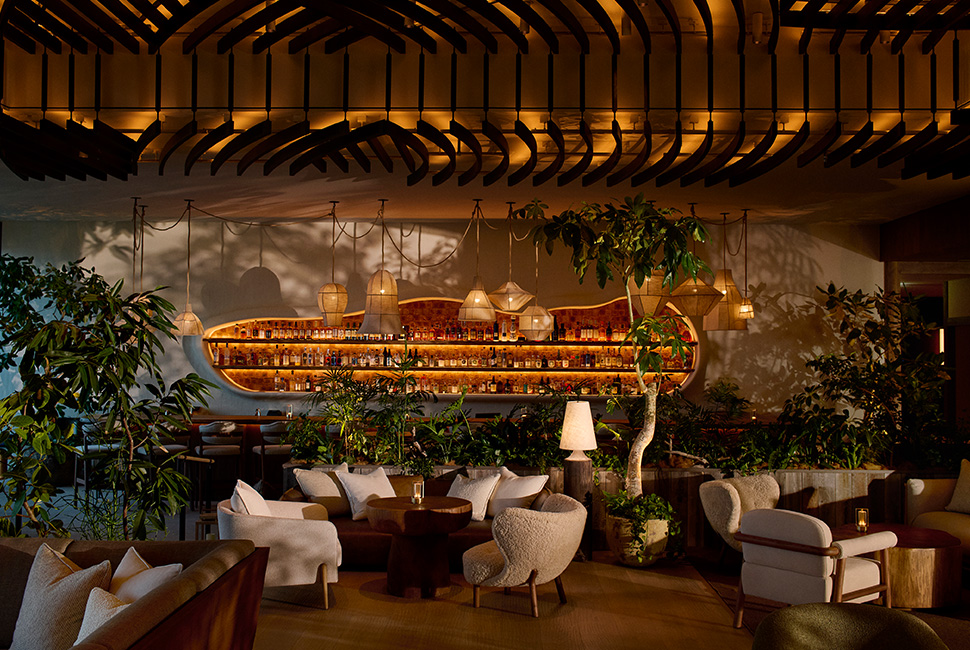
“The vibe is a huge part of the experience, and that comes through in softer lighting, natural materials and a more muted earthy palette,” says Murphy, acknowledging that the dreamy scent and groovy ambient soundtrack also help. “There’s a strong sense of progression through the space with moments of compression and release — moving from darker, more intimate areas into brighter, open ones.”
As fans of the brand have come to expect, there’s an abundance of greenery around the hotel. A majority of the 1,500 potted plants bring the outside inside guest rooms. However, a few, like a sculptural bonsai tree near the elevators, create standout visual moments. “Having such a large number of plants creates an immediate sense of life, softens the architecture, improves air quality and contributes to that restorative atmosphere,” Murphy says.
The Rooms
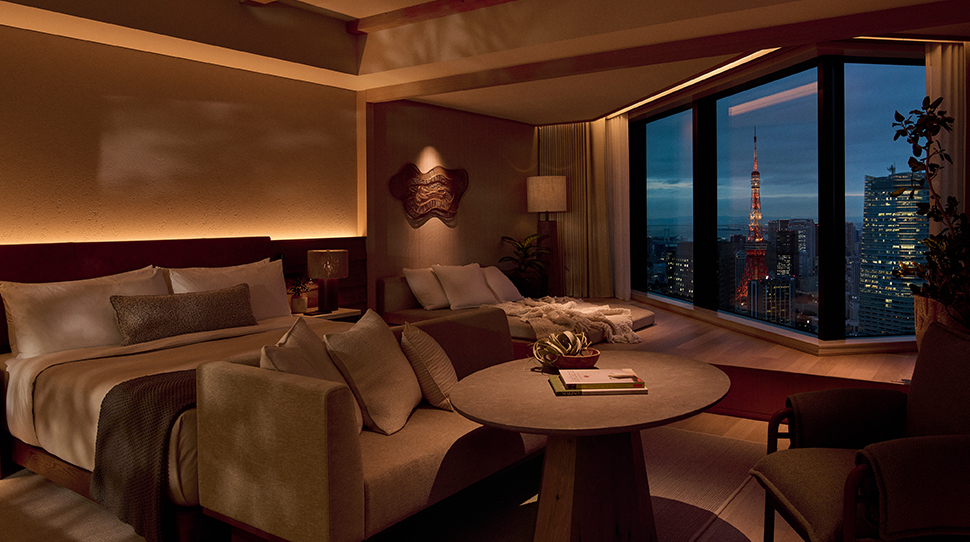
The emphasis on natural color, materials and a variety of textures continues in the 211 rooms and spacious suites. The largest of the latter even comes with daily breakfast, priority access to the house Audi and a complimentary spa treatment.
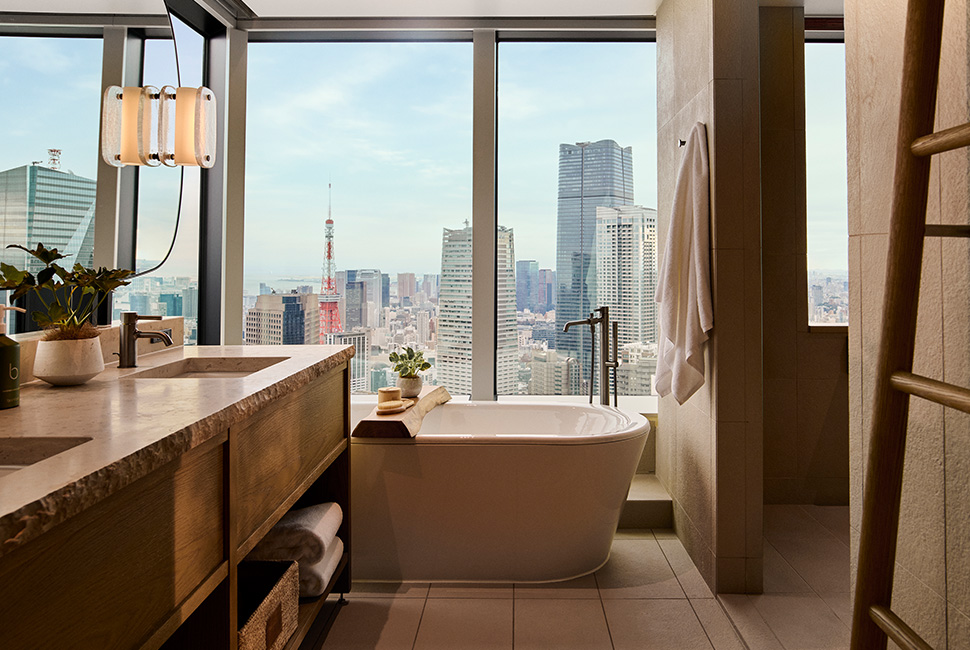
All accommodations have soaking tubs, walk-in rain showers, hardwood floors, eco-friendly but plush bedding and mattresses, Toto smart toilets and minibars with local snacks. Slip into the hoodie robe, make a Nespresso and stare out the floor-to-ceiling windows, which flood spaces with sunlight during the day and showcase stunning evening views of the twinkling cityscape. Corner bathroom suites provide particularly incredible looks from the tub.
The Sustainability
Using natural resources smartly is an integral piece of the 1 Hotel concept, and the company practices what it preaches in many ways, including recycling, composting, avoiding single-use plastic whenever possible, local sourcing and zero-waste kitchen and bar measures.
The building’s development and construction began in 2019, and because the hotel came aboard early on, green design principles were embedded from the ground up. The efforts regarding energy efficiency, water conservation and reclaimed materials earned the property Japan’s highest CASBEE (Comprehensive Assessment System for Built Environment Efficiency) certification, an S rank.
Some of what’s implemented is so artful guests might not even notice, like hangers made from old milk cartons, bamboo toothbrushes, business cards that double as to-do lists or rulers, and bedside drinkware crafted from old wine bottles. Other amenities subtly encourage conservation, like the brand-standard shower timer, in-room filtered water refill stations or toiletry packaging that lists alternate uses (for example, shower caps can be shoe bags, bike seat shields or snack bowls).
If guests bought too many souvenirs and need to make room in their luggage, the 1 Less Thing program accepts their gently used clothing and donates them to local charities.
The Food and Drinks
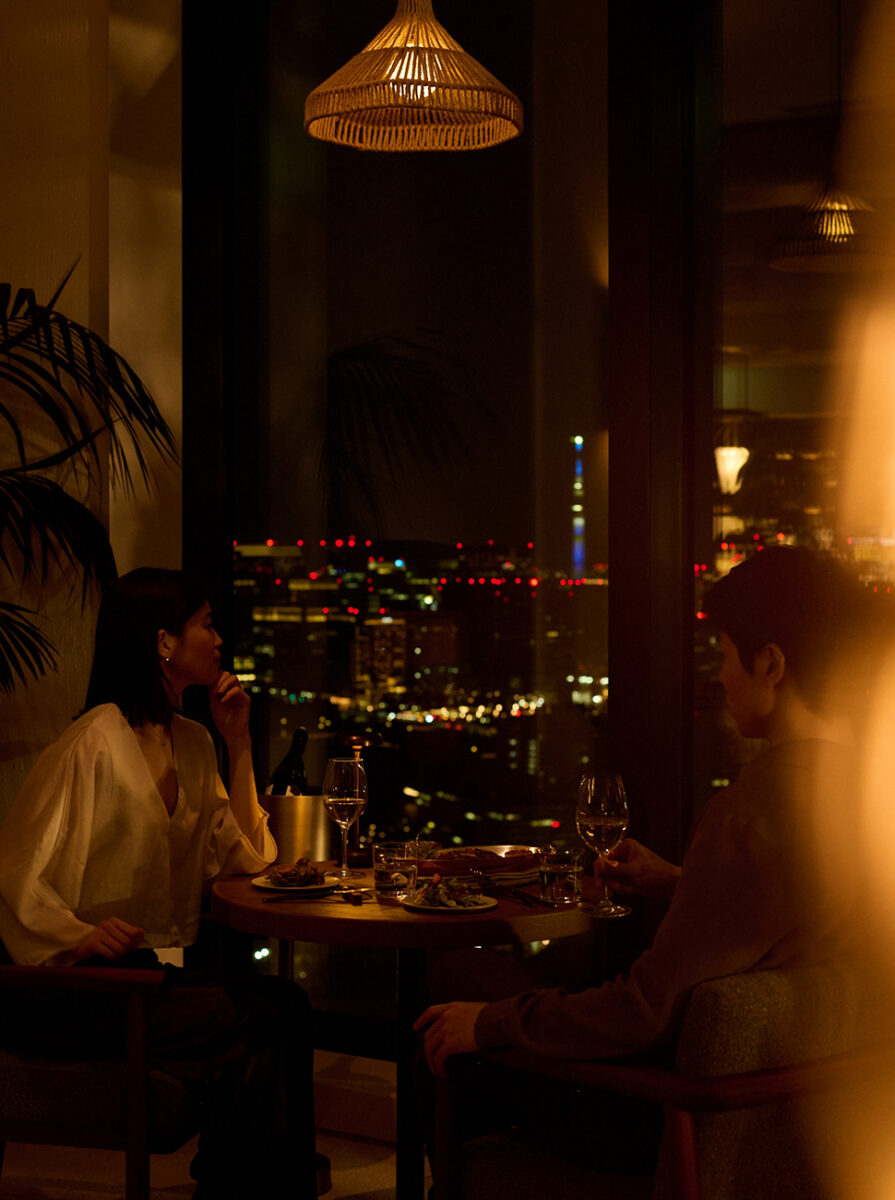
NiNi, which means “Two Two” in Japanese, is named for its blend of two coasts, cultures, flavor profiles and cooking techniques. The French Riviera-Japanese-influenced restaurant features seasonal breakfast, lunch and dinner menus, so expect dishes like a Nicoise crudo combining yellowtail, green olives and smoked tomato vinaigrette; Comté ravioli; or charcoal-grilled squid stuffed with lemon jam and arugula.
The restaurant also hosts daily afternoon tea and Matcha Mondays. To meet sustainability goals, food waste is processed through a dehydration system to reduce volume and methane emissions. Produce is sourced from regional farms, including an urban collective called Tokyo Neo-Farmers. The lobby Farmstand sells pickled produce, locally made condiments and imperfect (but still good) fruits from those same partners.
1 Hotel celebrates Japan’s famous cocktail culture at Spotted Stone. The lobby bar features one of the city’s largest libraries of Japanese gins (almost 100 different types, including a nonalcoholic option). It gets particularly atmospheric after dark, with sexy low lighting, weekend DJs and a roving martini cart that offers hundreds of customizations with botanicals like yuzu and sansho pepper, garnishes and vermouths. It’s hotel general manager Kominami’s favorite hotel detail. “It’s a discovery experience and such a thoughtful interactive way to connect guests with the local culture,” he says.
Neighbors is a coffee/smoothie bar with grab-and-go goodies like healthy bowls, pastries and breakfast onigiri often made with local products such as The Matcha Tokyo, Mitsubachi honey and Marugra granola.
The Wellness
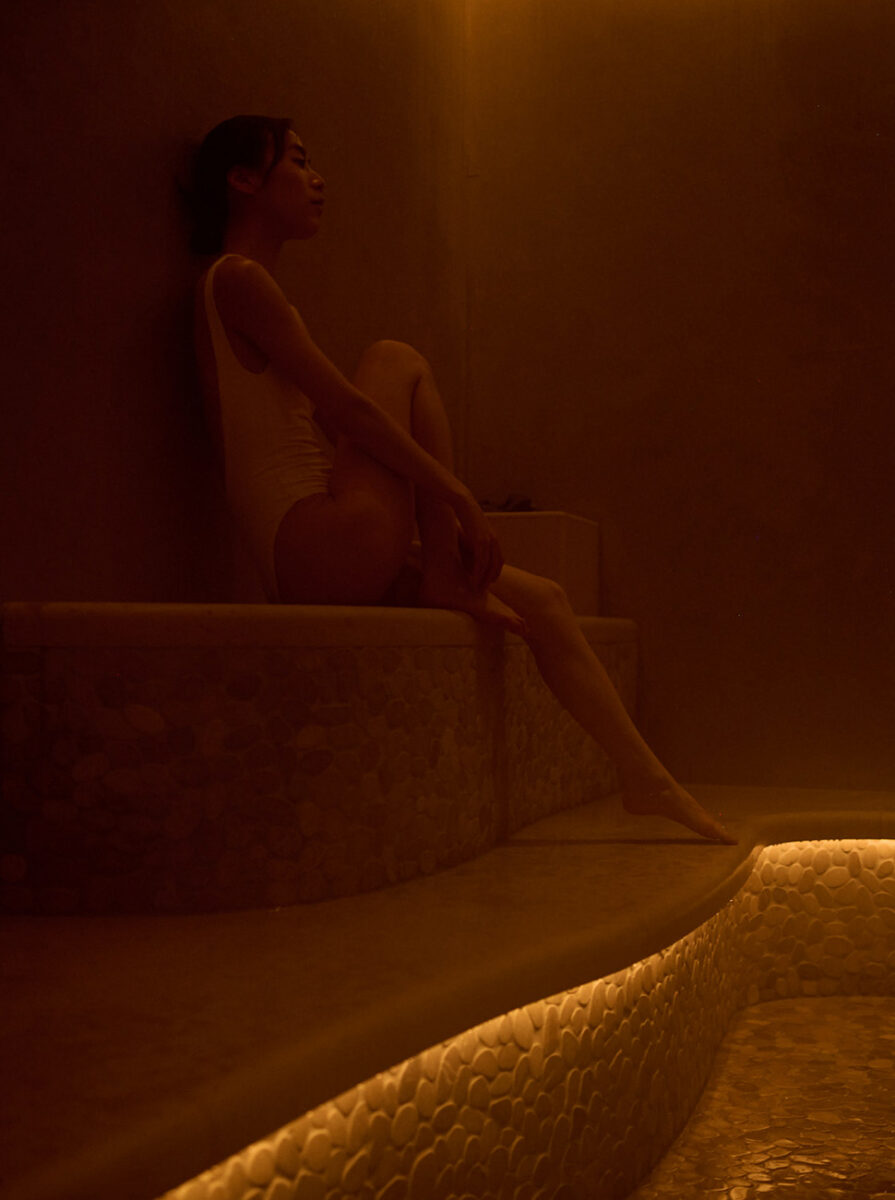
Nestled in a quiet corner, Bamford Wellness Spa performs Western- and Eastern-influenced holistic services in five treatment rooms and a couple’s suite. Guests can use the hammam-style steam room, dry sauna, the tranquil indoor pool (which has adults-only hours in the morning and evening) and an open-air deck with chaises surrounded by pollination-promoting planters.
The Tokyo hotel regularly hosts complimentary sound baths and sunrise yoga sessions as well as a twice-weekly greenery tour. For an added fee, partake in seasonal lifestyle workshops on topics such as spring fermentation.
The Field House gym also offers fitness classes. You can enjoy views of Tokyo Tower, the harbor and the Rainbow Bridge while using the Technogym equipment or weights. If you’re lucky and willing to press your face to the glass on a clear day, you might even catch a glimpse of Mount Fuji. ALO Wellness Club programming is also on the room TVs.
The Location
The 1 Hotel is in Akasaka, the neighborhood where the samurai lived during the Edo period and where the American embassy stands today. It’s near key national landmarks such as the Imperial Palace, important spiritual sites like the Hie Shrine with its sacred monkey guardians and 90 red torii gates, and government districts like Nagatachō. (Fun fact: One side of the rooms overlooks the prime minister’s busy helipad and residence.)
“Akasaka, one of Tokyo’s most well-balanced neighborhoods, blends tradition with a more contemporary international character and offers centrality without chaos,” Kominami says. “Guests can experience the city’s energy during the day and return to a quieter, more composed environment at night. It’s refined yet lively, vibrant but not overwhelming.”
It’s also a very connected neighborhood. In fact, the hotel’s building has a subway entrance, allowing guests to hop on the Ginza and Namboku lines and get to trendy neighborhoods like Roppongi and Shibuya quickly.
