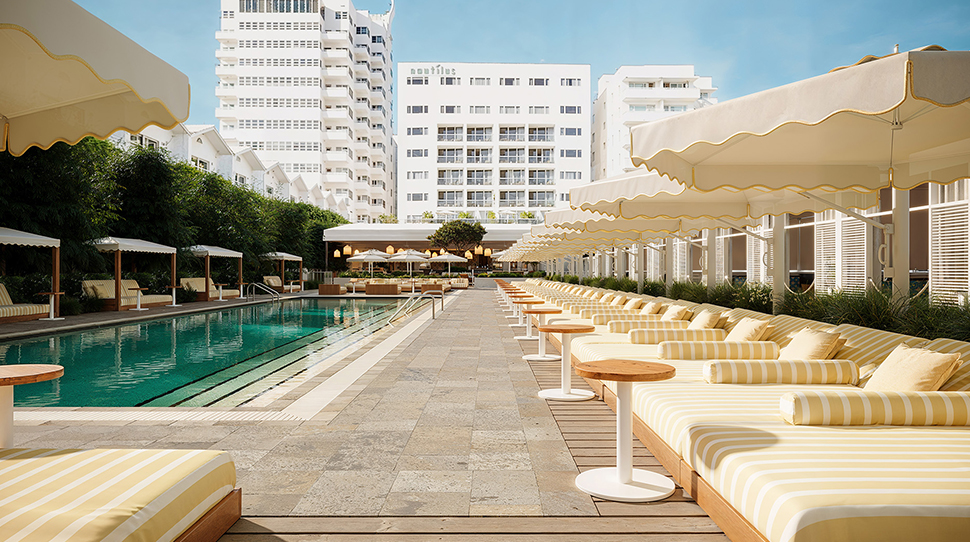
Miami Beach has a spectrum of luxury hotels, but Sonesta is betting there’s room for something a little different. Set to debut in late 2026, The James Nautilus Miami Beach marks the launch of The James Hotels, a reimagined lifestyle brand from Sonesta International Hotels.
During a late-spring hard hat tour of the oceanfront property on Collins Avenue, it became clear that the goal isn’t another polished Miami Beach hotel. Instead, the team is building an immersive world centered around a fictional host named James — a well-traveled, culturally connected personality whose influence touches everything from the artwork on the walls to the notes left on bedside tables.
“All of our messaging — pre-stay, post-stay and on-property — is going to be in this voice of James,” Elizabeth Harlow, Sonesta’s chief brand officer, told Forbes Travel Guidein an onsite interview. “That’s how we present ourselves. We’re not this anonymous hotel brand. We’re meant to be very personal.”
The setting helps. Originally designed in the 1950s by famed architect Morris Lapidus, the visionary behind Miami Beach landmarks like the Fontainebleau, the property occupies a coveted stretch of beachfront between South Beach and Mid Beach. The hotel’s in-progress renovation pays careful homage to that legacy while introducing a contemporary design language crafted by Anderson Miller.
Lapidus’ presence is woven throughout the property in thoughtful ways. Small, framed photographs of the architect are incorporated everywhere from a two-queen guest room to an oceanfront king room — in fact, there will be a different image of Lapidus in each accommodation.
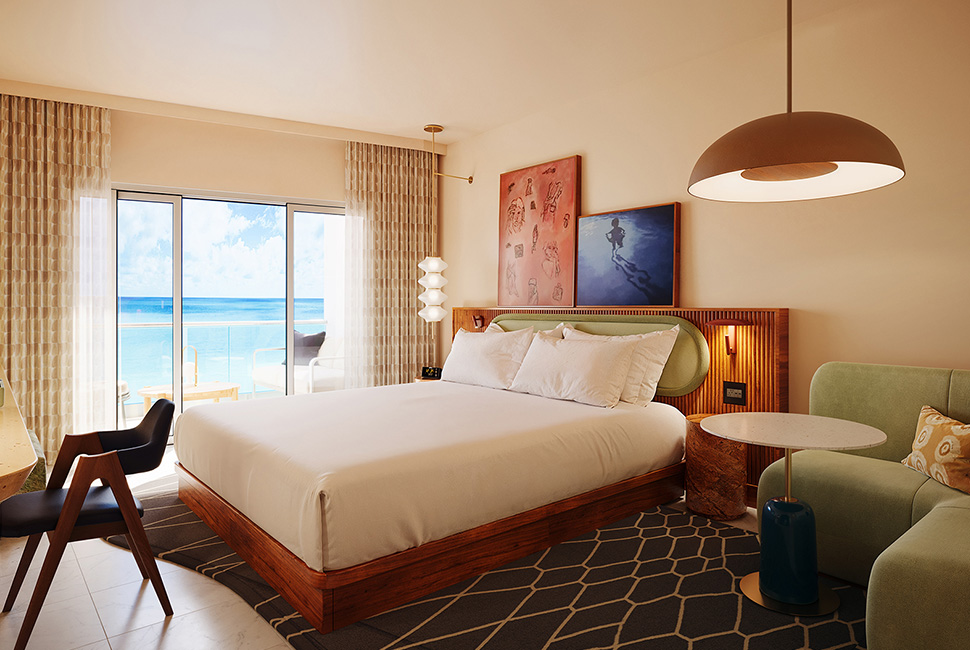
The 250 guest rooms are among the clearest expressions of the brand’s personality. Every element appears selected to evoke a sense of timelessness, with pops of color and vibrant art — a far cry from some of Miami’s overly white and cream palettes. Marshall speakers sit atop furnishings; vintage-inspired telephones replace generic hotel handsets; and analog clocks offer a reminder to slow down. Harlow explains those touches are deliberate.
“People are nostalgic,” she says. “These little touches are meant to kind of bring back that feeling [like with] the analog clock. I like to say that time is the biggest luxury.”
The rooms themselves strike a comfortable balance between sophistication and warmth. Frette linens, soft textures and a color scheme inspired by sand dunes and the nearby shoreline create a residential atmosphere. Fresh flowers add a personal touch.
That inviting approach forms one of the brand’s core pillars. “When you walk in, you feel like you’re coming into someone’s house and home,” Harlow says. “The welcome is warm and genuine.”
The concept extends through the guest experience. Handwritten notes from James appear throughout the rooms and will be the norm during turndown service. One bedside card reads, “So happy that you’re here. See you at 8:00. X, James.” It’s playful, personal and refreshingly different from a polished corporate atmosphere.
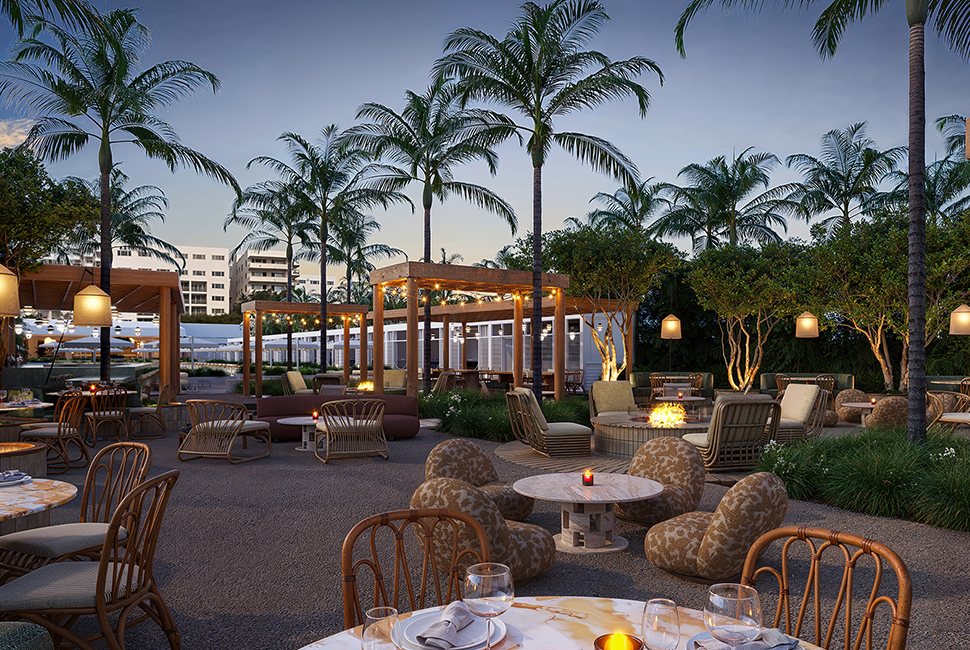
Outside the completed rooms, the transformation is in full swing. Landscaping is being adjusted to maximize ocean views, including the relocation of several palm trees that once interrupted sightlines. (Don’t worry, no palms are being harmed in the process.) Guest patios are being outfitted with plush seating and live greenery, avoiding the artificial look that often accompanies large-scale renovations.
Art plays a major role throughout the property as well. Beyond the Lapidus references, guests will encounter a substantial collection inspired by James’ fictional travels and interests.
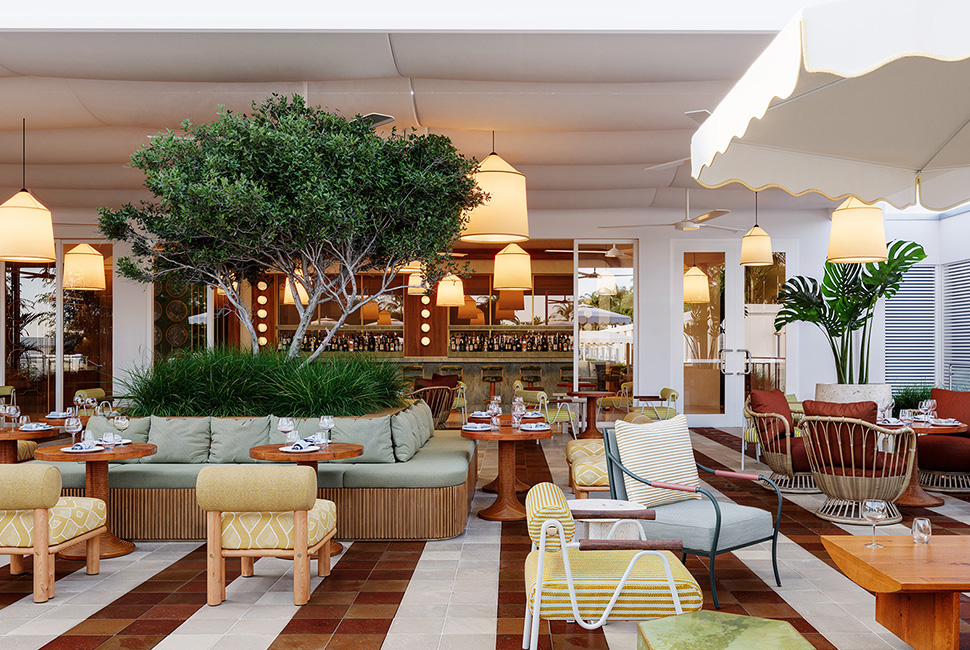
Food and beverage offerings will be equally important. Through a partnership with LDV Hospitality, the group behind acclaimed restaurants such as Scarpetta and American Cut, the hotel plans to offer several destination-worthy concepts, including a Mediterranean-inspired beachfront restaurant, an intimate omakase venue and a late-night lounge. A coffee bar also will open near the hotel entrance.
“We want to say we have restaurants that happen to be in hotels,” Harlow says. “We don’t have hotel restaurants.”
That distinction speaks directly to how Sonesta views the property. While overnight guests remain central, The James Nautilus also hopes to attract Miami locals looking for dinner reservations, cocktails or a beach day.
As Miami’s hotel landscape continues to evolve, Harlow sees The James occupying a unique position between traditional luxury and the lifestyle brands that helped reshape hospitality over the past two decades.
“James is the ultimate host,” she says. “It’s a more lighthearted, playful approach to what I’m seeing in the marketplace.”
If the finished product delivers on what’s already visible behind the construction walls, The James Nautilus Miami Beach could become one of Florida’s most intriguing hotel openings of 2026.
