
Few cities are as rewarding to eat your way through as Hong Kong.
One minute you’re following your nose to a dai pai dong (open-air food stall) for wok-tossed clams; the next you’re sharing a table at a busy dim sum house, as steaming pots of tea and baskets of dumplings fly out of the kitchen. And then, skyward you go: dozens of floors above the street, another layer of the city’s dining scene unfolds, from humble eateries to fine dining overlooking Victoria Harbour. The highs and lows are part of the experience, and both can be equally delicious.
“What many don’t realize until they experience it firsthand is how integral food is to Hong Kong’s daily life,” says Sandy Mau, a guide with Secret Food Tours, who was born and raised in the city. “It’s an unspoken language that brings people together, whether it’s breakfast before school, a quick lunch or late-night bites after a night out.”
Celebrating our love for Cantonese cooking and Hong Kong’s unique dining scene, we’ve rounded up seven must-try foods and the beloved institutions that do them best.
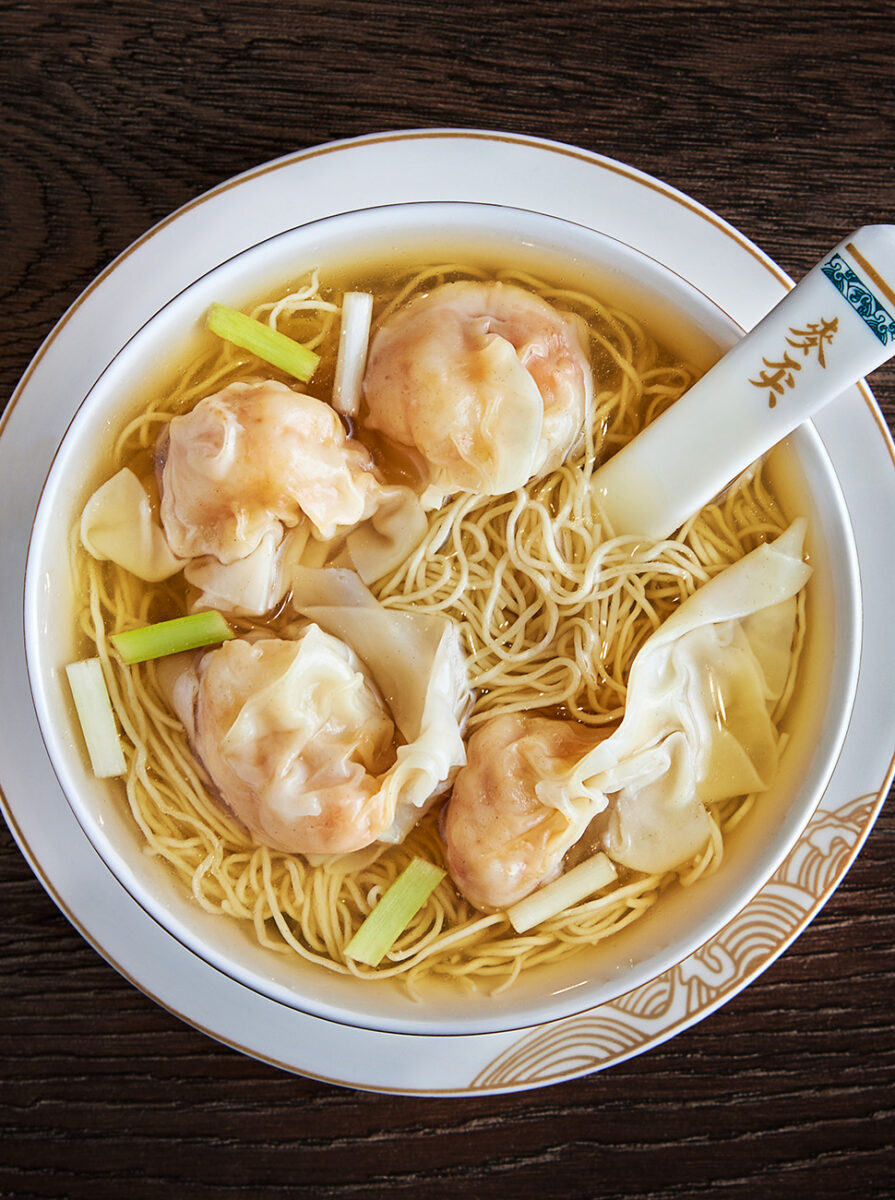
Wonton noodles
A steaming bowl of wonton noodles is one of Hong Kong’s greatest comfort foods. It’s deceptively simple and quick to eat, yet surprisingly difficult to perfect. The Cantonese staple traces its roots back to Guangzhou, across the border in mainland China, where the combination of skinny egg noodles, delicate prawn-filled wontons and soothing broth was already popular by the early 20th century before migrating into Hong Kong’s everyday food culture.
For a timeless introduction, Mau recommends Mak’s Noodle on Wellington Street in Central. The Mak family’s noodle story began in Guangzhou, where Mak Woon-chi opened a wonton noodle restaurant in the 1920s and became known as the city’s “King of Wonton Noodle.” He taught the craft to his son Mak King-hung, who moved to Hong Kong and opened the first Mak’s Noodle, a dai pai dong in Central, in 1968. The Wellington Street restaurant followed in 1989, just steps from the famous Central-Mid-Levels escalator.
Several decades on, the Mak family continues the tradition, serving relatively petite bowls of springy egg noodles, plump wontons and umami-rich broth. While you’re there, try some of the other specialties, like beef brisket or beef tendon noodles, to round out the meal.
Roasted goose
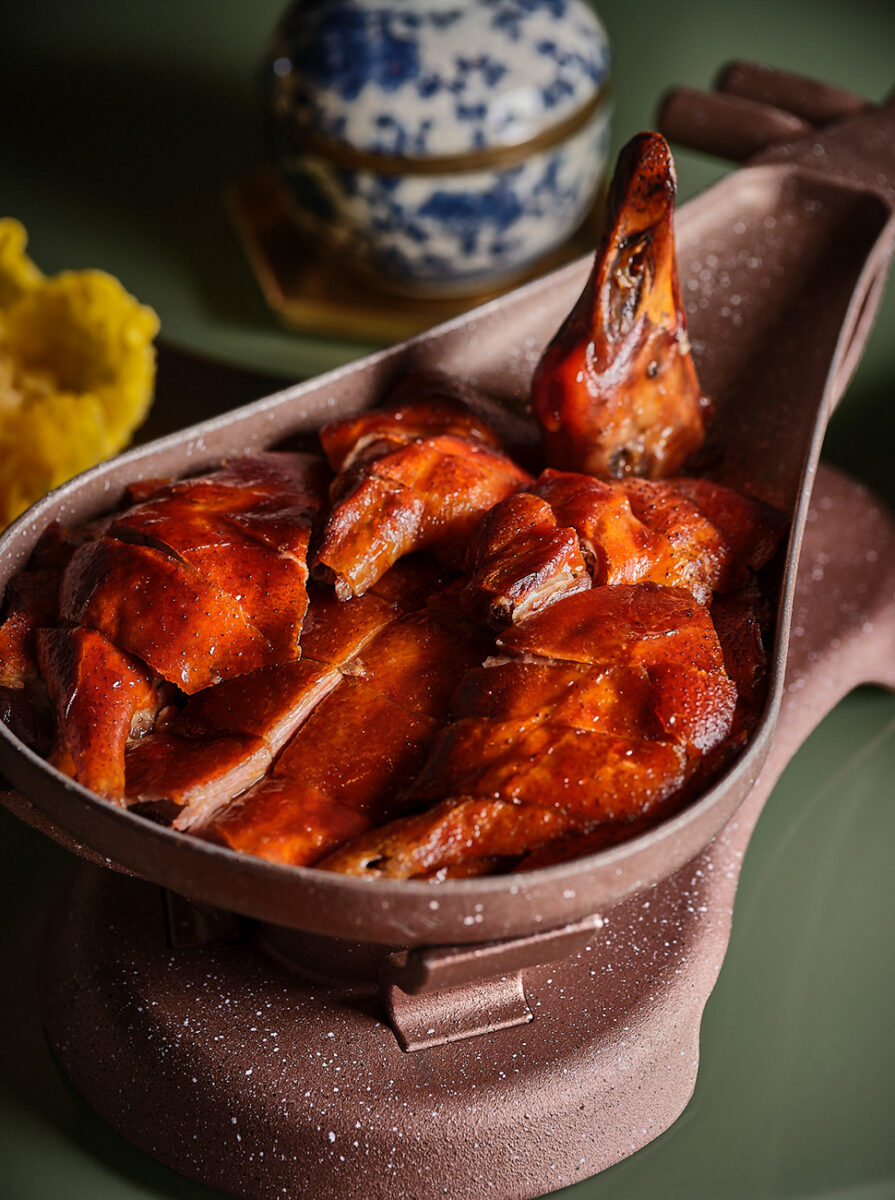
Few sights pique your curiosity or stir up your appetite quite like a row of gleaming geese hanging in a shop window. One of the cornerstones of Cantonese siu mei (roast-meat) cooking, roasted goose is prized for the contrast between crackling skin, a thin layer of fat and exceptionally succulent meat. It’s typically served with a simple side of rice or noodles, plus plum sauce for a sweet-and-tart counterpoint to the rich meat.
Hong Kong has no shortage of siu mei shops, so choosing can be hard. Mau suggests Kam’s Roast Goose in Wan Chai, which “has perfected the art of roasting to bring out the best in this dish.”
Founder Hardy Kam is the grandson of Kam Shui-fai, who established the legendary Hong Kong restaurant Yung Kee in 1942. Here, the signature goose arrives with exceptionally juicy meat and paper-thin skin that shatters with each bite. Order it with rice, or dial up the indulgence with noodles tossed in fragrant goose fat.
Roasted goose also frequently makes appearances in Hong Kong’s luxury dining rooms. For a polished rendition, reserve a table at The Legacy House at the Forbes Travel Guide Recommended Rosewood Hong Kong, where the Pipa Goose is one of the sought-after dishes. Named after the traditional Chinese instrument it resembles, the dish uses Magang goose, a beloved Guangdong breed chosen for its tender meat and balanced fat. After marinating and air-drying for eight hours, the bird is roasted over an open flame, giving the skin smoky, charred notes while still keeping the meat juicy.
Pineapple buns
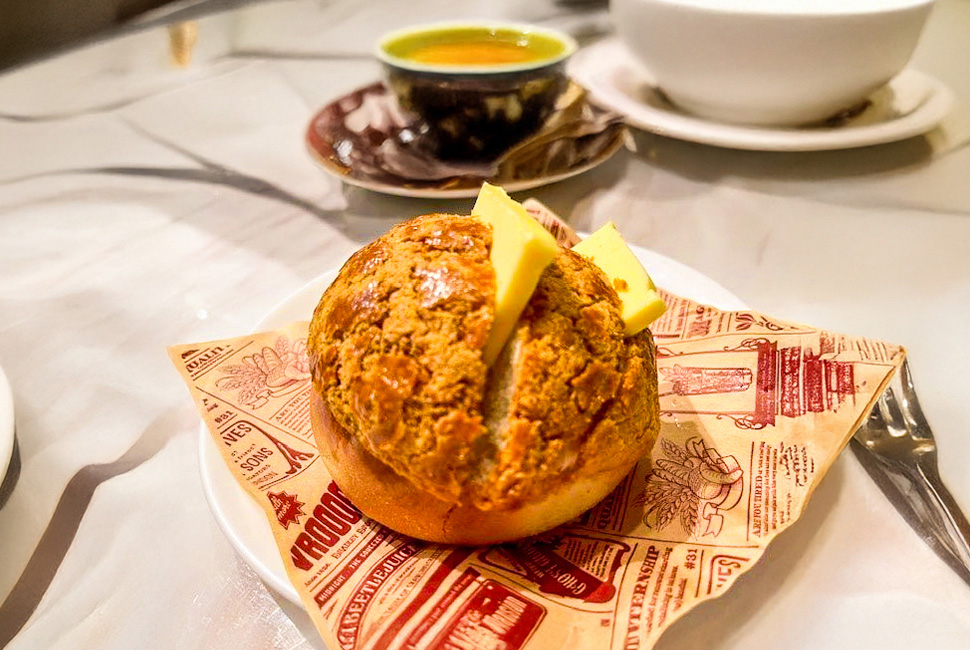
They may be called pineapple buns, but there’s no trace of the tropical fruit in these fluffy buns. Instead, the beloved bo lo bao gets its moniker from its craggy golden crust, whose cracked surface resembles a pineapple’s skin. Beneath that sweet, crumbly hat is a soft, pillowy bun that’s incredibly satisfying to rip into.
“Pineapple buns are a symbol of Hong Kong’s bakery culture: fluffy, slightly sweet, with a crackly top,” Mau says. She likes the classic bo lo yau with a slab of cold butter. “It’s perfect with a cup of milk tea at a cha chaan teng [a Hong Kong-style diner], especially in the morning or as an afternoon snack. The combination of the sweet bun and the savory butter is truly addictive.”
For a taste of bakery royalty, head to Cheung Hing Coffee Shop, an old-school cha chaan teng in Happy Valley. Around since 1951, Cheung Hing feels like a snapshot of a bygone era of Hong Kong cafe culture, thanks to its mosaic-tiled floors, compact wooden booths and nostalgic tableware. Its pineapple buns are a signature, made fresh onsite with an airy, bouncy texture and a crackled crust that’s neither too thick nor too sweet.
Curry fish balls
Few snacks capture Hong Kong’s multicultural history quite like curry fish balls. Bouncy, chewy and smothered in sauce, this iconic street food finds its roots in Chiu Chow cuisine. Originally boiled and served in broth, fish balls took on a new life in postwar Hong Kong, when hawkers started frying them and simmering them in curry sauce, creating the golden, saucy bite that’s still a fixture on the city’s street food scene.
“Curry fish balls evoke childhood memories for me — streetside snacks that are both nostalgic and invigorating,” Mau says. “They’re best experienced at a busy street market like Temple Street or Mong Kok, where the aroma and the lively atmosphere really bring out their street food charm.”
A great fish ball should have a springy texture, while the curry sauce adds spice and a little heat. Make your way to Tung Tat Food Shop, a modest snack shop on Pitt Street in Yau Ma Tei, to sample a particularly good version. Pure nostalgia for Hongkongers, the shop’s plump fish balls have an extra-fresh flavor and plenty of bounce, while the deeply savory curry sauce has a mildly spicy, slightly sweet taste. For just a few dollars, you can order a portion to eat streetside, or squeeze onto one of the shop’s stools and add some cheung fun (rice noodle rolls) or siu mai (pork-fish dumplings) to the mix.
Char siu
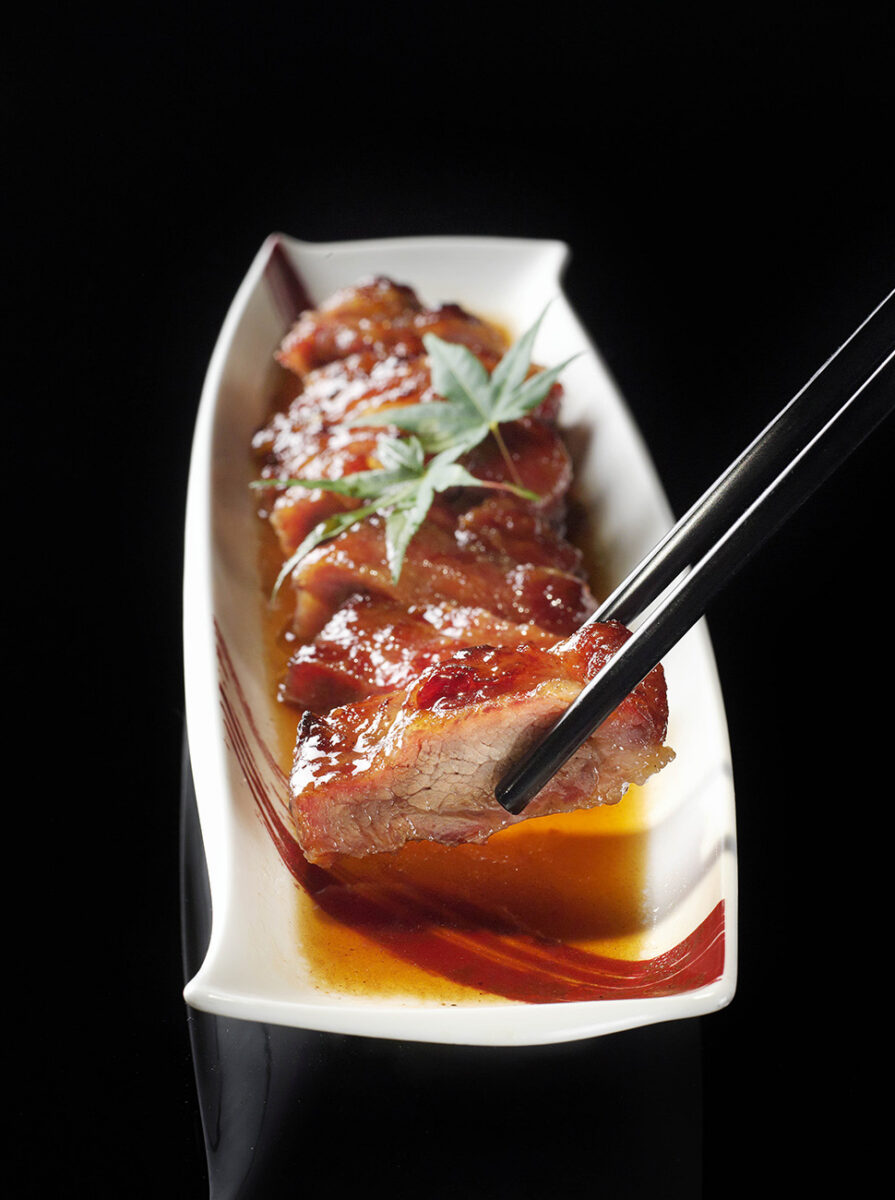
Available at dim sum, local markets, siu mei shops and high-end Cantonese restaurants alike, char siu is as delicious as it is ubiquitous. Literally translating to “fork-roasted,” this Cantonese barbecue staple is typically made by marinating pork in a sweet-and-savory sauce, roasting it until super tender, then finishing it with a honey glaze that caramelizes around the edges.
“Good char siu is all about the quality of the meat and the roasting process,” Mau says. “I prefer a slightly caramelized, tender cut with a good amount of fat, because those charred edges add depth.”
Thankfully, good char siu is plentiful. You can find it at stalwart spots like Ki’s Roasted Goose (which has multiple locations around town) or Yat Lok in Central. For a no-frills favorite, head to Dragon State Kitchen in Sheung Wan, a neighborhood shop that feels representative of the genre. At busy times, you’ll probably wait 15 to 30 minutes to order — go for the combination plate, which pairs char siu with another roasted meat. When ordering, ask for bun fei sau, or “half-fat, half-lean,” for beautifully marbled pieces.
At the opposite end of the dining spectrum, take the elevator up to the 102nd floor of Five-Star The Ritz-Carlton, Hong Kong, where Five-Star Tin Lung Heen offers two refined takes on char siu: one made with Iberico and the other with local pork.
Since it’s richer and more marbled, the former is glazed with honey to enhance its caramelized notes. Meanwhile, the more finely textured and slightly firmer local pork is paired with fragrant osmanthus flower honey to complement the meat’s flavor without overpowering it. For both, the chef applies the glaze in stages to create a shiny, lightly charred exterior while keeping the pork tender and juicy. The Iberian version requires 24 hours’ advance notice, so plan accordingly.
Cheung fun
You may know cheung fun as delicate rice noodle rolls stuffed with shrimp, beef or char siu that arrive steaming hot at dim sum. But Hong Kong has another version that’s just as worth seeking out. Known as jyu cheung fun, literally “pig intestine noodles,” because they resemble the organ, these plain, slippery rice rolls are cut into strips or bite-sized pieces, then generously bathed in a combination of sweet, salty and nutty sauces for an irresistibly savory result.
“For cheung fun, the street-style version with soy, sesame and hoisin sauce is the most quintessentially Hong Kong; it’s simple, flavorful and satisfying,” Mau says. “I’d recommend ordering it ‘lo mai‘ [mixed] and trying it at a local street stall in an area such as Mong Kok or Sham Shui Po — these places serve up silky, fresh cheung fun that’s hard to beat.”
One such place is Hop Yik Tai, a perpetually busy snack shop on Kweilin Street in Sham Shui Po that embodies Hong Kong’s knack for simple foods done right, with just a few tiny tables and stools squeezed behind an open kitchen. Its cheung fun is made fresh daily and coveted for an exceptionally silky texture, with a touch of lard adding richness before the rolls are piled into a plastic bowl, slicked with sauces and sprinkled with sesame seeds. Grab a seat inside, where sharing tables is part of the experience, or take yours to go as you explore more of Sham Shui Po.
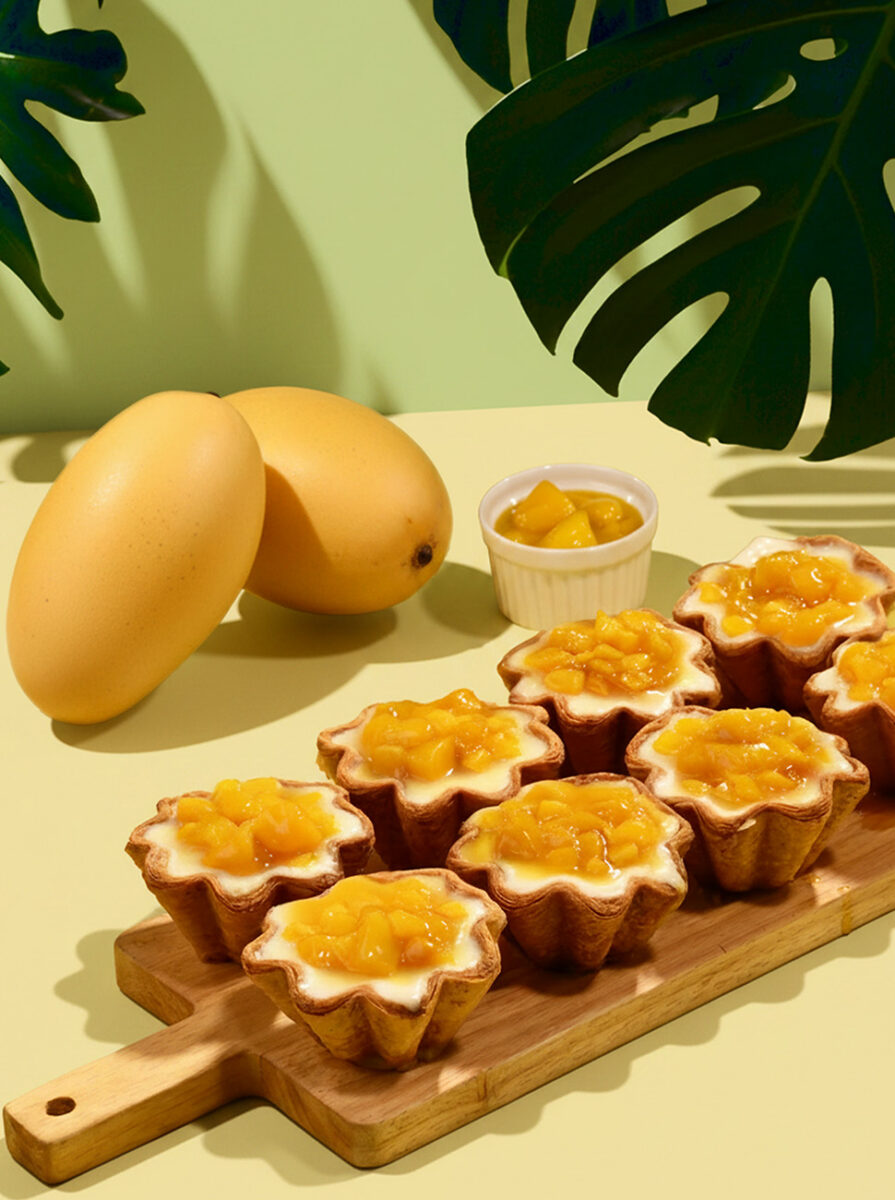
Egg tarts
Hong Kong’s daan tat might look like a cousin of Portugal’s pastel de nata, but the two followed very different paths. The Hong Kong tart is generally thought to have emerged in Guangzhou in the 1920s, where Cantonese bakers adapted the British custard tart using local ingredients and techniques. The confection later traveled to Hong Kong and became a staple in local bakeries, cha chaan tengs and dim sum restaurants.
Unlike pastel de nata, known for its highly caramelized custard and laminated pastry shell, the classic Hong Kong tart has a smooth, glossy yellow custard that’s firmer and more egg-forward, encased in either crumbly shortcrust or flaky pastry.
“Egg tarts hold a special place in my heart; they remind me of weekend visits to local bakeries with family,” Mau says. “I prefer the flaky, crispy pastry over shortcrust, but both are delicious.”
To taste the shortcrust version, head to Tai Cheong Bakery in Central. Established in 1954, this little shop is famous for its rich, buttery, cookie-like shells that provide a firm base for the smooth egg custard. Over in Cheung Sha Wan, Gold Garden Cafe takes a different approach: softly set custard cradled by handmade puff pastry, with delicate, buttery layers that flake with each bite.
Egg tarts are particularly ripe for reinvention, and you can often find playful riffs on the original. At Hashtag B, for example, the contemporary local bakery churns out imaginative tarts spanning flavors like black sugar mochi, mango coconut, pandan and pistachio. That mix of tradition and experimentation is, after all, part of what makes eating your way through Hong Kong so rewarding.
But just as important as what you eat is how you experience it, Mau says. You can embrace the local food culture by dining at dai pai dongs and street stalls, sharing dishes and asking for recommendations. “Even speaking a bit of Cantonese — like ho sic [“delicious”] or ng goi [“thank you”] — can help you connect with vendors,” she adds. “In Hong Kong, food is a way to connect, share stories and enjoy the moment with locals.”
