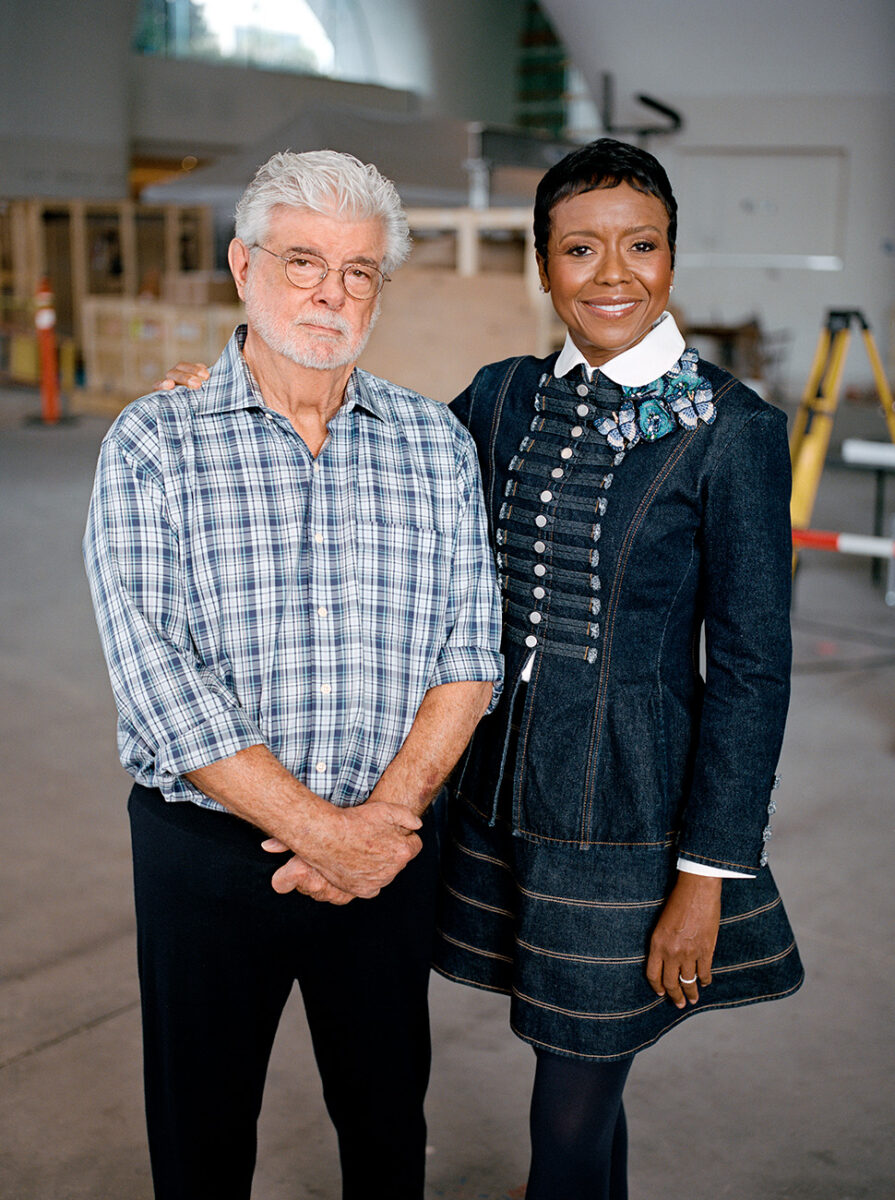
Star Wars creator George Lucas has spent more than 50 years collecting art, starting with $30 comic works at underground auctions and working his way up to masterpieces by Frida Kahlo, Chuck Close and Banksy as his household-name status was cemented. Two decades ago, the director began dreaming of giving his collection a more public, permanent home.
“I’m not one of the typical high-art collectors who buys, and then you come back five years later and say, ‘What happened to that painting you bought? It was so beautiful,’” Lucas explained during a 2025 San Diego Comic-Con panel. “‘Well, I sold it for $10 million and made a lot of money.’ I could never do that. It’s not what I think art is.”
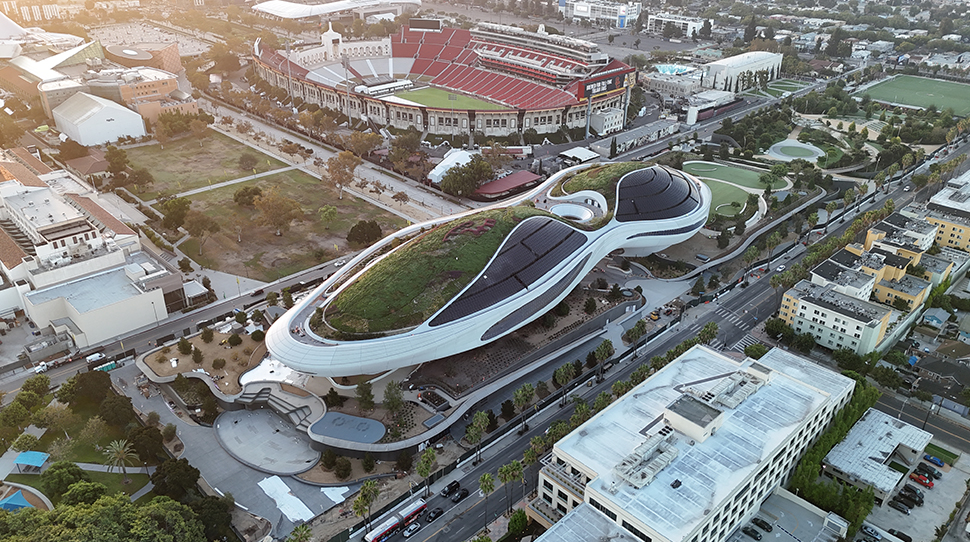
Cut to present-day Los Angeles, where, after four proposed sites, pandemic construction setbacks and a $1 billion construction bill, the Lucas Museum of Narrative Art is finally ready for its premiere.
Opening September 22 in Los Angeles’ Exposition Park, the museum sits next to the Natural History Museum and across from Lucas’ alma mater, the University of Southern California. Backed by a board that includes Oscar winners Steven Spielberg and Guillermo del Toro, it champions what Lucas calls the “people’s art,” which runs the gamut of ancient cave paintings, advertisements, children’s book illustrations, films, anime, photographs and massive murals.
“The images are illustrations of beliefs we live with every day,” said Mellody Hobson, museum co-founder and Lucas’ wife, in a press release. “For that reason, this art belongs to everyone. Our hope is that as people move through the galleries, they will see themselves, and their humanity, reflected back.”
With a starting collection of more than 40,000 works, it is the “first museum dedicated entirely to the power of visual storytelling,” according to museum CEO Tracey Bates.
“George and Mellody have always believed that narrative art can help us better understand ourselves and one another because images are a universal language,” Bates told Forbes Travel Guide. “They wanted to share their collection because the stories images tell — whether about history, imagination, justice, identity or everyday life — can open up new ways of seeing the world. For them, making the collection public was about creating a place where people could encounter those stories together and feel invited into a broader conversation about creativity and possibility. Shared understanding is what builds community.”

The Exhibits
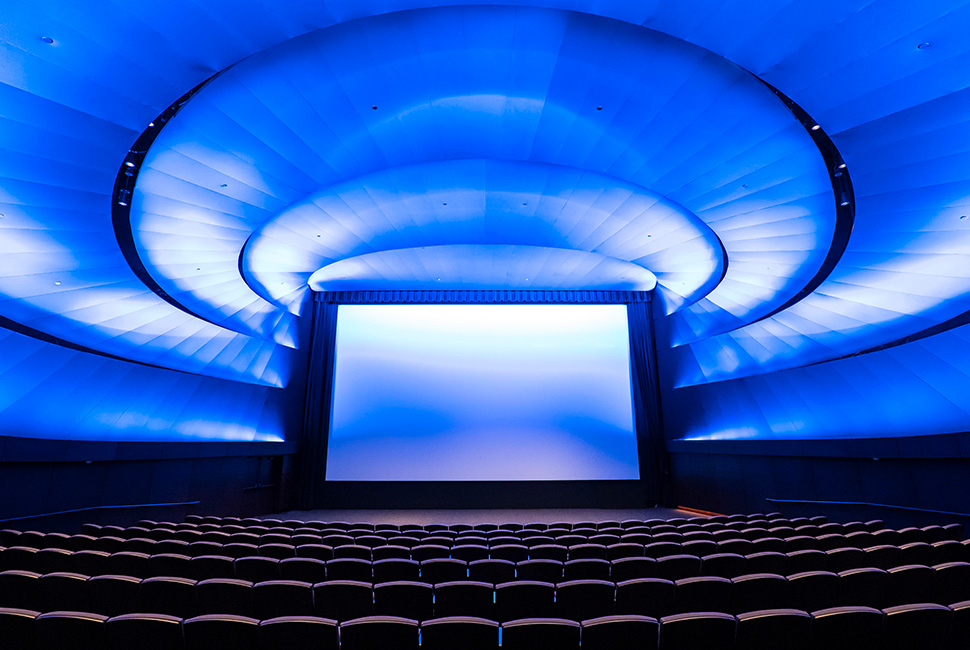
The museum is made up of more than 30 galleries — these areas are named after and organized around enduring themes like “love,” “childhood” and “adventure” to reflect the human experience — covering more than 100,000 square feet. It includes two state-of-the-art theaters, a research library, a park, a sculpture garden, a restaurant, a café and a shop.
While most of the works are owned by the founders, “there are also select loans, including pieces that help complete the story we’re telling in the inaugural exhibition,” senior curator Ryan Linkof said. “The collection itself is wide-ranging, and evolving over time has always been part of the vision, [but] there’s so much for visitors to discover right from opening day.”
Some 1,200 objects will be displayed to give equal value to all mediums and eschew the standard fine-art hierarchies per Lucas’ wishes. The Frank Frazetta gallery is an example of this mission. “Frazetta shaped the visual language of the entire genre of fantasy and pulp illustration, but he’s rarely been given serious space inside an art museum,” Linkof said. “That’s exactly what this museum was built to do: platform artists whose work has shaped generations of people’s imaginations but has often been overlooked by traditional institutions.”
And even though this is not specifically a Lucas-themed museum, that doesn’t mean the force isn’t strong with this new attraction. There are a number of reasons for fans of the auteur, especially those of the Star Wars variety, to get in line.
The “Star Wars In Motion” exhibit includes vehicle designs, props, costumes and illustrations from the first six films, which, according to Bates, offer “a close look at the visual imagination and craft behind the galaxy George created.” The inaugural film program includes Lucas’ early student movies along with Star Wars Detours, an animated series he created with Seth Green and Matt Senreich that has never aired publicly.
“We think those screenings will give fans a rare chance to see a different side of Lucas’ creative work and how it connects to the museum’s broader focus on storytelling,” Linkof said. “‘Star Wars In Motion’ will feature some of the most spectacular objects in the museum’s Lucas archives.”
Linkof is particularly proud of thefilm programming found in the Robert Flaherty Theater and the Slavko Vorkapich Theater: “The experience is designed to feel flexible and gallery-like. Visitors can drop in, stay for a short piece or a longer screening, and come and go as they like.” The films vary from just a few minutes to about an hour and a half.
The Architecture
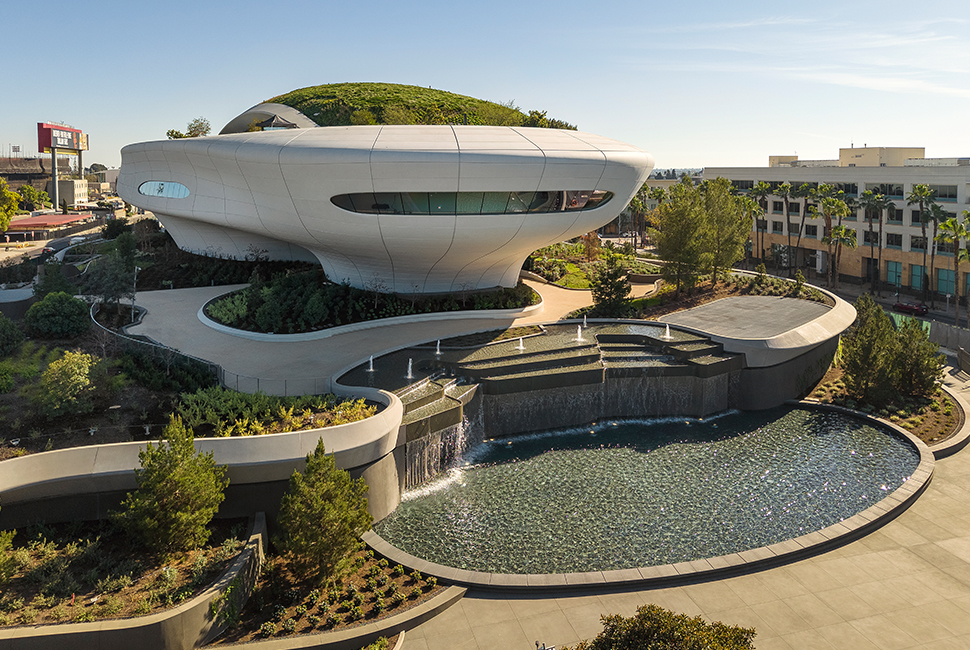
Designed by Ma Yansong of Beijing studio MAD Architects (which has an office in L.A.), with Stantec as executive architect, the gleaming five-story, 300,000-square-foot building features a living roof and an elliptical oculus centered over a light-filled central plaza. A suite of sustainable elements includes a geothermal system, rainwater harvesting and a crown made of photovoltaics (devices that convert sunlight into electricity).
It sits within an 11-acre campus that boasts a hanging garden, an amphitheater and a meadow created by landscape architect Mia Lehrer. Originally slated to open in 2021, the museum has taken years to complete, and Angelenos have watched the giant futuristic structure take sinuous shape and assumed it was supposed to resemble a spaceship, given the Lucas connection.
That was never the design intent, Bates said, but she understands why people made that connection. “We love that the form is open to interpretation,” she said. “Our founders were drawn to Yansong because of his ability to create architecture that feels imaginative, organic and deeply connected to its surroundings.”
Bates continued, “His design gives the museum a sense of movement and curiosity, while still feeling rooted in Exposition Park. Just as important [are the] outdoor spaces. We want the museum to feel open to the community, with places to gather, reflect and spend time even beyond the galleries.”
The Restaurant
If a day at the museum makes you peckish, Skywalker Grill serves lunch, dinner and weekend brunch atop the structure. Designed by Rockwell Group and operated by Rhubarb Events & Hospitality Collection, the restaurant channels the legendary hospitality of Skywalker Ranch (Lucas’ filmmaking retreat) through an elevated American menu featuring lobster corn dogs, chicken Milanese and wagyu burgers.
Plan Your Visit
The museum is open every day except Tuesday with expanded evening hours on Friday and Saturday. The gardens open at 8 a.m. and close at sunset.
Tickets can be purchased online. Admission is free for children 17 and under, visitors with California EBT, active-duty military members and residents who live in the museum’s zip code, as Lucas is committed to making art accessible to the surrounding lower-income community. The gardens and the restaurant do not require a ticket.
There are multiple parking lots around Exposition Park and at USC, and the Expo/Vermont Metro train station is a short walk from its doors.
Where To Stay
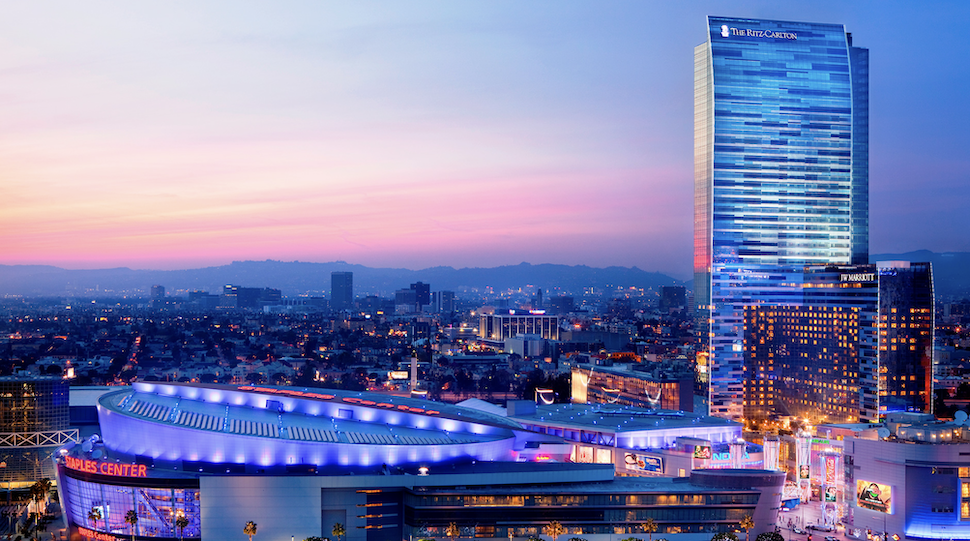
To make the most of your museum day, stay in nearby downtown L.A. at the 878-room JW Marriott Los Angeles L.A. LIVE or Forbes Travel Guide Recommended The Ritz-Carlton, Los Angeles, which occupies the top floors of the same 54-story skyscraper. Relieve tired museum feet with a massage at the 8,000-square-foot Ritz-Carlton spa or cool off in either of the hotels’ pools on the fourth and 26th floors.
JW Marriott’s Glance Lobby Bar won’t conclude its renovation until October, although its new food and cocktail menu, which draws inspiration from the city’s diverse neighborhoods, multicultural markets and bountiful coastlines, is already available.
For dinner that comes with a bird’s-eye view, head up to Sendero on the 24th floor. The unique establishment has something for everyone among its four concepts: Latin-inspired steakhouse Leña; seafood-forward Corteza; a fine-dining experience at Volante; and the not-so-secret tasting bar at the Agave Library.
