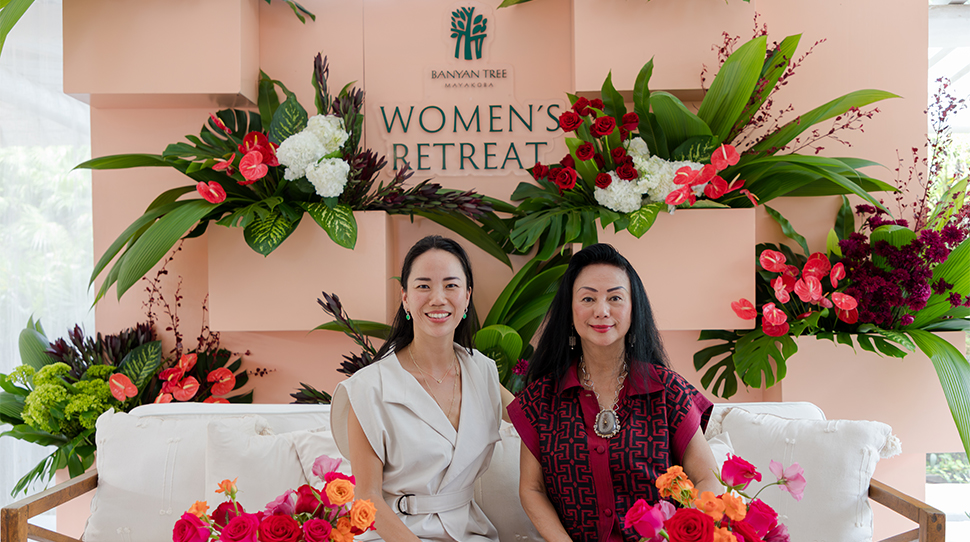
Claire Chiang and her husband, Ho Kwon Pin, did not set out to become sustainability leaders.
Chiang, a sociologist, and Ho, a journalist, wanted a vacation home in Thailand and settled on a scenic lagoon-dotted tract along Phuket’s Bang Tao Bay. They thought they got a good deal but bought it without performing due diligence. Soon they were stunned to find out it was the site of a former tin mine and was toxic. But the pair got to work, enlisting the help of environmental experts to rehabilitate the land. “We never gave up,” she says. “That challenge actually became an opportunity.”
That opportunity became Banyan Tree Phuket. The couple decided to build its first hotel there, and it became part of Laguna Phuket, Asia’s first integrated resort. Once the land was safe to develop, the pair ran into another challenge: designing an island hotel without a beachfront.
It forced them to come up with the creative idea of offering only standalone villas, each with its own pool. The concept was the first of its kind, and the pool villas have become a hallmark of the Banyan Tree brand since the Phuket hotel’s 1994 opening — they’re now ubiquitous at tropical luxury hotels worldwide.
Banyan Tree also pioneered changes to the hotel spa, eschewing the prevailing European models and embracing Asian traditions, including a focus on Eastern techniques (the Thai massage is a must), having barefoot therapists and setting its treatment rooms among lush gardens.
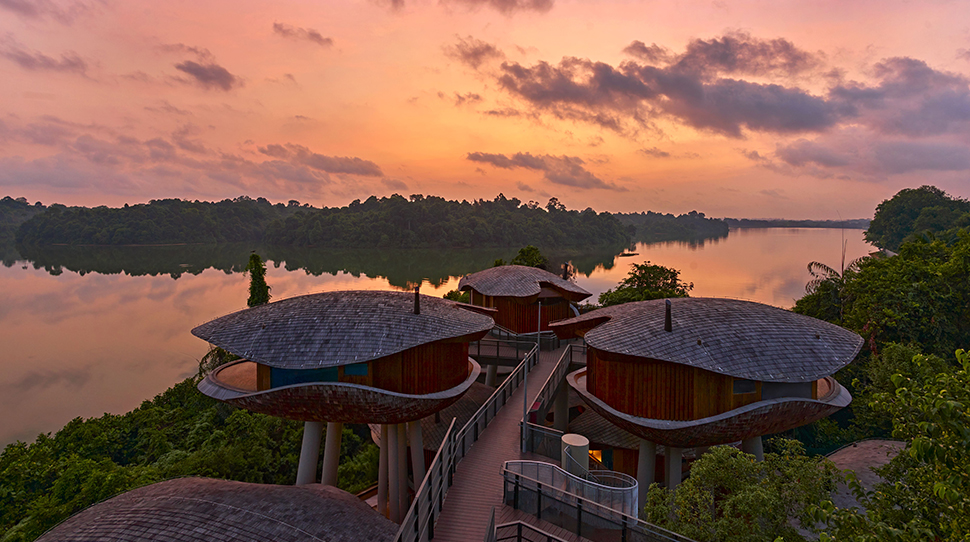
Parent company Banyan Group marked a big milestone in December, opening its 100th hotel, Mandai Rainforest Resort by Banyan Tree, and its first in Singapore. It’s a homecoming of sorts for Chiang, a Singapore native. And with 12 brands — including the flagship Banyan Tree — across more than 20 countries, Banyan Group continues to grow, with plans to debut hotels in new destinations ranging from the Dominican Republic to Tanzania.
Ren Yung Ho, deputy CEO and Chiang’s daughter, says the company has traditionally built hotels in nature environments but is increasingly landing in more urban locations. “No matter where we go, we will always be a sanctuary,” Ho says from a glass-walled overwater villa at Forbes Travel Guide Four-Star Banyan Tree Mayakoba in Mexico, overlooking the tranquil canal and mangroves. “We will always be this place for pause and connection.”
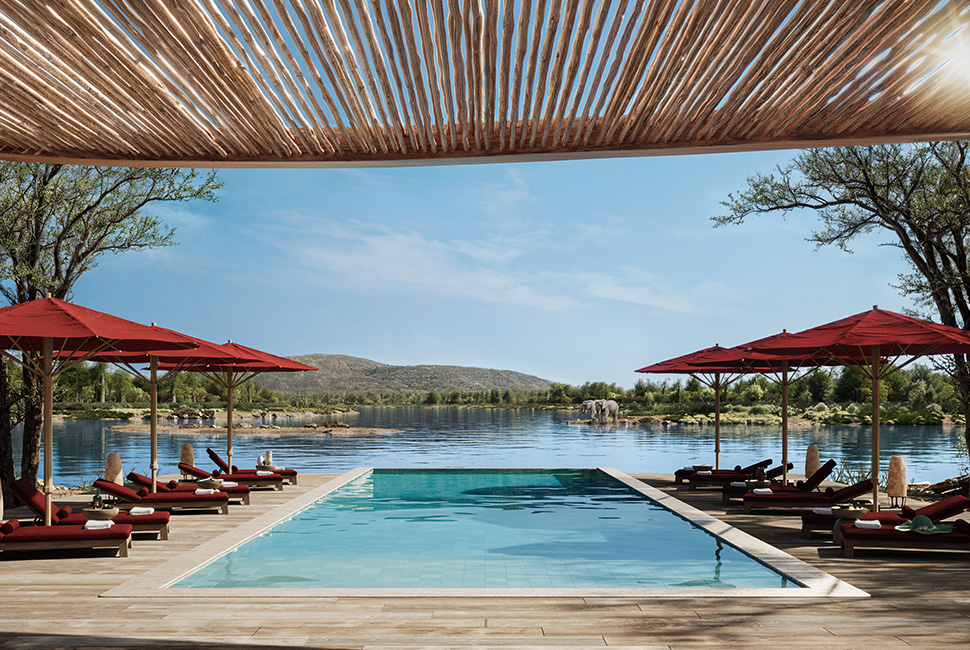
Ho gets animated when talking about Ubuyu, A Banyan Tree Escape, its first safari resort. Tucked within Tanzania’s Ruaha National Park, which has one of Africa’s largest elephant herds, the hotel will debut in May with just six villas (each, of course, with its own private pool). That’s in line with the company’s priority to leave a light footprint among its properties.
“I’m excited by the fact that it’s not in a [typical] safari destination, like the Serengeti, but in Ruaha, which is something that is a much more subtle and nuanced experience of what a safari can be,” she says. “It’s not just about seeing the big five.”
And while luxury hotels are all courting Gen Z, Chiang says she wants to pursue the S Generation — seniors. “They are internet savvy, love to travel — expectations are very high,” she says of the future wave of older adults. “How are we building to service this aging, silver senior generation?”
Banyan Tree’s Sustainable Mission
Even before opening Banyan Tree Phuket, Chiang says she was destined to be an environmental champion. She and her husband grew up during Singapore’s years of struggle after achieving independence in 1965. “The idea of scarcity of resources, governance, being responsible, is part of our makeup,” says Chiang, an energetic and charismatic leader who later became the first charter president for the UN Global Compact in Singapore, the world’s largest corporate sustainability initiative. “And because we are both trained in sociology and economics, we are very committed to development ethos and principles of value creation. So, land-use responsibility, respect for nature and building a community became part of those ethos that guide our directions.”
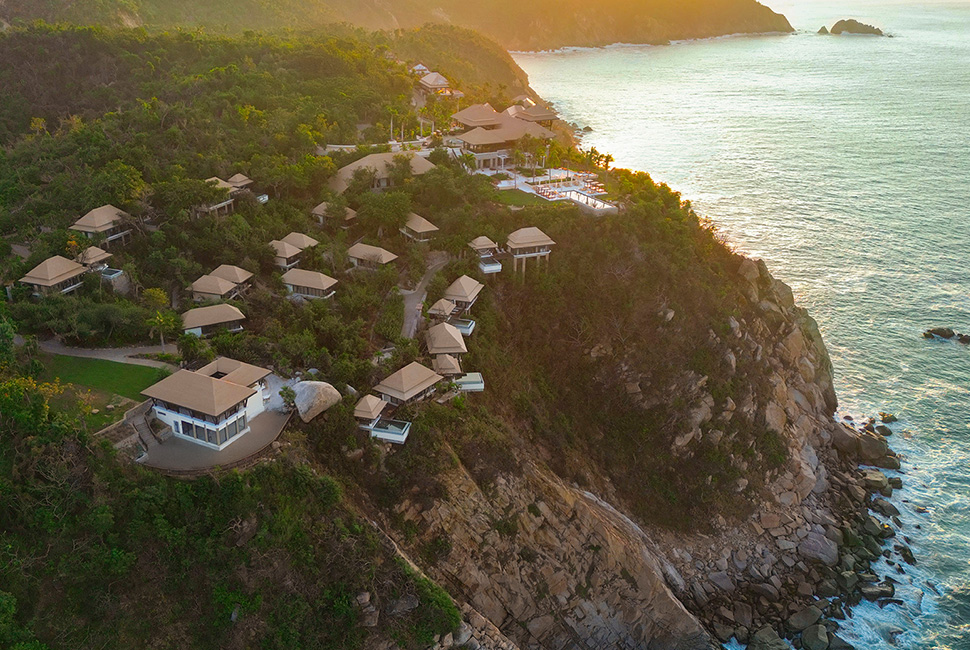
Their directions have led Banyan Tree to adopt eco-friendly practices that include the construction of energy-efficient biophilic buildings with locally sourced materials, ensuring their hotels use a values-based supply chain and a Stay for Good program that connects guests to local communities and environments through experiences.
This background also influences Ho. She envisions an idealized long-off future she calls Humanity 5.0, which will be “a conscious ecosystem.” In this period, “rather than longevity and immortality, humans are concerned with being able to discern a level of connectedness with the world around them as a marker of a life well lived,” she says.
For now, she’s laying the groundwork to make that era possible. One of her passion projects is making Banyan Tree Vabbinfaru, a secluded 48-pool-villa haven in the Maldives, circular. That is, she wants the island resort to produce zero waste and emissions and become an example of regenerative hospitality.
Banyan Tree’s Brand of Luxury Travel
“I feel that travel has become no longer a luxury or a privilege,” Chiang says. “It has almost become a need — a need to get away, to network, to learn, to retreat, to refresh.”
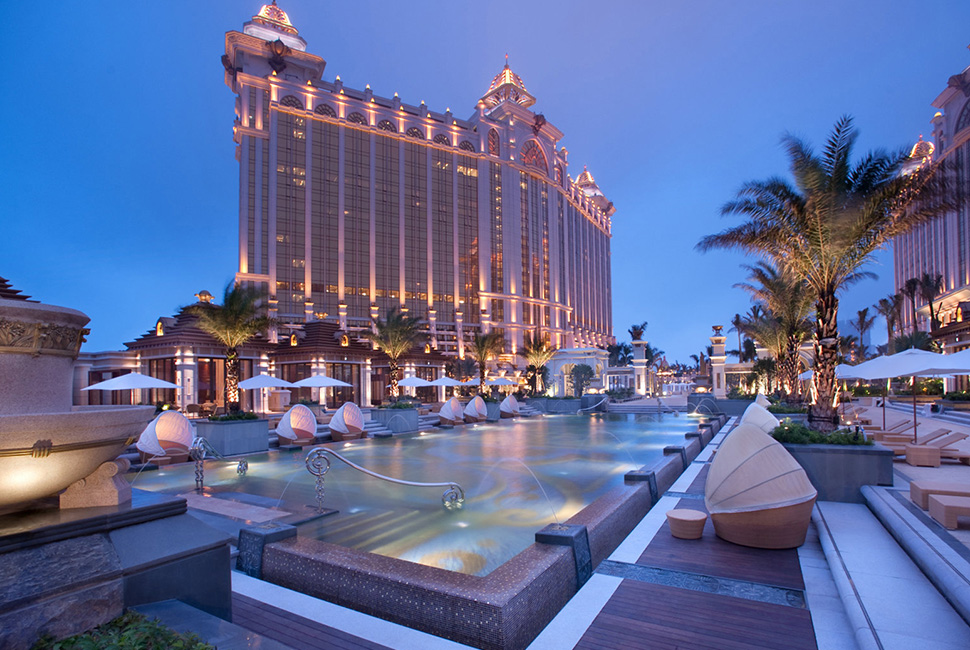
Both Chiang and Ho veer away from the traditional connotations of the word “luxury”—forget about chandeliers and Italian marble. “The rarity of those pure moments in nature where you forget all the stuff of being who we are in our daily lives, I think that really is the purest luxury,” Ho says.
Chiang prefers the term “deep luxury,” which she says boils down to “time, space, the place and the service.” For her hotels, this means areas where guests will feel the privilege of not doing anything and yet being taken care of — what she calls “having the time and the space to be.”
