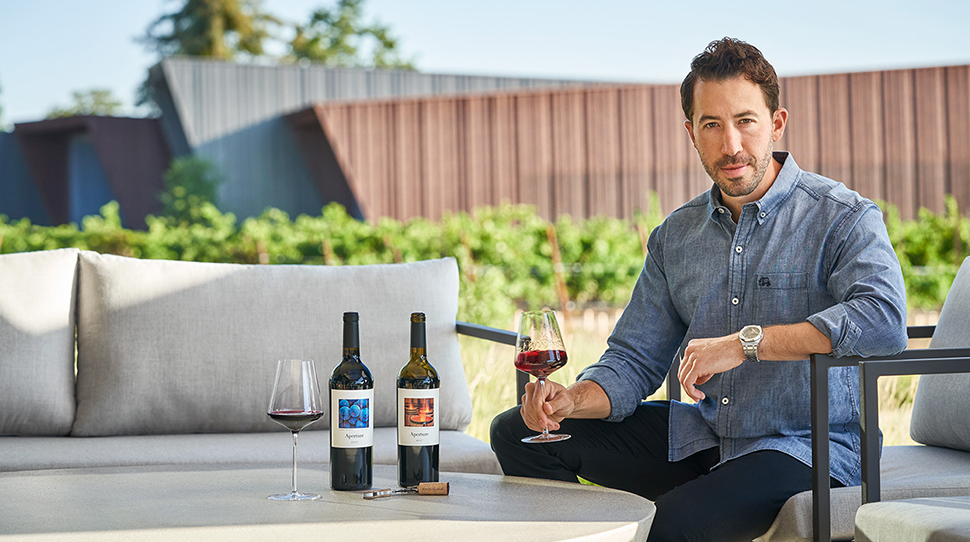
One recent morning, our car follows a dirt path to Farrow Ranch, a 75-acre property tucked away in Sonoma’s Alexander Valley. Against a vivid blue sky, the sun hangs above the gently sloping hills, casting a soft golden glow on the vineyard’s neat rows — the kind of light a photographer waits for.
As we sip breakfast wine — a crisp 2023 Aperture Estate Farrow Ranch Sauvignon Blanc — acclaimed first-generation winemaker Jesse Katz of Aperture Cellars talks about efforts to make the area in and around the ranch, which he acquired in 2021, its own American Viticultural Area, or AVA, called Pocket Peak. “This AVA is going to be the first one that is really going to be almost exclusively dedicated to the highest-end stuff for red Bordeaux varietals,” he says.
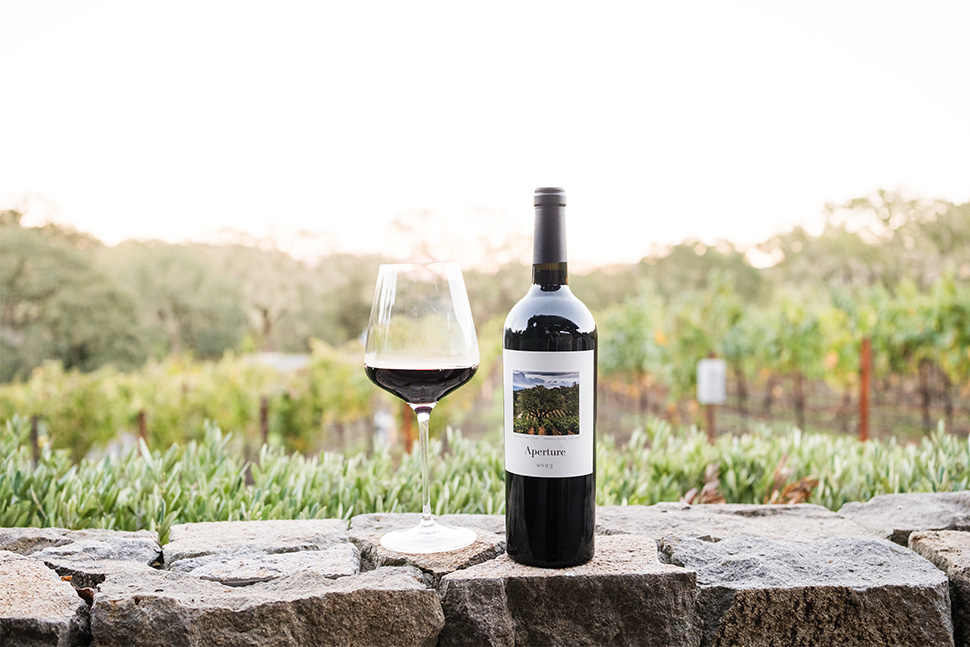
“There’s a level of discovery that really excites me,” he says, “Finding these somewhat hidden gems in these unique climates and these unique soil types and getting to really pull out the best of them and express those in vastly different ways that no one has ever done before.”
Katz founded his boutique Healdsburg winery in 2009 and quickly made a name for himself in Sonoma’s culinary scene with his complex Bordeaux-style wines (like the luscious 2023 Aperture Bordeaux). He became the first winemaker to land on Forbes’ “30 Under 30” list and set a world record with his $1 million cabernet sauvignon (it was the most expensive wine bottle ever sold). Plus, he’s collaborated with everyone from celebrities like Justin Timberlake and Jessica Biel (with whom he launched the wine label Prophet and Poet) to chefs like Kyle Connaughton of Forbes Travel Guide Five-Star SingleThread Farms Restaurant (a batch of Aperture’s fresh, elegant chenin blanc is fermenting in a concrete egg outside of the Healdsburg restaurant and will be paired with the exquisite Japanese-influenced tasting menu).
And Katz is finishing the year on a high. While visits to U.S. wineries were down by 5.1% in 2024, Aperture had its best year in 2025. United Airlines began pouring Aperture’s cabernet sauvignon in its Polaris business class cabins in October. Wine Enthusiast named Katz its Winemaker of the Year in November. Then on Dec. 2, Montage International, which includes the prestigious all Five-Star hotel company Montage and its contemporary sister brand Pendry, unveiled Montage Estate, an estate wine collection made at Aperture using grapes grown at Montage Healdsburg — Katz designed the hotel’s 15.5-acre vineyards before its 2021 opening. The 2023 cabernet sauvignon is available in every Montage and Pendry lobby, signature restaurant and guest room minibar. Rosé and sauvignon blanc will follow this spring.
The Colorado native got his start in wine through his father, renowned photographer Andy Katz. Jesse tagged along as his father crisscrossed the globe on assignment, traveling to 80 countries by the time he turned 18. Andy’s work brought them to wineries as well. Jesse sipped his first wine in Burgundy at age 12, but he discovered California wine country when Mondavi hired his father to do a book on Napa and Sonoma.
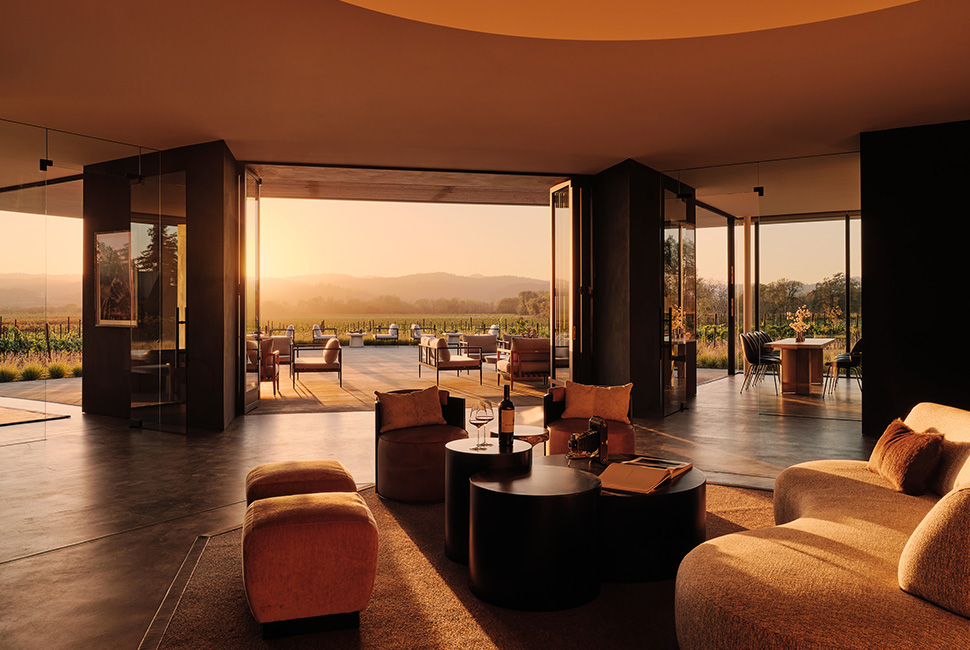
Andy’s art continues to inspire Jesse. The Healdsburg winery’s angular buildings mimic an aperture (the camera lens opening that allows in light). In the center, the circular tasting room features a unique aperture-like skylight ceiling, and the space serves as a gallery for Andy’s striking black-and-white nature photos. His work can also be found on each Aperture label.
Like his father, Jesse is always looking for the next shot. Katz — who’s worked at such illustrious wineries as Petrus in Bordeaux, Screaming Eagle and Robert Foley in Napa, and Viña Cobos and Bodega Noemia in Argentina — may have produced his magnum opus with his latest, Collage. The name fits: hundreds of Andy’s photos form an aperture on the label.
The wine itself also is like a collage. For the 2021 Collage Proprietary Red, Katz used harvests from more than 200 acres of vineyards across five appellations, including estate vines planted in 1912, and blended the best into a nuanced and velvety cabernet sauvignon.
“It’s one of my favorite wines I’ve ever produced,” he says.
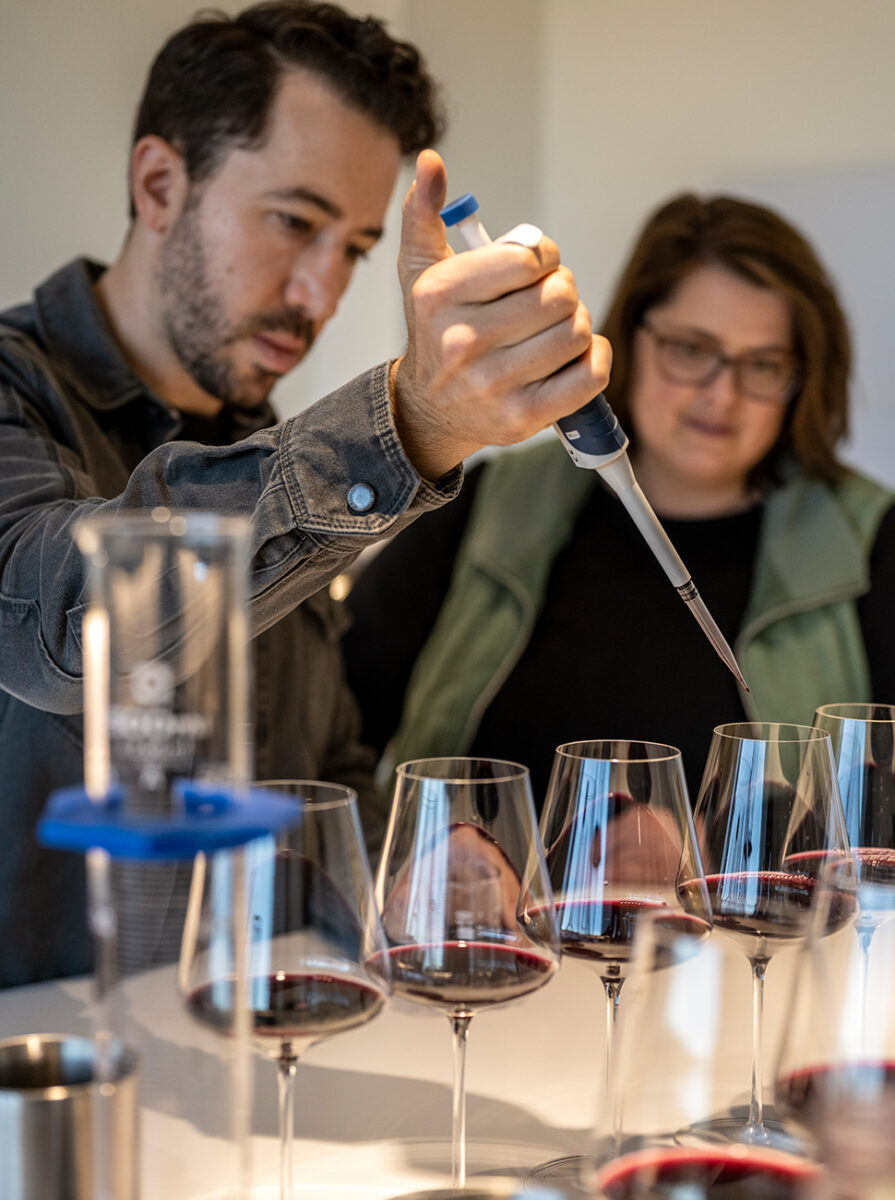
While the debut Collage red has gotten the most attention, the 2022 Collage Proprietary White, a sauvignon blanc, offers a bright, vibrant counterpoint. During Alinea’s 20th anniversary tour, consisting of pop-up residencies from Tokyo to Brooklyn, the Five-Star restaurant chose the white for a pairing during The Maybourne Beverly Hills stop.
Katz has earned much critical praise for his wines, but he’s also seen as a leader for his sustainable approach to winemaking. “It’s always for the next generation,” he says. “Sustainability is not what we can do to be sustainable now. It’s creating a structure and habits.”
As California wine country faces mounting climate pressures, Katz is finding ways to adapt. Aperture reclaims 98% of the water used in the winery and returns it to the vineyard through drip irrigation. It also captures rainwater and implements water-conserving measures like deficit irrigation or dry farming where possible. “We’re saving more water than I even want to use in the vineyards,” he says.
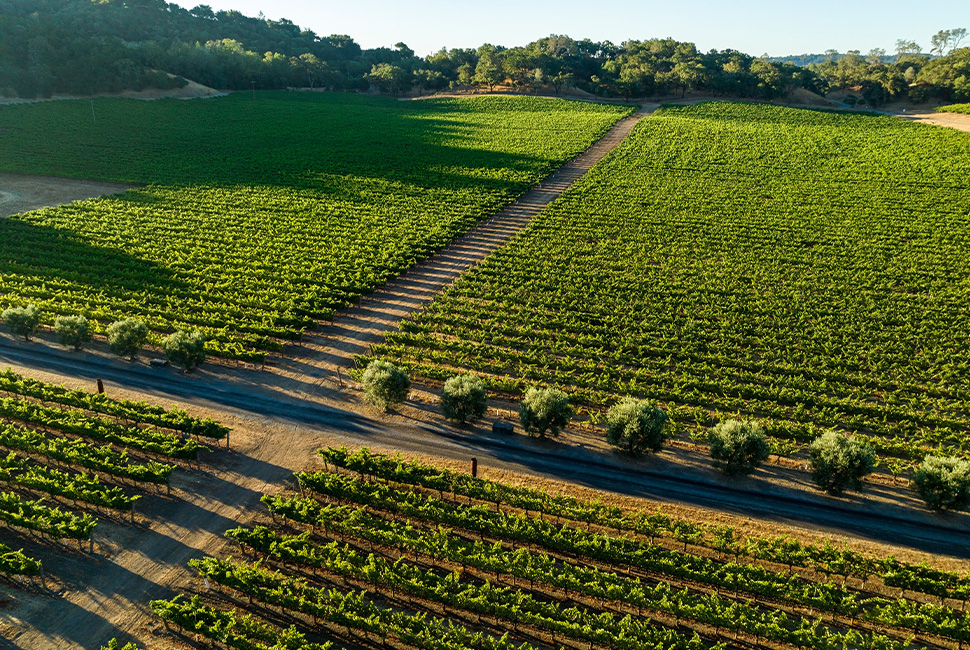
The winery also uses the Normalized Difference Vegetation Index, an advanced aerial imaging technology developed by Aperture’s consulting viticulturist Phil Freese (and Katz’s mentor) in collaboration with NASA that accesses vegetation health, allowing the team to adjust water use vine by vine. The winemakers also work on building soil health by composting grape pomace (the pulpy residue after the fruit is pressed).
In addition, Katz chose to preserve the 1912 vines that he inherited when he purchased Aperture Estate. He says that keeping these historic vines helps reduce the significant environmental impact associated with replanting, which most commercial vineyards undertake every 25 to 30 years.
For Katz, a key part of sustainability is finding land that is more adapted to where the climate is now and where the climate may go, and intentionally planting later-ripening varietals that can handle a bit more heat and are more drought-tolerant. “It’s putting it in areas that most people think, ‘You’re going to have a tough time ripening there,’ and living up to that challenge,” he says. “We are going to push the limits and walk that fine line.”
