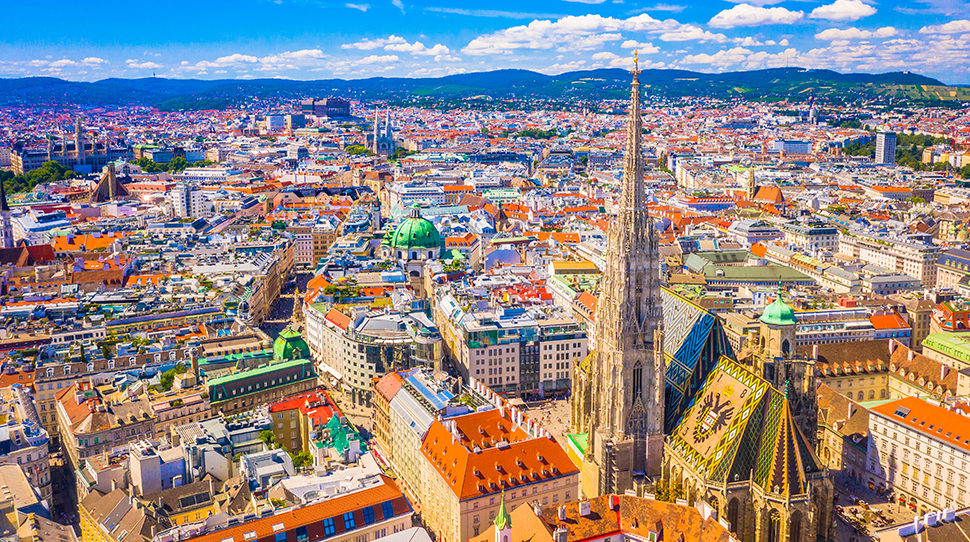
Vienna is an undeniably romantic city. The film Before Sunrise captured it perfectly: chance encounters, cobblestone streets, imperial facades, gilded concert halls and café culture. But hidden between its centuries-old Baroque veneer is Viennese Modernism (or Wiener Moderne), an art and architecture movement at the turn of the 20th century that brought the city to the brink of the future with modern design.
Look around on any street, square or corner in the historic center, just beyond the imperial pomp, and Vienna starts to shift. A flash of Otto Wagner ornament here, a Secessionist flourish there; then, just as quickly, the clean, almost severe lines of Adolf Loos.
Wiener Moderne was a refusal to imitate the past and a rejection of Vienna’s habit of dressing itself in borrowed styles: neo-baroque, neo-classical, neo-everything. It didn’t replace old Vienna. Instead, it layered over it and still shapes how the city looks and feels today. All of it is there for you to explore.
Viennese Modern
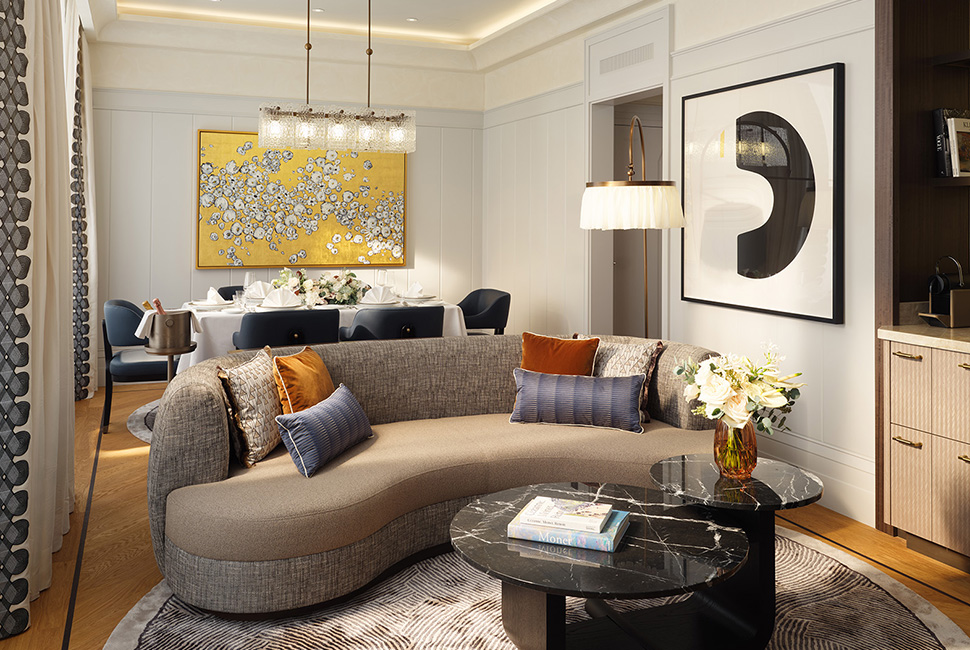
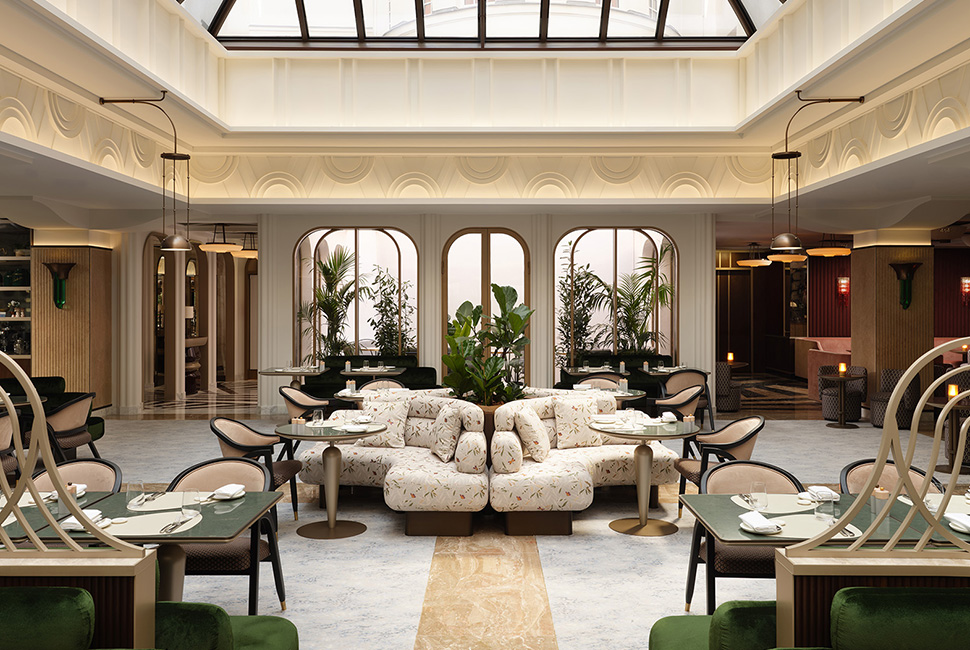
No hotel in Vienna makes the case for Wiener Moderne quite as effortlessly as Mandarin Oriental, Vienna. Housed in an early 1910s commercial law court, the building still shows off its Secessionist bones with geometric and ornamental molding details, rich marble and a sense of order that reads as modern. The 2025 reboot by designer Martin Goddard doesn’t overwrite that history; it fine-tunes it with a 21st-century flair, bringing in contemporary artists to help set the stage. In the UNESCO-listed First District, it’s exactly where you want to start your exploration from empire to modernity.
The Architecture Walk
Wiener Moderne landmarks are just a walk from Mandarin Oriental, Vienna, which is convenient for falling into architectural rabbit holes. You can set out in search of Loos or follow Wagner’s more decorative path, but the better approach is to meander and let the city reveal itself. It’s all in the details.
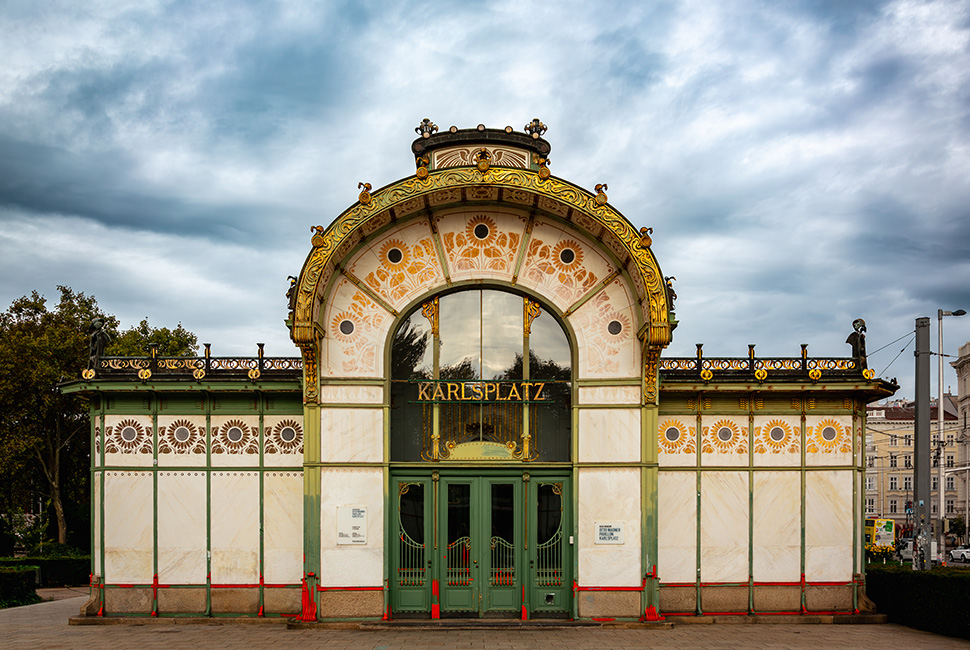
Wagner’s Karlsplatz Stadtbahn stations (those apple-green, gold and white entrances to the U-Bahn) are perhaps the clearest expression of Viennese Modern at its most optimistic: decorative, precise and whimsical. Within a few years, Wagner pared it all back at the Austrian Postal Savings Bank, where ornament gives way to steel, marble and the modernist creed “form follows function”.
Then there’s the Secession, a century-old edifice straight out of the future — white, cubic and crowned with its gilded dome. Designed by Joseph Maria Olbrich, it remains Vienna’s most confident avant-garde statement. Inside, Gustav Klimt’s Beethoven Frieze (1902) unfolds in the basement.
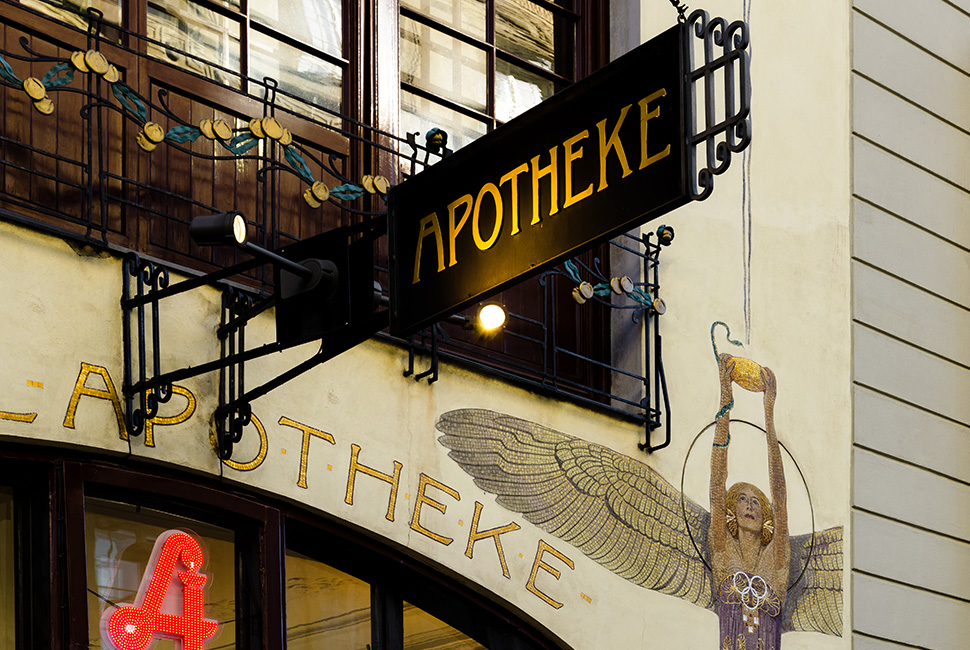
For a return to Art Nouveau’s lighter touch, step into the Apotheke Zum Weissen Engel (White Angel Pharmacy), whose facade was designed by Oskar Laske with larger-than-life angels flanking its entrance. Then pivot sharply. The Loos Haus, by Loos, of course, is the modernist marvel in marble, and just a few steps away is the Loos American Bar, a masterclass in restraint — mirrors, marble and mahogany expanding a room barely 300 square feet. It’s Vienna, reduced to essentials.
And for a moment of well-timed theater, head to the Anker Clock on Hoher Markt just before noon, when Franz Matsch’s procession of historical figures glides across its face.
For a little more overlap, check out the Belvedere, where Vienna’s imperial past and modern edge sit side by side. The Baroque complex — which includes two palaces, stables and an orangery — is a spectacle in itself, but you are here to explore what’s inside. At the Upper Belvedere, 24 Klimt paintings — including The Kiss, arguably his most famous work — draw crowds.
From there, the collection opens out into a sharper view of Vienna around 1900, with works by Egon Schiele and others who transformed the artistic landscape. It’s worth getting the combined ticket and continuing to Belvedere 21. Designed by Karl Schwanzer, the mid-century modern building shifts the perspective again with its clean lines, glass and focus on contemporary art. Don’t skip the MAK, Museum of Applied Arts, where design takes center stage from Vienna 1900 and the Wiener Werkstätte to furniture, textiles, architecture and global decorative arts.
Where to Eat and Drink
Food, like everything else in Vienna, resists easy definition.
For the classics, try Otto Will Meer on the banks of the Danube. Set inside Wagner’s Schützenhaus, all white-and-blue Art Nouveau elegance, it’s playful and fun, with a seafood focus: oysters with ponzu, crisp fritto misto, cod with white wine butter foam.
If you want a more modern taste, dine at Doubek. The space is stripped back to near-total black (no windows, no distractions), so all focus lands on the open kitchen. At its center: a wood-burning oven and glowing coals that drive nearly every dish on the tasting menu, turning the meal into something elemental, precise and quietly intense.
And for something that ties all the architecture, design and history together, there’s all-day contemporary Austrian restaurant Salonplafond set inside the MAK.
Vienna takes its drinking as seriously as its design, and the cinematic Kleinod Prunkstück makes the case beautifully. Inspired by the Wiener Werkstätte artists of the early 20th century, Kleinod features craftsman details, including ceiling tiles, brass ornamentation, half-moon leather banquettes, dark wood and a tiny dance floor, along with its craft cocktails. For cocktail purists, it’s Josef Bar, a Baroque speakeasy with meticulous design and drink. It’s low-lit with quilted leather and an old-school speakeasy mood.
Back at the Mandarin Oriental, Atelier 7 leans quieter. Cocktails like The Kiss-inspired Aikizu (with gin, rosé vermouth and yuzu) draw from Vienna’s artistic legacy.
