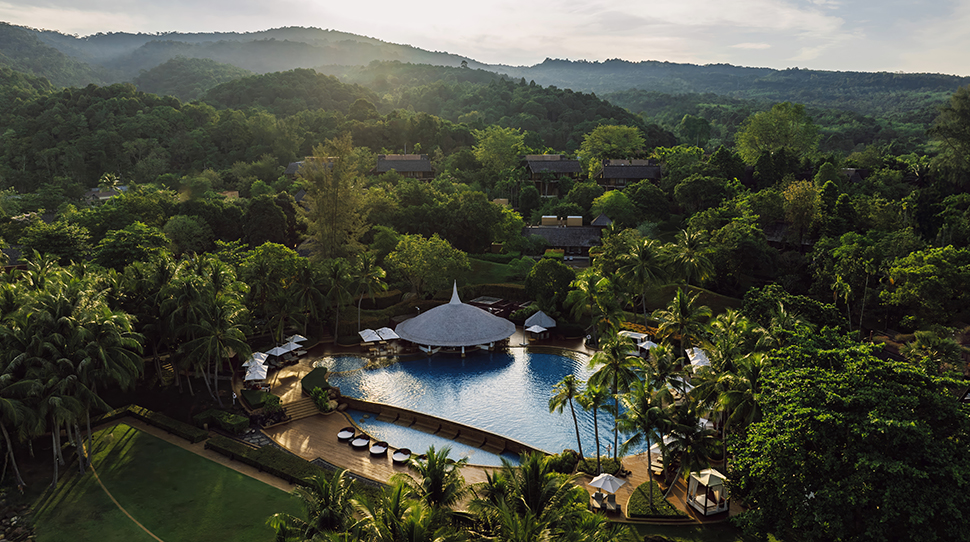
In 2007, Ritz-Carlton announced it was launching a new brand of hotel. The late Simon F. Cooper, then president and chief operating officer, envisioned it as a collection of “hand-selected ‘hideaway’ destinations globally,” designed for travelers seeking singular locations that reflect the culture, history and heritage of their surroundings.
West Caicos was slated to host the first Reserve, Molasses Reef, but the financial collapse of 2008 put a stop to that development. Instead, the brand turned to Thailand’s Krabi province for its inaugural resort: the Forbes Travel Guide Four-Star Phulay Bay, a Ritz-Carlton Reserve. It opened in December 2009, just in time for high season, when the rains had passed and the Andaman Sea was at its most azure.
Back in the Ritz-Carlton’s planning phase, Thailand was an early target for the Reserve, which now counts nine properties in its collection. The kingdom had already established its bona fides in the world of luxury, and it would provide the brand an opportunity to compete among the world’s best hotels. The Five-Star Mandarin Oriental, Bangkok had drawn well-heeled travelers since 1876, the first Aman opened in Phuket in 1988 and Banyan Tree debuted in Phuket in 1994. Six Senses, Four Seasons and other luxury brands had planted flags there as well.
Still, the Reserve wanted to make its mark by breaking new ground. Krabi, just across Phang Nga Bay to the east of Phuket, made sense. A smattering of high-end hotels existed, but it was still relatively untouched, a haunt of backpackers and rock climbers. Cooper would later describe Phulay Bay as a “natural choice.”
Hollywood first discovered Krabi in 1995 when Cutthroat Island filmed here. Since then, more than a dozen movies have used the province for set locations, usually for sci-fi action thrillers like 2025’s Jurassic World Rebirth. But it was the star power of Leonardo DiCaprio in The Beach that originally helped Krabi rise to fame in 2000.
Suddenly, the area was booming, and as the first tourist areas filled up, developers turned their attention north, to more virgin coastline. In 2003 and 2004, Thai businessman Piya Bhirombhakdi (of the Singha beer dynasty) began developing on a rocky promontory surrounded by two national parks on both the mainland and in the water.
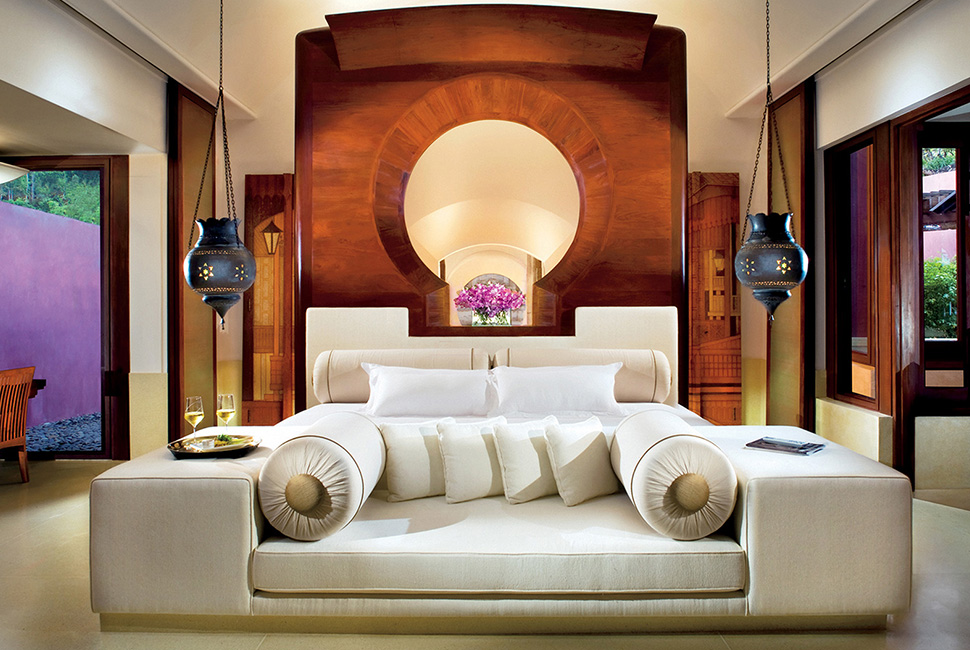
Bhirombhakdi’s team coined the portmanteau “Phulay” by combining the words for “mountain” and “sea” (phukao and talay, respectively), and he hired one of Thailand’s most celebrated architects, Lek Bunnag, in hopes of constructing an ultra-luxury retreat. Bunnag mixed Moroccan, Moorish and Thai elements, in part to celebrate Krabi’s diverse population of Muslims and Buddhists.
Then the Boxing Day tsunami struck in 2004. While Phulay Bay avoided major impact, the disaster halted tourism. The project stalled. And in 2006, when Cooper’s team was scouting locations for the first Ritz-Carlton Reserves, there it was, still under construction.
Phulay Bay works as a Reserve because it feels so remote, and yet it’s comfortably accessible. Since Krabi International Airport opened in 1999, visitors have flown in from Bangkok in less than 90 minutes (or from Singapore in less than two hours). Phulay Bay’s driver will meet you, and within moments, you’ll wind through the outskirts of Krabi Town and into the lush countryside.
Cows, farms, rubber plantations and pineapple groves will rush past. Then you’ll drive through villages of tile-roofed houses, tin-covered markets and the gilded peaks and domes of temples and mosques. The route curves around mountains then out to the coast before rising once more into the jungle. Almost out of nowhere, the road forks and, after a sharp left, an unassuming wall of sandstone brick appears. A guard will slide open the gate, and you’ll enter a different world.
Three indelible images greet you when the van stops: the smiling faces of hotel staff, the 20-foot-tall orchid-purple walls and, through the open doorway, the Sala Srichan pavilion. Next, your ton hong (“personal butler”) will lead you in silent walking meditation on a pathway of stepping stones within the Sala’s reflecting pool. It’s like entering a fortress of serenity, the high walls themselves framed by towering coconut palms.
Awaiting you in the pavilion are staff members who sound a temple gong and present a phuang malai, an intricate garland of jasmine, rose and orchid blossoms that slips over your wrist. There’s no front desk here; instead, you’ll settle into your room before checking in via iPad, in the comfort and splendor of your new surroundings.
The way time slows here, you could spend three nights and feel as refreshed as after a weeklong vacation. The beach is ill-suited to swimming, but at low tide, you can walk up neighboring Hat Tubkaak, which continues for 1.2 miles.
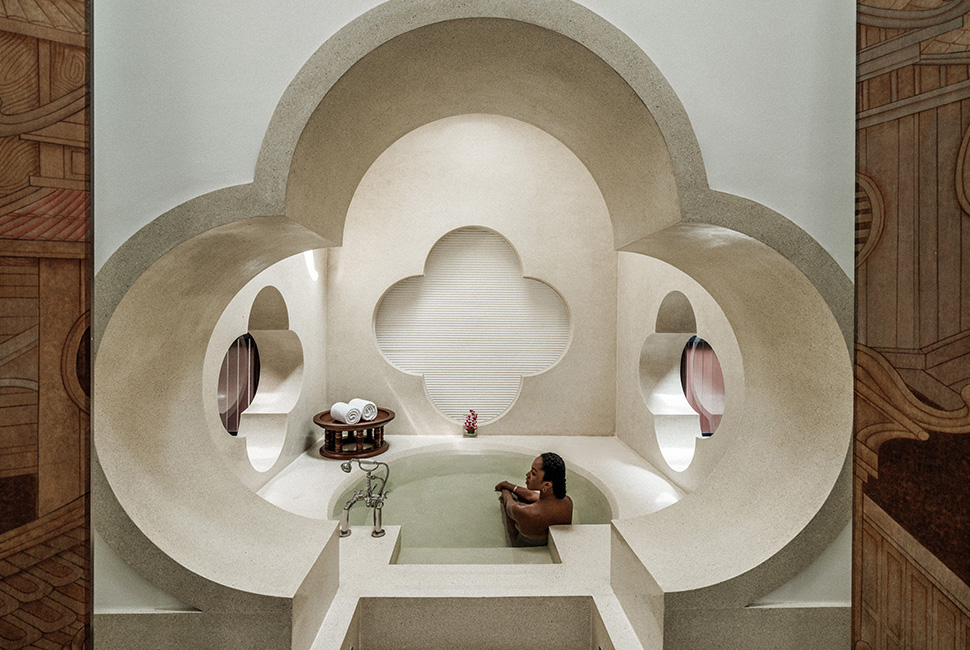
Bunnag designed the resort to maximize natural light, and nowhere is this more dramatic than at Chomtawan Bar, the sunset point where guests converge nightly to watch the sky turn orange and crimson directly behind the black silhouetted karsts.
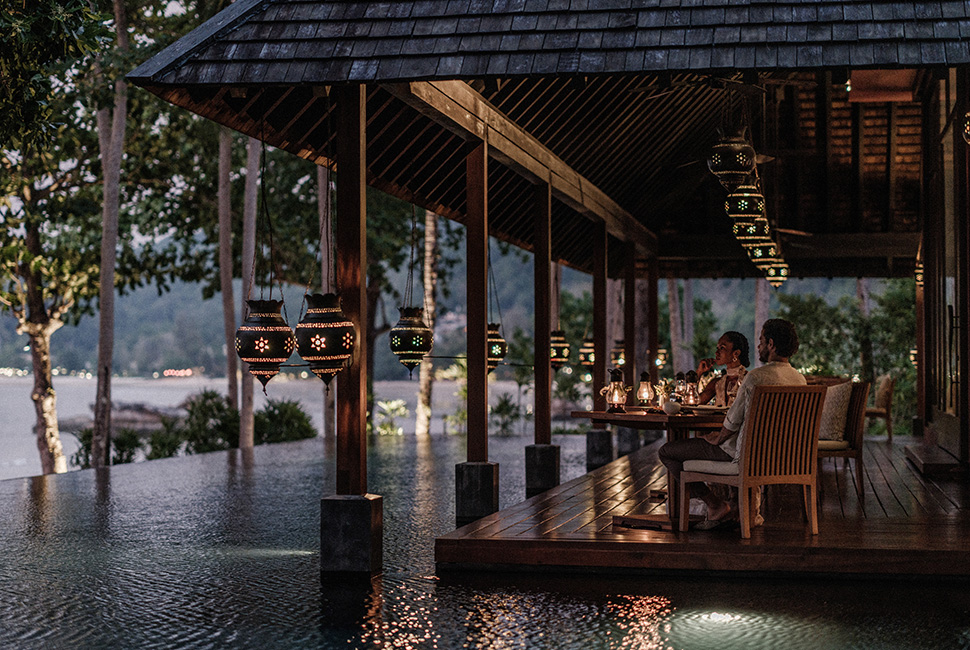
You’ll want to spend hours at the Phulay Bay Spa, which features a recovery room open to a forest thicket where you can sip your tea and listen to birds. The lovely restaurants include both Western and Thai dining options, but a private dinner at Sala Srichan elevates the romance to a spiritual level as thousands of candles flicker from the walls surrounding the reflecting pool.
You can stay content without ever leaving Phulay Bay, but then you’d miss out on Krabi, arguably Thailand’s best province for adventure and exploration. Inland, begin the day by hiking up Dragon Crest Mountain or with the Balance of Five Elements wellness journey that includes yoga and ayurvedic balance.
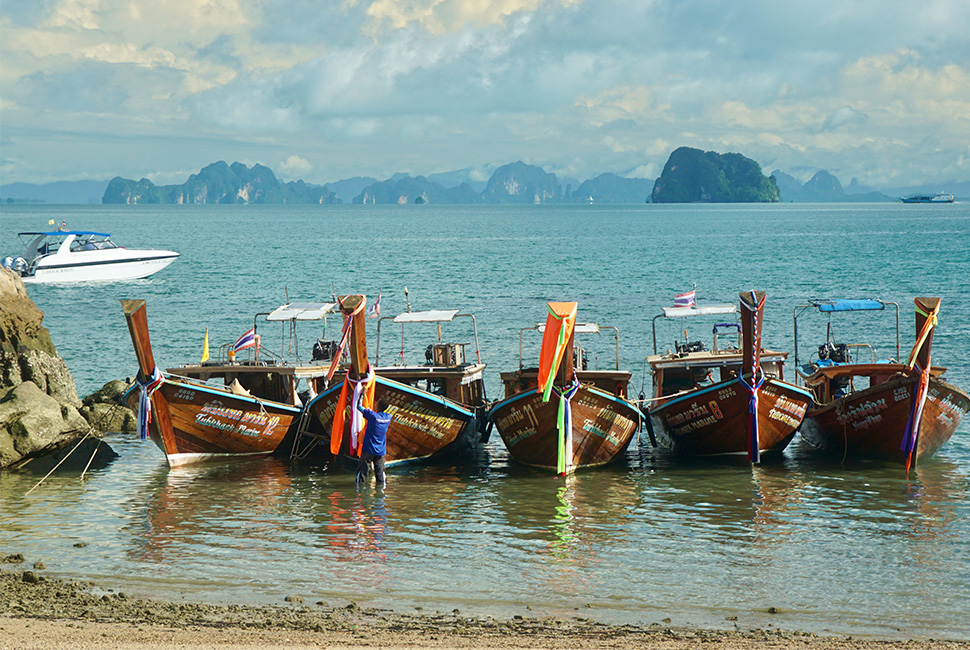
On the water, watch the sunrise from Nong Talay Lake or kayak to prehistoric paintings in Phi Hua To Cave. A 25-minute longtail boat ride from Chomtawan Bar will give you both mountain and sea on Koh Hong island, where you can climb 400 steps to the karst mountaintop, then descend to snorkel in a small white crescent bay. Your ton hong can also arrange trips farther out to Railay Beach or Koh Phi Phi.
While the Reserve brand values unspoiled nature, each property also aims to celebrate the people and culture of its location. The Heritage Flavors of Krabi tour lets you spend an afternoon learning about everyday village life through food. Your first stop is the fresh market, brimming with seasonal fruit and vegetables, herbs and spices. Next, you’ll visit a small curry factory operated by a local Muslim family where the mah (mother) will teach you to make red curry paste the old-fashioned way, with a mortar and pestle. For the final stop, you’ll visit another home, where you’ll steam haw mok custard, using fresh fish mixed with egg, coconut cream, herbs and curry paste.
Phulay Bay was one of three Ritz-Carlton Reserves on Forbes Travel Guide’s inaugural Edge List for many of the same reasons that Cooper and his team chose it back in 2006. “Guests don’t want to leave,” current general manager Vidya Sagar says. “They desire to be here forever. So, they always look forward to coming back. We want every guest to feel special.”
