In Mexico City, fall spells the arrival of one of the highlights on the country’s cultural calendar: Día de Muertos. It’s also the season to indulge in pan de muerto, the sugar-dusted roll that fills bakeries and family altars in the weeks leading up to November 1 and 2.
Pan dulce, the catch-all term for Mexico’s sweet rolls and pastries, is a breakfast staple. The Spanish brought wheat in the 16th century, but it was 19th-century French influence that gave the country’s bakeries much of their modern repertoire. Well-known names such as Rosetta and Odette need no introduction, but they’re not the only places serving up memorable pan de muerto.
Some of the city’s favorite bakers stray just enough from the traditional recipe to keep things interesting. From celebrated bakeries to the tables of upscale hotel restaurants, these are the takes on pan de muerto you won’t want to miss.
Maricú Cocina Dulce
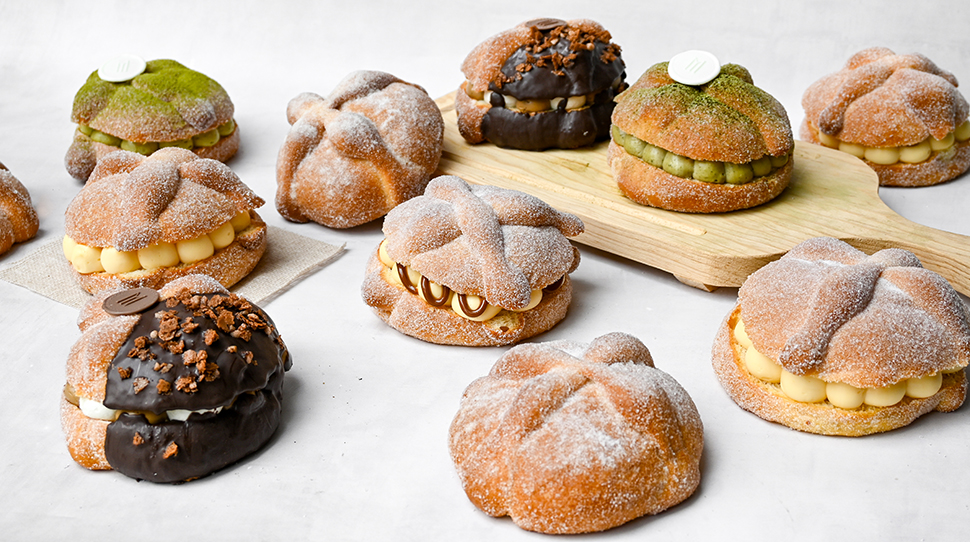
After more than 40 years in the pastry business, Maricú Ortiz is still finding new ways to fill a pan de muerto. This year, it’s matcha and tiramisu. They join vanilla cream and dulce de leche versions made with creams her kitchen prepares every day. All four are built on a classic base of fresh yeast, free-range eggs, Anchor butter and orange zest for a soft, airy crumb.
Maricú Cocina Dulce has several locations, including one in upscale Lomas de Chapultepec.
Samos
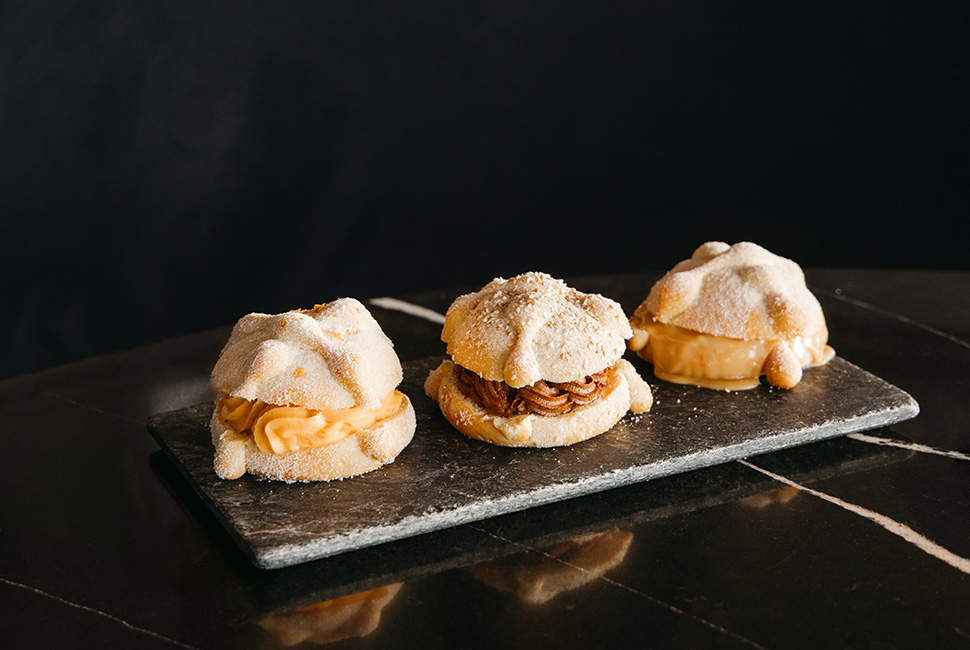
A mole-filled pan de muerto is the standout at Samos, the restaurant at Forbes Travel Guide Four-Star The Ritz-Carlton, Mexico City, where newly arrived pastry chef Aarón Santana has put together four varieties.
The savory take brings one of Mexico’s signature flavors into the bread. Alongside it are the hotel’s traditional recipe and two other new flavors (the sweet and comforting caramel and citrusy mandarin), each handmade by the bakery team. All four are available until November 7, so there’s still time to try them after Día de Muertos has passed.
Dukkah
A few blocks from the Ángel de la Independencia monument, the restaurant Dukkah has covered its façade in marigolds, candles and corn, and set up a floating altar inside. Paloma Solano, the restaurant’s chef, adds rosemary to the classic butter-and-orange-blossom dough, and builds four varieties on it.
The signature pairs a toasted pumpkin seed cream filling with a dusting of dukkah, the seed-and-spice blend for which the restaurant is named. Another is filled with nata de rancho and tart guava, and a third pairs Edam-style queso de bola with sweet quince.
Cardín
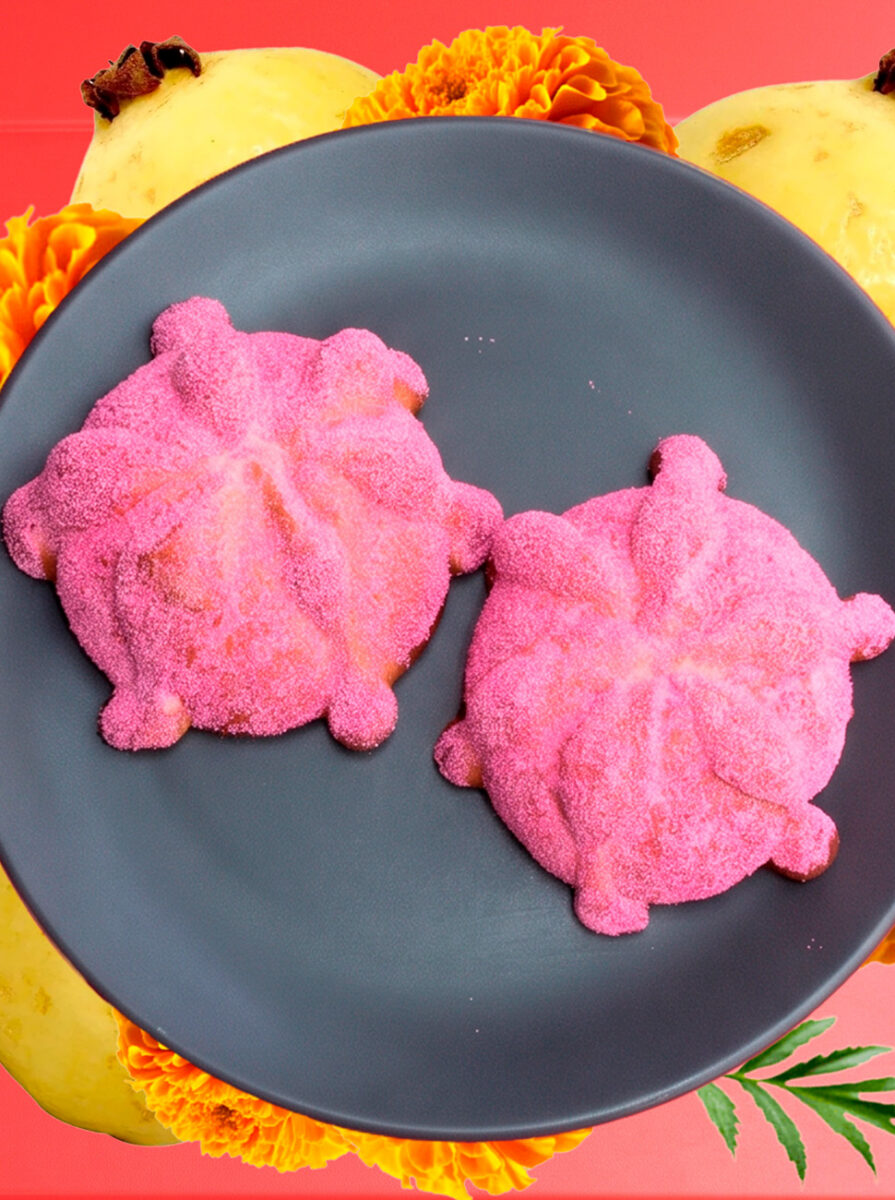
Cardín, the small Roma Norte bakery of chef Ricardo González Foyo, started as a catering business. This season, the pink pan de muerto is the must-try item. Made with guava and spices, it sits alongside a cardamom version and the classic. Fans of the Gansito snack cake should also try the Cuack, Cardin’s take on it, featuring orange blossom bread, orange marmalade, chocolate and cempasúchil (marigolds).
There are only a couple of tables, so plan on takeout, or book one of the bakery’s October workshops to make pan de muerto from scratch.
Artisan Bakehouse
This Colonia del Valle bakery keeps its handmade pan de muerto traditional, scented with orange and orange blossom, and saves the experimenting for what goes inside. Last season’s three favorites are back this year: Dubai (pistachio and chocolate), mascarpone and pumpkin spice.
They’re joined by two newcomers. Passion fruit has been a standout this season, its tart, fruity edge a contrast to the soft, fragrant bread. Chai goes the other way — warm and spiced, ideal for fall.
Fougasse
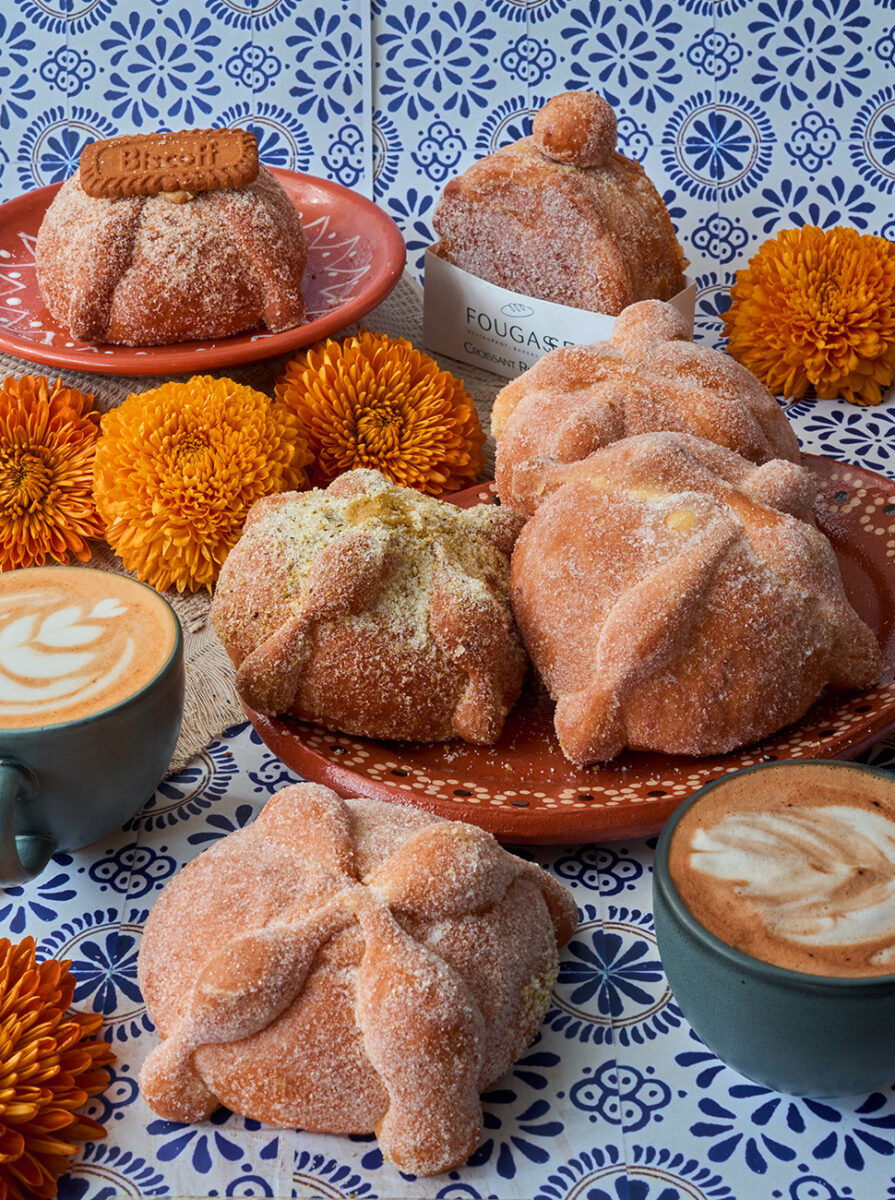
With branches across the city, Fougasse follows one guiding rule: its bread should taste of butter, and the pan de muerto is no exception. The lineup includes the traditional roll, two favorites (speculoos and pistachio) and a new lavender pastry cream filling that is deliberately subtle.
The real draw, though, is the salted caramel-stuffed Roulette de Muerto, back for a third year. It’s a seasonal spin on the Roulette, Fougasse’s take on the viral New York roll and one of its best-loved pieces.
Xolo Café
Xolo Café bakes in Texcoco, in neighboring Estado de México, and its pan de muerto went viral when it debuted in 2021. The bread is coated in totomoxtle (corn husk) ash, topped with dried cempasúchil and filled with dulce de camote morado, a purple sweet potato confection traditional in Texcoco, Puebla and Tlaxcala.
While other bakeries split and stuff their pan de muerto like a sandwich, Xolo bakes the filling inside, so the crumb is denser.
Every October Sunday, Xolo brings a limited number of pieces to surprise pop-ups at Mexico City cafés, with locations announced weekly on its social media. Lines form early.
La Conchería
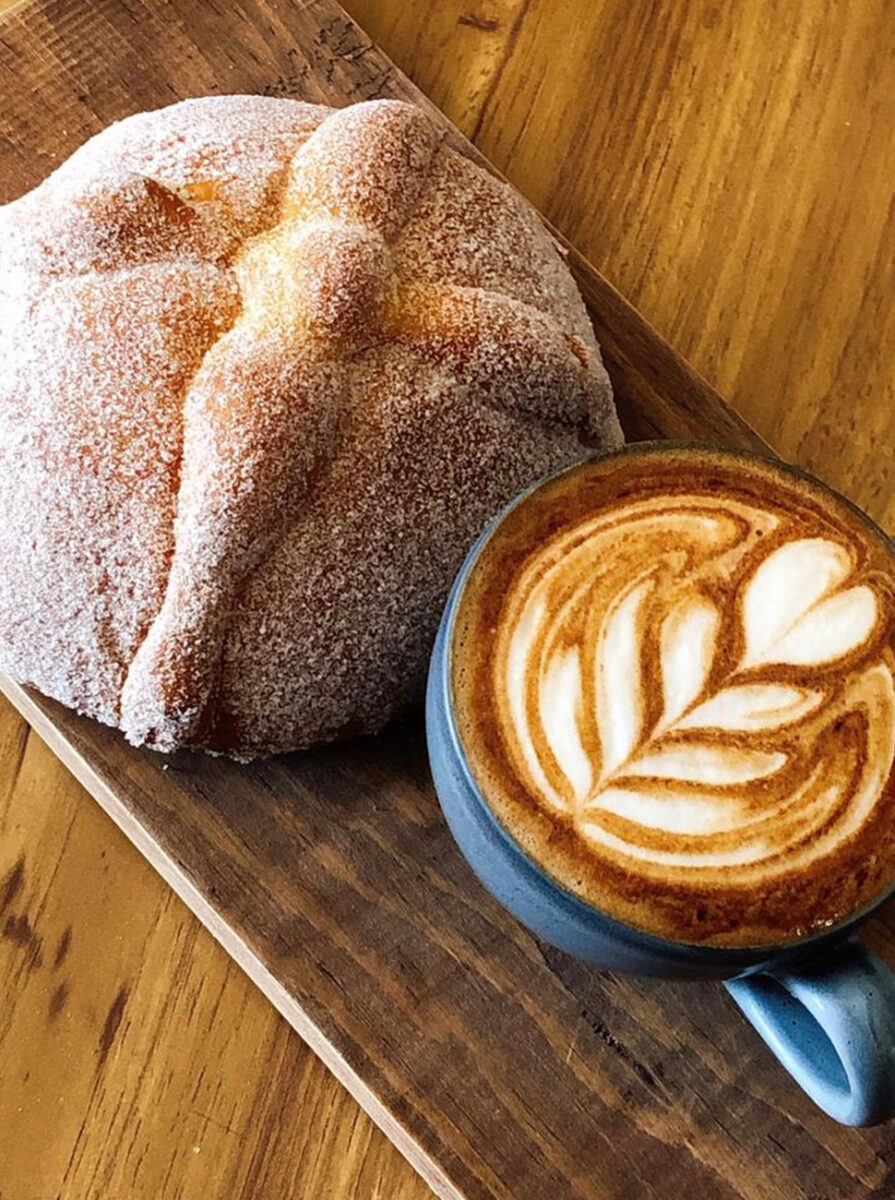
Raúl Linares is the third generation behind La Conchería, an offshoot of Once 28, his family’s pastry shop that opened more than 30 years ago. His pan de muerto uses New Zealand butter and a natural orange flavor infused for 36 hours, and the dough is slow-fermented for a light, cloudlike crumb.
Of the three filled rolls, the house favorite pairs nata, the thick cream skimmed from boiled milk, with Papantla vanilla and Caribbean rum; another swaps orange and orange blossom for kaffir lime leaves and lavender and adds caramelized figs.
New this year is the concha calavera, a shell-patterned sweet roll decorated with a skull, meant for altars in place of the usual chocolate skull. Look for it at the Nuevo Polanco shop.
Rulce
At their Roma Norte location, Cecilia España and Raúl Mondragón start every pan de muerto from the same dough: all butter, a light touch of orange blossom and no artificial flavorings.
The traditional roll is finished with butter and sugar. The pick for chocolate lovers, made with hazelnut cream and coated in dark chocolate, is inspired by one of the bakery’s bestsellers. Two filled versions round out the lineup: one with mandarin and cheese and the other with dark chocolate and raspberries. They’re available until November 8 or until they sell out.
Mignon Pâtisserie
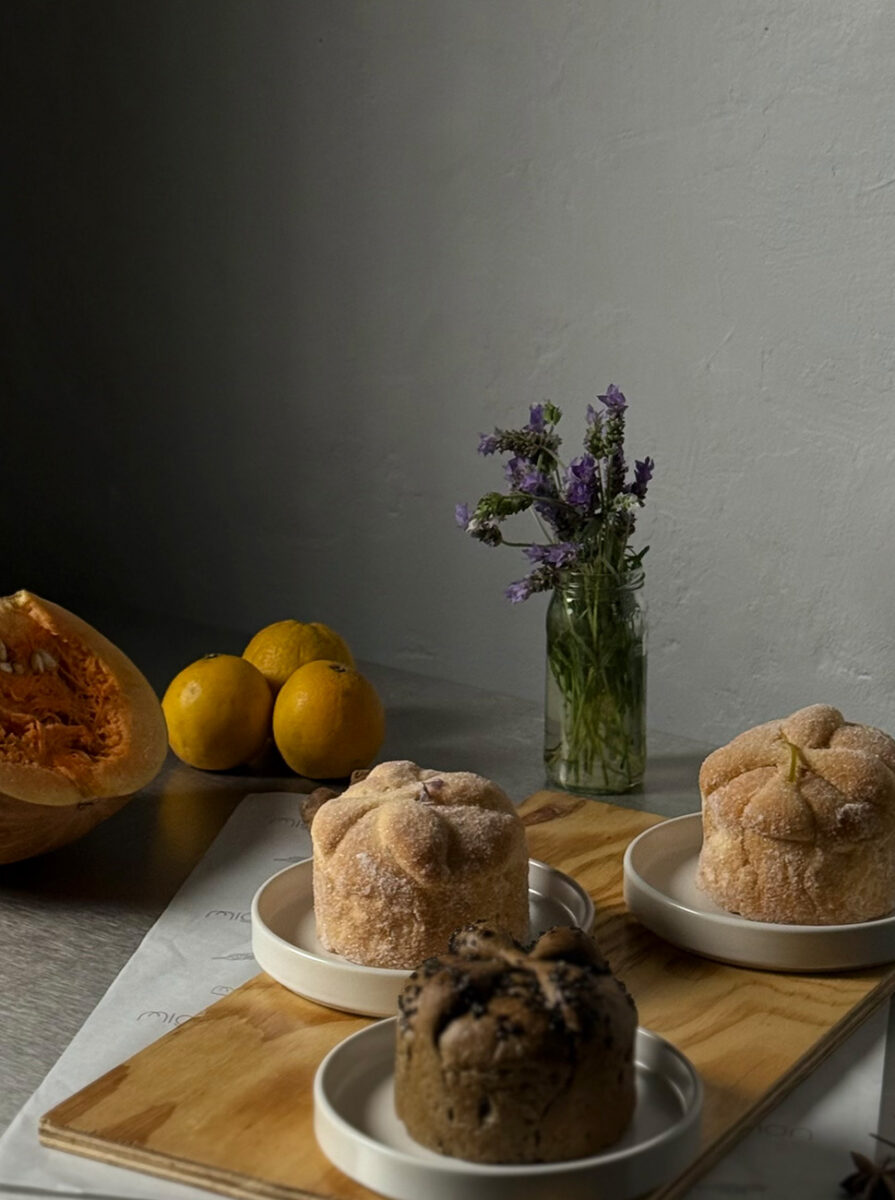
Sisters Itzel and Meztli Rivero created Mignon in 2020 as a pâtisserie that pairs French technique with Mexican flavors. They opened their Colonia Cuauhtémoc shop two years later. Itzel trained at Rosetta in Mexico City and at Fauchon and Cyril Lignac’s bakery in Paris.
The traditional roll uses orange blossom water, steam-distilled from bitter orange petals, while the black sesame roll, inspired by small-town fair breads, is topped with toasted seeds and filled with calabaza en tacha (candied pumpkin) ganache. Its lavender pan de muerto, the bakery’s debut creation, is another highlight on the menu.
