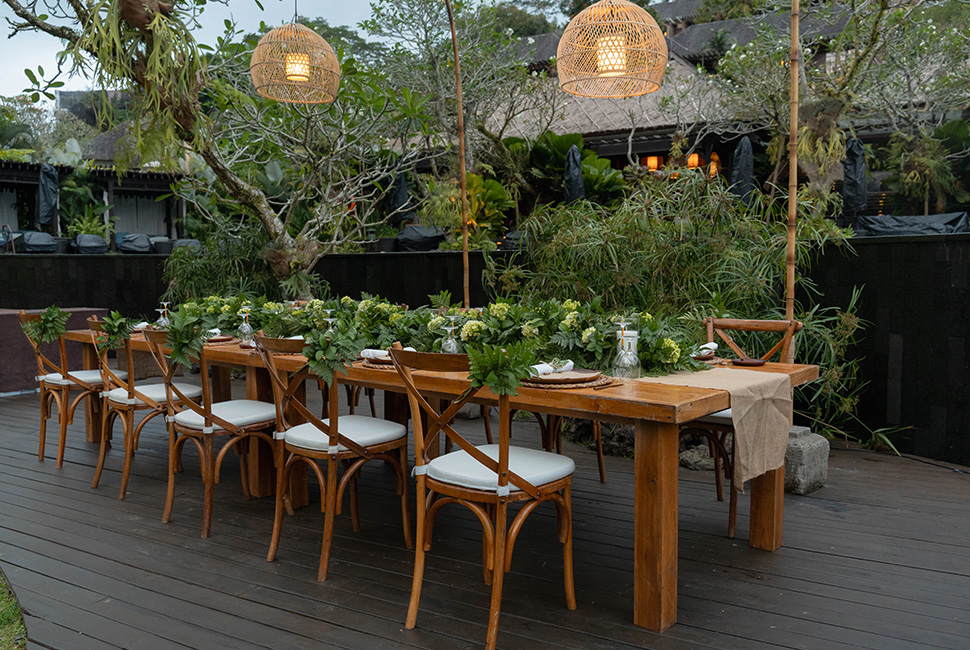
The Bali leg of Marriott International’s 2026 Luxury Dining Series opened on a tiered terrace tucked between Mandapa, a Ritz-Carlton Reserve’s sinuous infinity pool and sprawling rice paddies. Soft music from a local band and croaking frogs provided the soundtrack for a lush landscape lit up with luminaria.
Guests lined two communal tables dressed with verdant greenery for an intimate multi-course menu from Bayu Retno Timur, the Forbes Travel Guide Five-Star hotel’s executive chef, and Syrco Bakker, chef of Ubud’s fine-dining Syrco BASÈ.
The exclusive event, which ran last month, was part of the third annual Luxury Dining Series in Asia Pacific. This year’s edition also traveled to JW Marriott Phu Quoc Emerald Bay Resort & Spa in Vietnam; The Naka Island, a Luxury Collection Resort & Spa, Phuket; The St. Regis Maldives Vommuli Resort; and The Ritz-Carlton, Kyoto. It culminates with a trip across Japan aboard The Ritz-Carlton Yacht Collection’s Luminara October 8 to 19.
The premise of the series is simple: meaningful gatherings held over leisurely paced, shared meals that spark conversation and offer a deeper look at a destination. Mandapa brought together eight chefs and two mixologists from across Asia Pacific for elaborate dinners, culinary-themed activities and, adding its own twist on the series, wellness traditions.
An Introduction to Indonesia
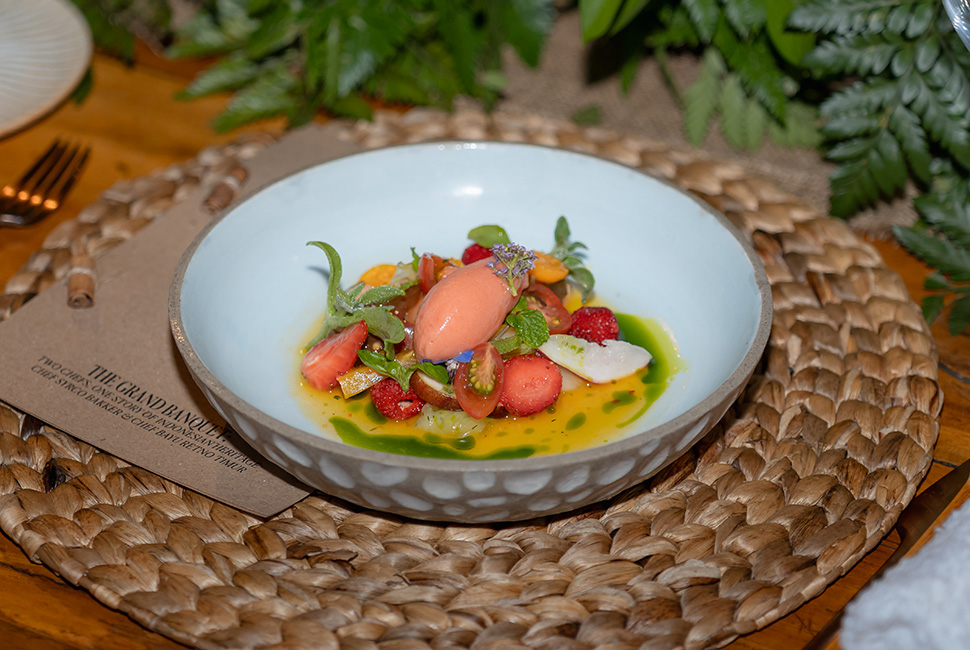
True to this year’s theme, “Across the Table,” chefs joined diners for each course to tell the stories behind every dish. At the opening-night Grand Banquet, Timur and Bakker took turns introducing Indonesia through its food.
East Java-born Timur showcased candlenut, which lent a nutty, slightly bitter note to a mud crab tartlet. His “Dutch Garden” course topped local wild berries with a passion fruit vinaigrette, heirloom tomato sorbet, basil oil and edible flowers. Timur also put his spin on rendang, brushing a tender charcoal-grilled wagyu with a rendang glaze.
Drawing on his Dutch and Indonesian roots, Bakker explored how more than three centuries of Dutch colonial rule influenced the country’s culinary heritage. He shared his grandmother’s Mendan-based naniura recipe, a ceviche that pairs hamachi with kemangi (lemon basil), and a lawar salad of grated coconut, vegetables and spiny lobster. His tuna tartare sambal pops wrapped raw fish loin and belly with flavorful sambal merah in shiso leaves.
The alfresco meal ended with Mandapa pastry chef Valerii Sadko’s klappertaart, a semicircular Indo-Dutch coconut custard tart flavored with amaretto and covered with meringue, accompanied with a scoop of raisin and fermented tamarind ice cream.
The dinner capped a day when we eased into the festivities by first stopping at the spa to unfurl our airplane-induced knots. We started with a calming, stretch-focused yin yoga class and later enjoyed a soothing Mepijet massage, a Javanese-Balinese treatment with acupressure.
Foraging and Feasting
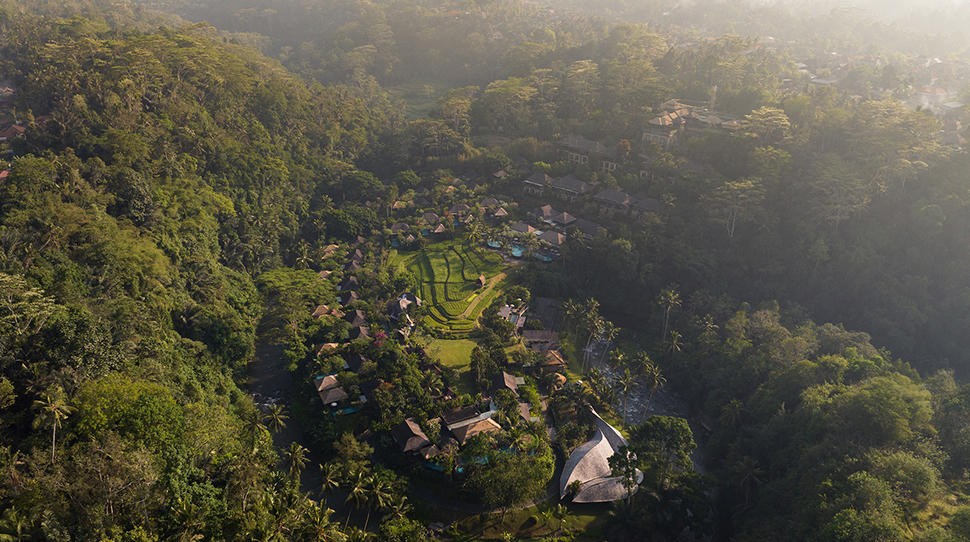
To show us where the dishes began, Eka Sunarya, executive sous chef of Mandapa’s Kubu restaurant, and Adi-San, head mixologist of the hotel’s Ambar Ubud Bar, led tours at nearby Sari Alam Garden the following day.
“This is our playground,” Sunarya said of the third-generation family-owned farm. A passionate foodie, the Bali native spoke with equal gusto about his go-to breakfast at the hotel (a shot of cold brew and sweet martabak manis pancakes) and tacos in Los Cabos.
He was an animated guide, stopping repeatedly to pluck herbs and fruit for us to taste. Swirling the electric daisy plant in our mouths set off eye-widening, numbing explosions on our tongues. We savored luscious mangosteen, and the cinnamon leaf gave a pleasant burst of flavor. The tour concluded with lunch in the jungle made from the ingredients around us.
Back at the hotel, series guests joined a water purification ritual at Mandapa’s temple. A local priest led the sacred ceremony, which Balinese perform to dispel negative thoughts or energies. It began with pranayama (yogic breathing) and moved onto canang sari (a Balinese Hindu offering to the gods of flower petals) as the priest chanted mantras. He then doused each forehead with the holy water. Next, several grains of uncooked rice — the seed of the universe — were pressed on the slick skin above and between the eyebrows to aid with spiritual growth.
That evening, Sunarya cooked the Heirloom PM: A Four Hands Dialogue of Land and Fermentation dinner at bamboo-filled Kubu. He teamed up with chef Lee Daejin of Yeoumul at JW Marriott Jeju Resort & Spa in South Korea, who drew parallels between the islands of Jeju and Bali. “People who are living in nature, they are always using nature,” Lee said.
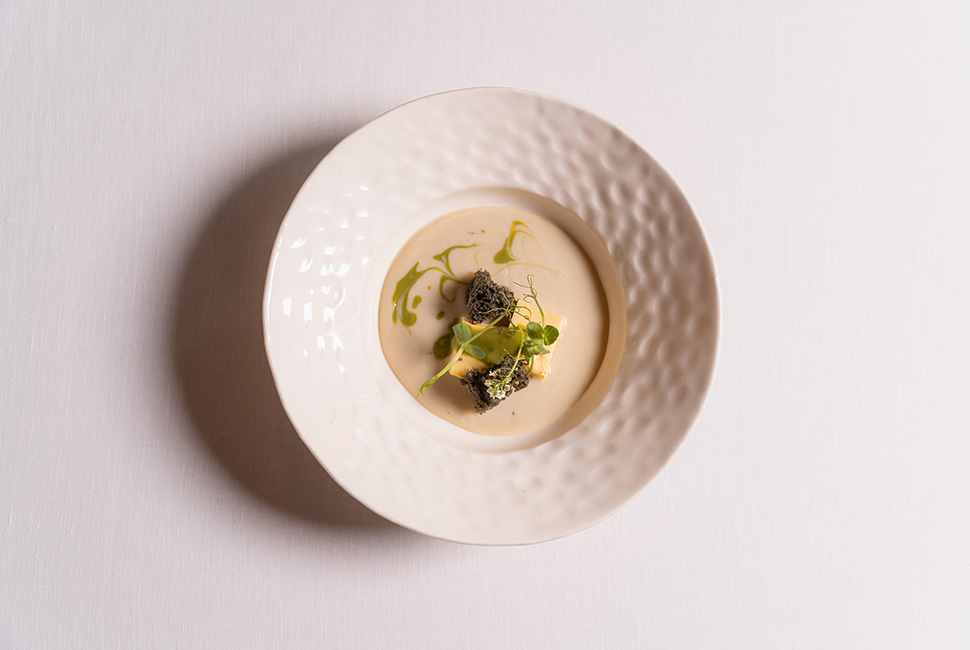
Lee used Balinese ingredients and Korean cooking techniques. A standout was the creamy, thick Tabanan duck egg custard with green bean, soy milk and basalt garlic sponge, which resembled Jeju’s volcanic stones. Another was the Baturiti heritage pig, prepared in the popular Jeju dombegogi style — he wrapped the skin-on meat in banana leaves and steamed it for six-plus hours — served atop gamjeo beombeok, a thick sweet potato porridge.
Sunarya answered with a chilled Jimbaran lobster alongside refreshing Plaga melon foam, avocado, minty marigolds and sour-salty “caviar” made of kelp garum. His braised Payangan beans were a revelation, elevating five local varieties with cashew cream, pickled mushroom, baby shallots and egg confit.
Courses also were paired with cocktails like the Tamarillo, a fruity and spicy libation mixing tomato-like tamarillo with pandan leaf and local spices.
A Balinese Finale
The final day started at Payangan market — the district’s largest — where stalls sold everything from the red, white, violet and gold flower petals used in daily spiritual offerings to salted mackerel, Kaffir limes and dragon fruit.
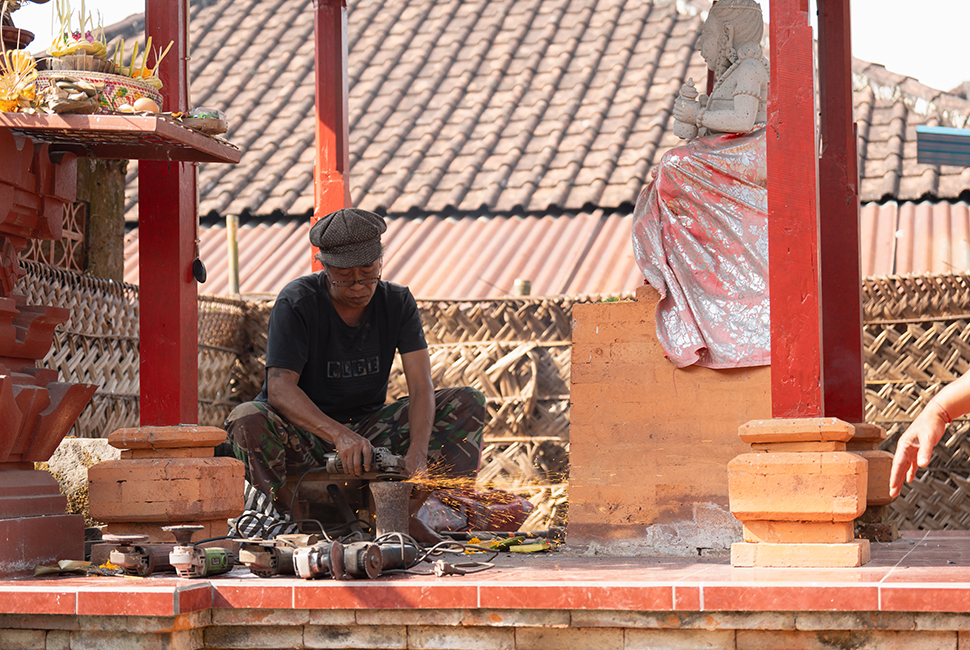
The next stop was at Pande Kumara, a family of blacksmiths in Melinggih who showed us how it hammers out knives and axes by hand, finishing them with glossy wooden handles and detailed metal accents.
Then we went to Bali Nguni, a cultural venue. Consisting of traditional Balinese houses, it serves as a restaurant and a school for Keliki painting, a style of intricate miniatures. While musicians banged on the melodic rindik (a Balinese xylophone made of bamboo tubes), we painted, learned how to create flower offerings and pitched in to make lunch.
We returned to Mandapa in time for The Tokyo EDITION, Toranomon’s Gold Bar takeover of Ambar. Gold Bar outlet manager Andrei Marcu mixed drinks like the fruity, citrusy Neo(n) Tokyo Sling, with Whitley Neill quince gin, Mancino Bianco, Claque-Pépin VS, pear syrup, tonic and yuzu foam. Open to the public, the event drew a big crowd to the popular sunset bar.
For the finale, Indonesian chefs Agung Ardiawan (of The St. Regis Bali Resort), Wira Hardiyansyah (of Nusadrasa Dapur Nusantara in East Jakarta) and Ketut Gede Sartika (of Mandapa’s Sawah Terrace, the host venue) provided a gastronomic tour of the country. During the Chefs [At The] Table: Where Indonesia’s Culinary Stories Come Alive dinner, musicians and Balinese dancers performed as the menu moved from Java (beras kencur bisque with local clams and steamed fish in turmeric leaves) to Bali (grilled Jimbaran lobster with a honey-spice glaze) to Yogyakarta (sweet and savory roasted duck). The journey returned to Java for dessert with the jenang sengkolo, a sweet rice pudding.
“This is not just food,” Hardiyansyah said about his dessert. “This is the journey of your life.”
