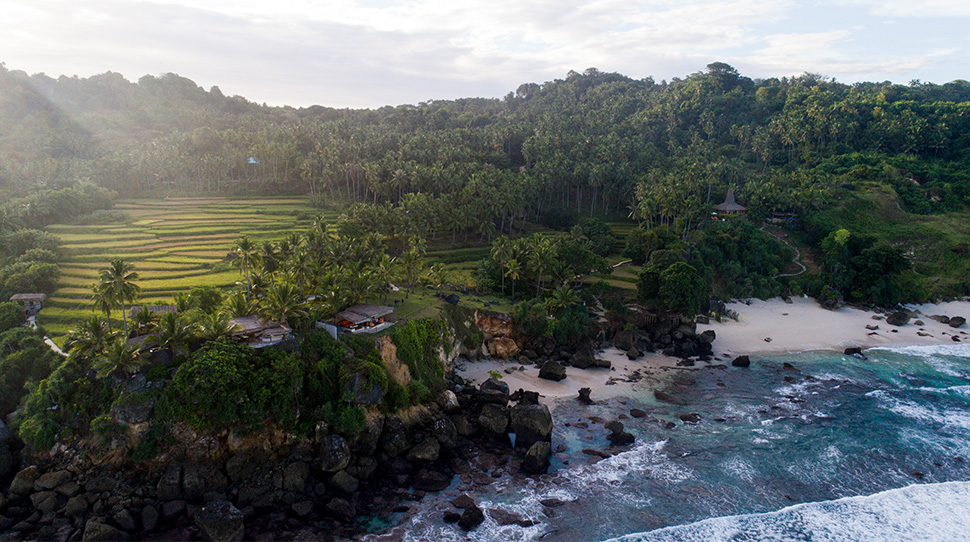
On a secluded coast of Sumba, Indonesia, there’s a tranquil 1.6-mile stretch of sand where horses gallop freely. This is NIHI Sumba, a sanctuary that feels less like a traditional hotel and more like a gateway to a lost world. Since reopening in 2015 under entrepreneur Chris Burch and CEO James McBride, NIHI has become a standard-bearer for “edge of the world” luxury, becoming the first resort honored on Forbes Travel Guide’s inaugural Edge List in 2025.
In many respects, NIHI exemplifies the Edge List, which celebrates elevated, purpose-driven properties in remote, breathtaking destinations where guests can undertake unforgettable adventures — precisely what the resort’s founders, Claude and Petra Graves, set out to create back in 1988. Originally from New Jersey, Claude first had a career in construction, working in places such as Saudi Arabia and Java. Then he ran a disco in Kenya. Surfing was always his passion, however, and Petra would join him on his wave odysseys. But as someone more interested in skiing than the water, Petra found her patience wearing thin. By 1987, both were sick of camping in what Claude has termed “surf slums,” and after falling ill in the Philippines, they decided to start something new: a resort where surfers could ride waves to their hearts’ delights but where non-surfers could enjoy themselves as well.

Over the next year, the couple researched remote locations. The two settled on a list of criteria for their dream: no tourists, excellent sand, great waves and a culture untarnished by outside influences. They landed in Sumba in 1988 and set out on an 83-mile trek along its southwestern coast with a 19th-century Dutch map, the only one they could find. But it proved accurate, and as Claude said in a 2021 live-stream on NIHI’s YouTube channel, “Being a surfer, I knew where the waves were going to be.”
The journey was rough, though. Few roads existed, and three tribal kingdoms were at war. In preparation for surviving on their own, the couple had brought a ton of supplies: spearguns, snorkeling equipment, dried food — too much to carry. Serendipitously, they met Jack Weru, the son of the king from the Wanokaka area. He helped them hire porters, but every time they reached a tribal boundary, the locals would have to turn back, and the couple would have to hire new hands.
It’s something of a miracle that NIHI eventually took root. After two-and-a-half weeks of walking, the Graveses were on the verge of giving up, but Petra suggested that they investigate one final beach — where they immediately knew they had struck gold. They returned home, packed up their belongings and six months later, they pitched their camp in the spot that would become Nihiwatu, meaning “mortar stone,” it referred to the sacred boulders on its beach (it would later be renamed NIHI Sumba). They built a bamboo hut, lived on fish that they caught each morning on the reef below and spent the next 10 years planning, securing land rights and developing relations with the Sumbanese people. They also witnessed the island’s poverty and its devastating public health problems, especially malnutrition and malaria, which both Claude and Petra contracted dozens of times. They had to do something to help.
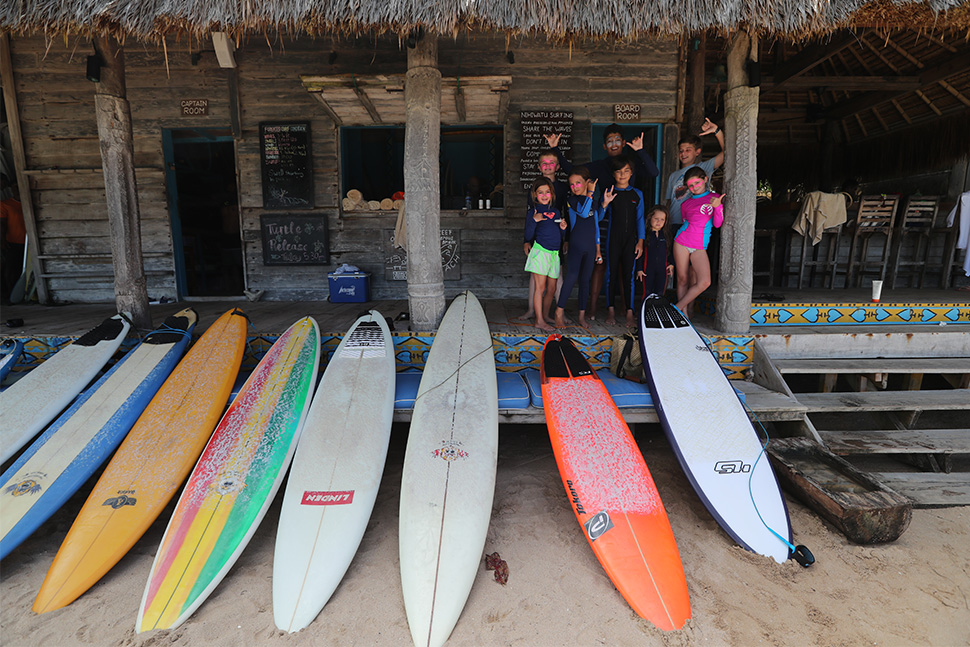
Sumba remains one of Indonesia’s poorest islands. While it’s twice the size of Bali, Sumba receives a mere fraction of the visitors, about 25,000 annually. The population is sparse, and its infrastructure is limited. Even before Nihiwatu opened in 2000, the Graveses knew that success would depend on the well-being of the local people. Then Sean Downs, an American businessman and early guest, recognized the area’s need and helped launch the Sumba Foundation in 2001. Guests began to give back, and the organization quickly established clean water programs, medical centers and schools. When Burch and McBride took ownership in 2012, they enthusiastically agreed to continue supporting the Sumba Foundation, and today its philanthropic efforts remain essential to NIHI’s character and identity.
All the while, NIHI has stayed true to its genesis as a luxury surf camp. The signature wave has become mythical, as famous for its barrels and walls as for its exclusivity. Named Occy’s Left (for Australian surf legend Mark Occhilupo, who rode it for Jack McCoy’s 1992 cult classic, The Green Iguana), the wave is private and limited to 15 riders per day. Its mechanical consistency and lack of a lineup have also made it the haunt of surf stars (including Tai “Buddha” Graham and Kelly Slater) and celebrities (like Jennifer Lawrence and David Beckham).
Land-based experiences in Sumba continue to set NIHI apart, as well. Take the Spa Safari. If you opt for the overland trek, you’ll depart at 7:20 a.m. to hike for two-plus hours on trails through rugged backcountry and pastures where horses and water buffalo graze, along the earthen borders of rice paddies, and past communities where children may run out for high fives and hearty welcomes of “Good morning!”
A few miles in, you’ll arrive at Nipa Lima, a giant “hand” built of bamboo that holds you in its palm above the jungle and ocean. Your guide will instruct you to make five wishes, one for each of the hand’s fingers, and to leave five concerns or emotional burdens behind. Sometimes, you might also hear or glimpse monkeys in the dense canopy below.
The Spa Safari partially re-enacts the Graveses’ initial trek along some of the dirt paths that they trod nearly 40 years ago. You’ll climb a stone staircase and pass through a once-fortified gate into the ancient village of Weihola to learn about the uma mbatangu, Sumba’s high-peaked, thatch-roofed homes, and peruse local handicrafts and ikat textiles for purchase. When you finally reach the Nihioka Spa, breakfast awaits in a small restaurant perched above a white-sand beach, and your wellness journey begins in earnest with fresh fruit, muesli and à la carte options — followed by two and a half hours of spa treatments.
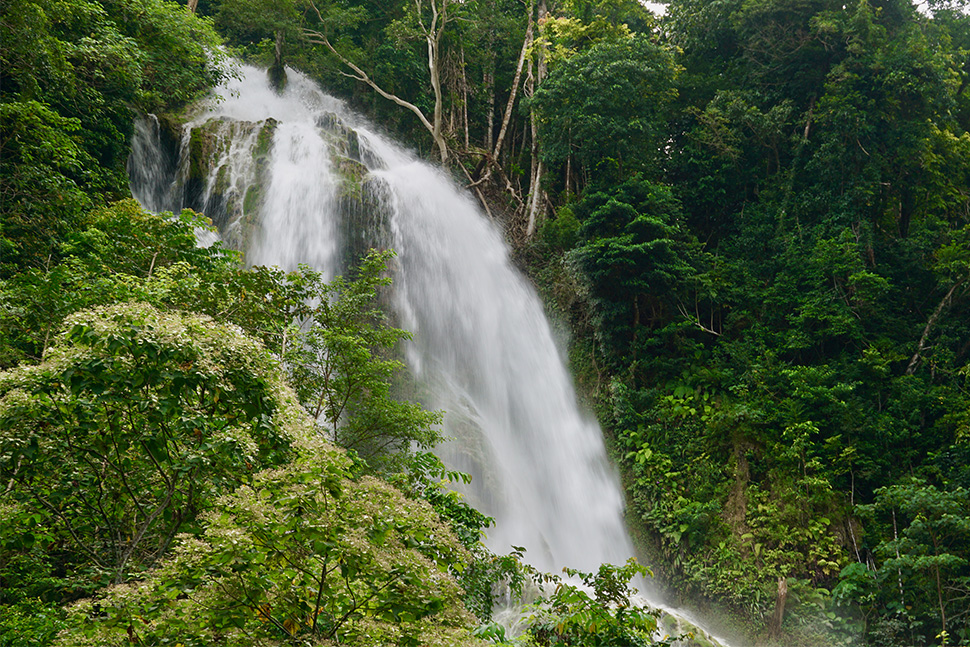
NIHI Sumba is a launchpad for other explorations, too. Looking for a longer hiking adventure? Check out the Blue Waterfall and cliff-jump into the crystal water below. A shorter alternative is a picnic and swim at Lapopu Falls — about a 40-minute drive through farms, towns and jungle — where the water cascades more than 300 feet into limestone pools. And right on NIHI’s beach, horseback riding is nothing short of iconic. You can even swim with the native sandalwood ponies.
“NIHI never started out with the idea of horses, but first there was one, and now we have 29,” general manager Sabine Lamberts says. “Everything here has happened organically.”
