At just 14 years old, Rocco Forte began working for the family business, Trusthouse Forte — then the world’s largest hospitality group. The company, founded by his father, Charles, owned a range of properties, from the legendary George V in Paris and Ritz Madrid to the Travelodge motel chain. By 1992, 51-year-old Forte ascended to chairman, only to face a hostile takeover by U.K. conglomerate Granada that forced him out of the company.
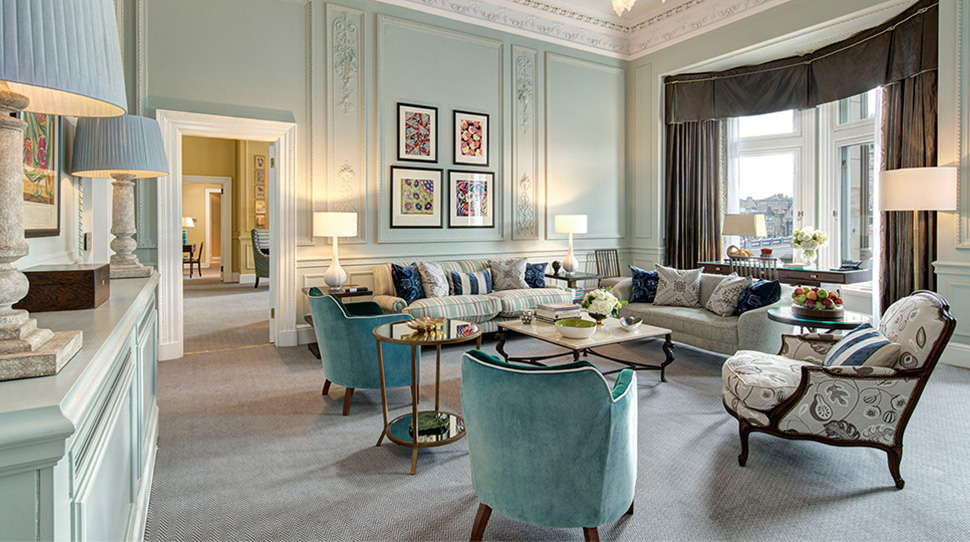
Undeterred, Forte pivoted, homing in on the luxury hospitality segment. In 1997, alongside his sister Olga Polizzi, he launched Rocco Forte Hotels, anchoring the brand with the acquisition of Edinburgh’s Five-Star landmark, The Balmoral. It has since grown to a well-curated collection of European luxury properties known for incorporating local design and hyper-tailored service.
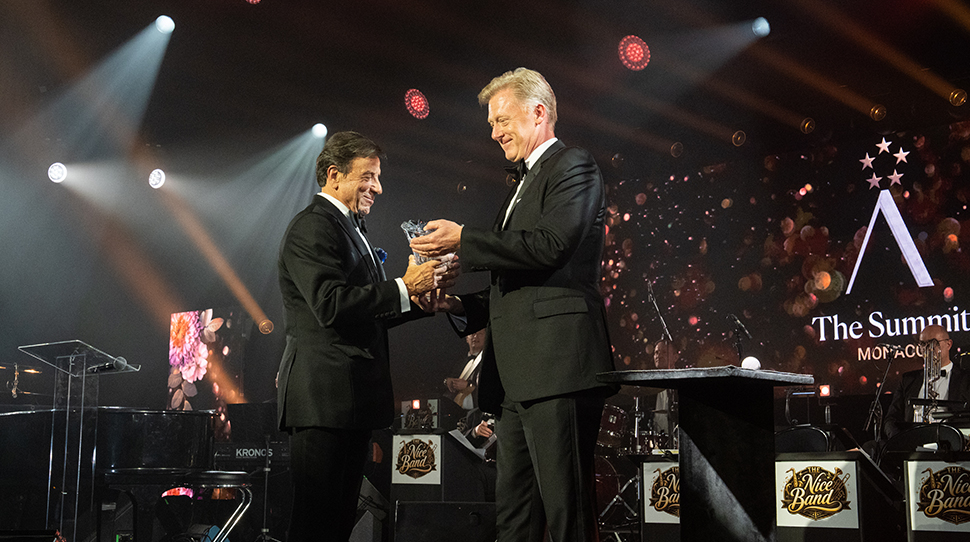
We caught up with the 81-year-old hotelier in Monaco, just before he received the Award of Excellence by Baccarat at Forbes Travel Guide’s recent Summit. He spoke candidly about the challenges he’s overcome, the work-balance myth and his ambitious plans.
What does hospitality mean to you?
The main aspect is the way you look after your customer — how you can personalize his experiences and effectively preempt his every need. It’s a continual effort to keep improving the service. You haven’t achieved a finish; there’s always something better and new you can add. Obviously, tastes and the approaches customers take change, although the underlying basics remain the same.
When people stay with you in your home, you want to make sure they have a good time and there are things for them to do which are of interest. They should go away feeling they’ve been very well looked after and had a great time. With a hotel, you’ve got a lot more guests staying at the same time, but it’s an extension of that.
What was the most important lesson you learned from your father?
My father developed a huge business, which was across the whole gamut of areas of hospitality, from budget to luxury. But I learned a lot of things from my father. Determination and not taking “no” as an answer. Finding ways around problems, because there’s always an easy answer as to why you can’t do something. Questioning everything so that you really get to the bottom of issues and find solutions people hadn’t thought of.
He had time for people. I remember someone who was down on his luck and my father trying to help him. I said, “Why do you spend all this time with this guy? He’s of no use to us.” And he said, “No, but it’s important for him.” He had a great humanity. He was very charismatic. He was very good with people.
Apart from being at the top of the organization, you’re setting an example. It’s no use writing memos and saying one thing and then doing something different yourself. People are looking at you. How you act when you go to a hotel and how you talk to the people in the hotel are very important. You have to be respected in the organization and, hopefully, liked as well. He was the founder of the business he developed, so he was a huge, towering figure.
In a much smaller way, I’ve founded a business and taken it to a certain level of success, and there’s that same aspect. It’s easy to let that go to your head. The key people I have around me are very important to me to bounce things off them and stay in touch with the grassroots — the people on the frontline — because that keeps you focused. People used to go to my father with a problem, and they came away with a solution. As a leader, that’s what you want to try to do.
What have been the biggest challenges you faced in your career?
The biggest challenges were the takeover bid of my father’s company. To come out of that is quite a feat. First of all, there was fighting it. In a sense, I was unsuccessful in dealing with it in that the company was sold. But in the U.K., a hostile bid is about creating shareholder value. It’s not about your own personal position. In the defense we put out, we were original in the way we approached the business. It’s a short process — two months — but there are certain rules you’ve got to follow. We were clever enough to force a bidder to raise his price. Once he raised his price, the institutional shareholders thought it was worthwhile to sell, and it was sold.
But the City of London was great to me. I initially tried to buy back some of the business because Granada, who bought it, weren’t into luxury hotels. I raised a billion in the city — this was in ’97, and a billion was a lot more money than it is today — to make an offer. It didn’t work out in the end because things had moved on by the time I managed to do that. That was one of the biggest moments I faced in my life.
When I came back to my office after it had been announced that the bid was successful, there was a whole panoply of journalists thrusting microphones in front of me. They said, “What are you going to do now?” The words of MacArthur in the Philippines came back to me, and I said, “I shall return.”
And then, of course, the financial crisis was difficult for us because I had a lot of debt at that time, and banks were immediately difficult. I was forced to sell a hotel in Geneva, which was sensible in relation to what I could get for it and the profits it was making. We paid a hundred million of debt, and things then picked up again quite quickly.
Then, of course, COVID was difficult because suddenly you have no income and big outgoings. We had to work hard to keep our people together and survive, which we succeeded in doing. When we were able to reopen, I didn’t have to start from scratch.
You’re making a big push in Italy with openings like The Carlton in Milan and forthcoming properties in Sicily and Naples. What is the destination’s big draw for you?
Italy is not necessarily an easy place to do business in. The fact that I’m of Italian origin and speak Italian made it easier for me. The first hotel I opened there was the Hotel de Russie, which was an immediate hit. It was the first “unstuffy,” not old-fashioned hotel in Rome in a very good location, and it just took off. That created a signature for me in Italy. Now, we’re considered one of the best, if not the best, luxury players in Italy.
Italy is the most attractive tourist destination in the world — 66% of the world’s artifacts are there. The American market, which is very important for the luxury hotel industry, loves Italy. They are prepared to pay high prices, so it’s possible to be quite profitable in Italy — more so than elsewhere in the world.
We’re looking at potential projects in Spain, Greece and Portugal. I’ve tried hard to do something in the States without success. Everything, for example, in New York is very expensive to get into. Even if you find an investor, the returns you can offer are not great. But we’ve got someone on the ground there looking. We may end up doing something in Mexico and the Caribbean first.
I have a partner now, which is the Saudi Arabian Public Investment Fund. That will give us a focus in the Middle East. We’re looking at projects in Saudi Arabia, which is a huge tourism hub that’s being created, and obviously the wider Middle East as a result. In a year’s time, you’ll see us starting to establish ourselves in that part of the world.
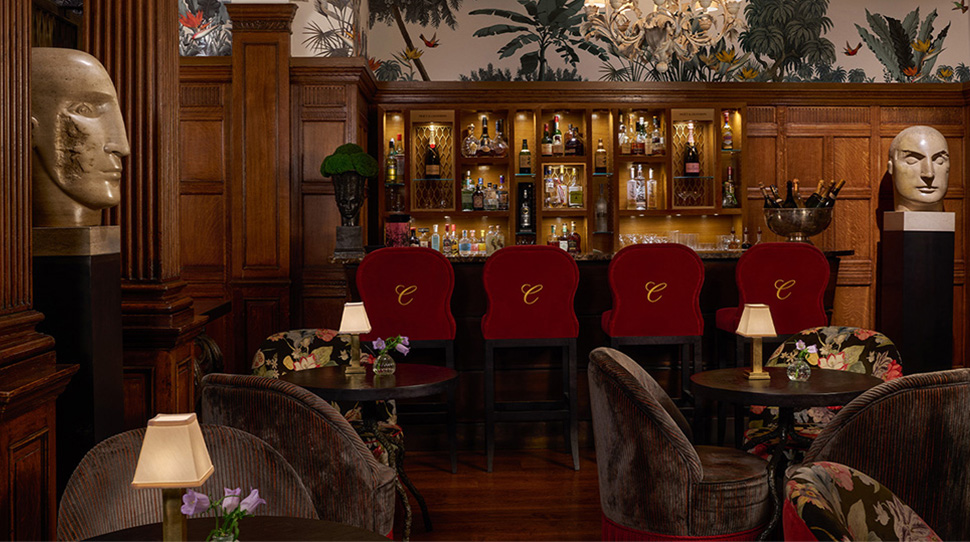
Among your properties, which one encapsulates your vision of a perfect hotel?
I don’t know if there is a perfect hotel. There’s always a feature of a hotel which renders something extra to it. The location and the building itself determine a lot of aspects of our hotels. My job is to create the right atmosphere and feeling of welcome in the hotel, wherever it is.
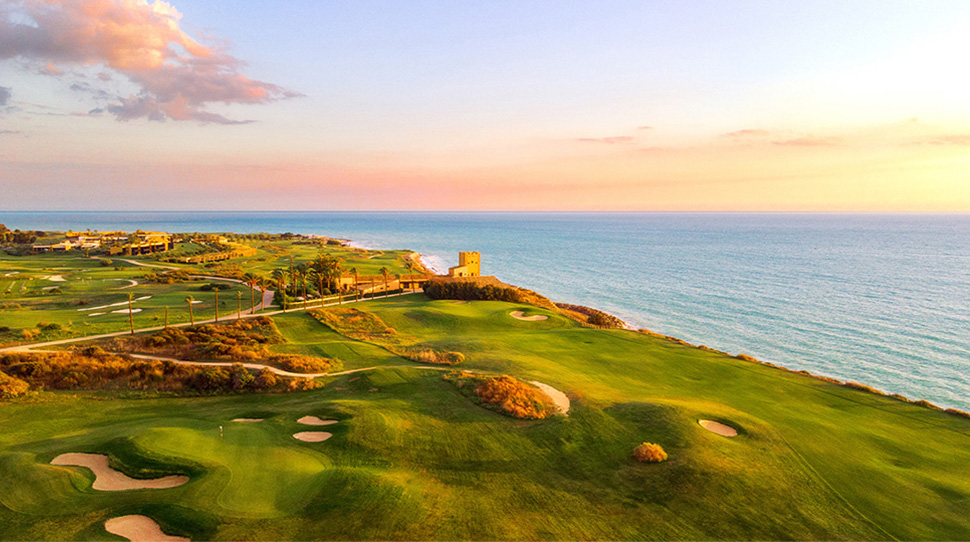
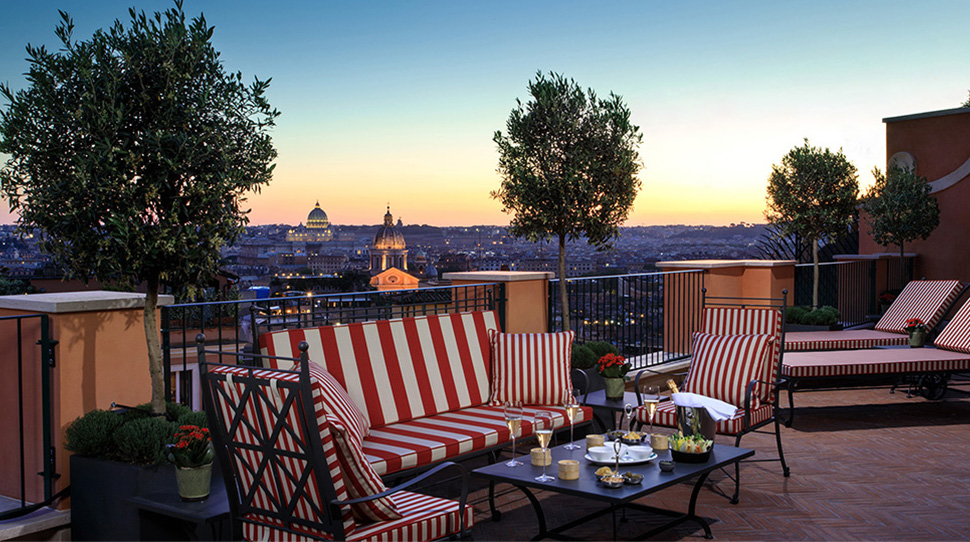
For example, in the Hotel de Russie in Rome, you have this amazing garden and courtyard, which is a big attraction. Villa Igiea in Palermo is a beautiful Sicilian Liberty building built in 1903. It’s a grand hotel and yet on a small scale. It’s got wonderful terraces leading down to the sea, and that’s got a special atmosphere because of that. Then you have Verdura, where the attraction is 550 acres — there’s a lot of space and a feeling of being with nature. Underlying it all is the same service, attention to detail and care for the customer.
What do you think are the most pressing issues hoteliers face today?
There are different issues in different countries, but generally, government interference. Government seeing the hotel industry as a cow to milk, with tourist taxes of one kind or another. That, of course, forces you to raise the price.
In the U.K., the government’s raised the social security taxes, they’re introducing a tourist tax and they’ve raised the minimum wage by 15% in two years. We employ very few people at minimum wage, but it affects differentials. It puts a cost burden on the hotel, and that’s something governments don’t see and understand. The hotel or tourism industry is undervalued because it’s not necessarily evident what it does. You open a factory with 2,000 jobs — politicians see that. But it’s lost a bit in hotels.
Verdura is an example where you see the effect of it. There was very little economy around Verdura; it was very low-ebb, there wasn’t a lot of employment. By building Verdura, we created 500 jobs and an industry around it. I was made an honorary citizen of Sciacca, which is a town nearby where most of the employees come from. The mayor said a thousand small businesses have been created on the back of Verdura. We created a whole economy and started to attract other international hoteliers to the area.
Then there’s the labor issue — difficulty finding the right people. It’s a 24-hour operation, therefore you have to work different shifts. It’s not immediately attractive. You’ve got to have a vocation for it. You enjoy giving service and making people happy. There’s a camaraderie involved in people who work together in the industry, which creates a real purpose in life. All this “work-life balance” stuff that’s going on now works against that approach. No one who’s worried about work-life balance has ever built anything in his life.
Are there any goals that you still want to achieve?
Yes. You can’t stand still. The thing I’m most proud of in my business is the culture we’ve created. That’s something I want to establish on an even firmer footing and develop further. That’s very important.
I’ve got 15 properties, but I think the scale is a bit too small. I need to get bigger but in a way that I can keep the ethos of the company as it is. I’d like to see another 15 hotels over the next five or six years.
What do you want your legacy to be?
I don’t think much about legacy. I think about what I’m going to do next. At my age, I wouldn’t be doing what I’m doing if I didn’t love the job and the excitement and interest it creates for me. There are always challenges and issues to face; it keeps me looking forward. Whilst I have the energy, it’s something I want to continue doing.
