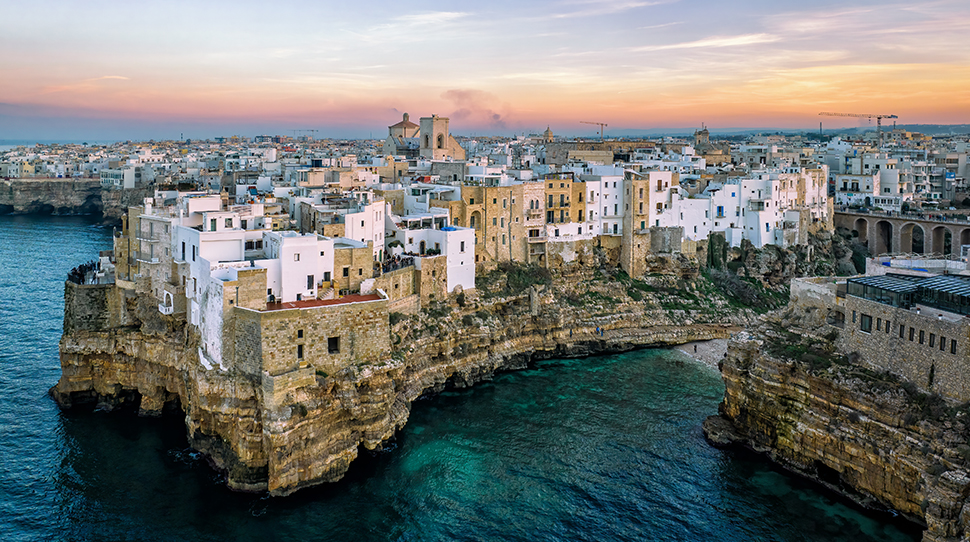
Ask most visitors what they did in Puglia and you’ll get the checklist: explored Alberobello and Ostuni, went to a beach and ate a plate of orecchiette. Ask Marianna Cardone, who oversees guest experiences and public relations at Masseria San Domenico, and she quietly rearranges the question. The heart of Puglia, she suggests, isn’t the landmarks in the Italian city but the country that runs between them.
“The most authentic experience isn’t simply seeing Alberobello, Locorotondo or the sea,” Cardone explains. “It’s allowing yourself the time to understand what exists between one place and another.”
It’s unusually good advice, and it argues for a base most itineraries overlook. Savelletri di Fasano, a small Adriatic fishing village positioned, almost improbably, at the center of everything. From here, the coast, the trulli-studded Valle d’Itria and even the Ionian Sea on Puglia’s opposite shore are within easy reach.
Though two days is enough to taste both seas from one village, the timing of your trip is key. Late spring and September are the sweet spot, with mellowed heat, fewer crowds and, by September, warm sea. If you travel in high summer, expect hot spells in July and August, but a sea breeze helps take the edge off.
Day One
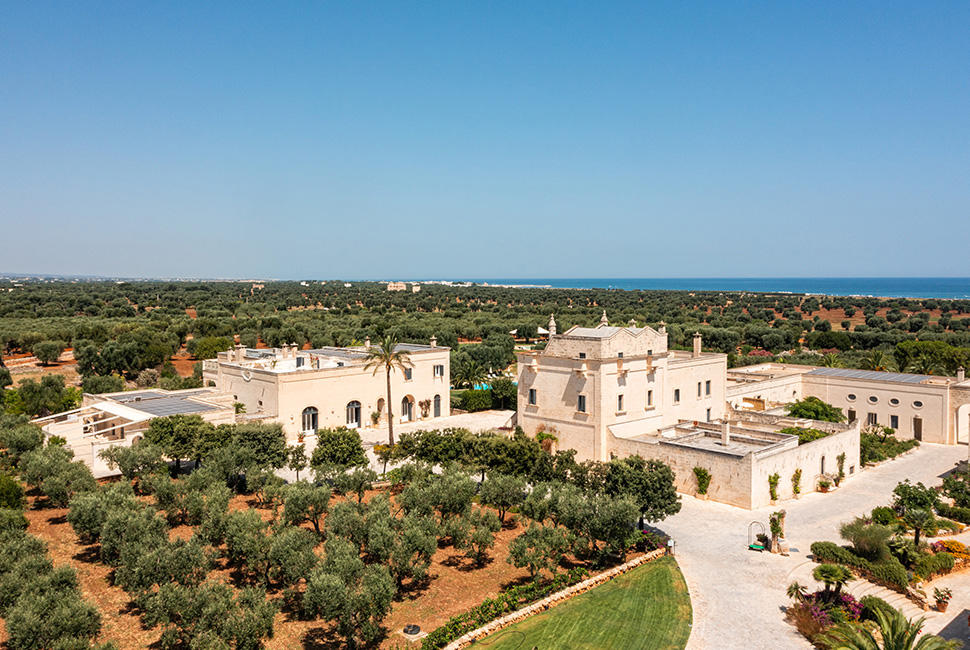
Masseria San Domenico, the Melpignano hospitality family’s 40-room estate, is the precious, film set-like property where you’ll stay. The 15th-century farmhouse began life as a Knights of Malta watchtower. Today the grounds hold a Gatsby-grade pool, a thalassotherapy spa that sends you home with olive-oil creams, tennis courts and one of the best club sandwiches in the peninsula.
The boutique hotel sits in Savelletri, a one-road seaside village that you could drive through in 90 seconds and then spend the rest of the trip wishing you had stopped. Beach clubs dot the Adriatic coast, but there’s far more history than sand. Drive a few minutes north, and you hit the archaeological park of Egnazia.
This was a Messapian city, then a Roman one. Its ancient walls still stand by the sea. Inside the park, you can see the grooves left by cart wheels on the Via Traiana. Walk the forum, the basilica and the Roman baths, then peer down into decorated Messapian tombs.
The on-site museum tells the story through some wonderful finds, including a mosaic of the Three Graces. Visit in your swimsuit and you can hit the beach immediately afterward. For the adventurous, take a deep dive to see the submerged Roman ruins.
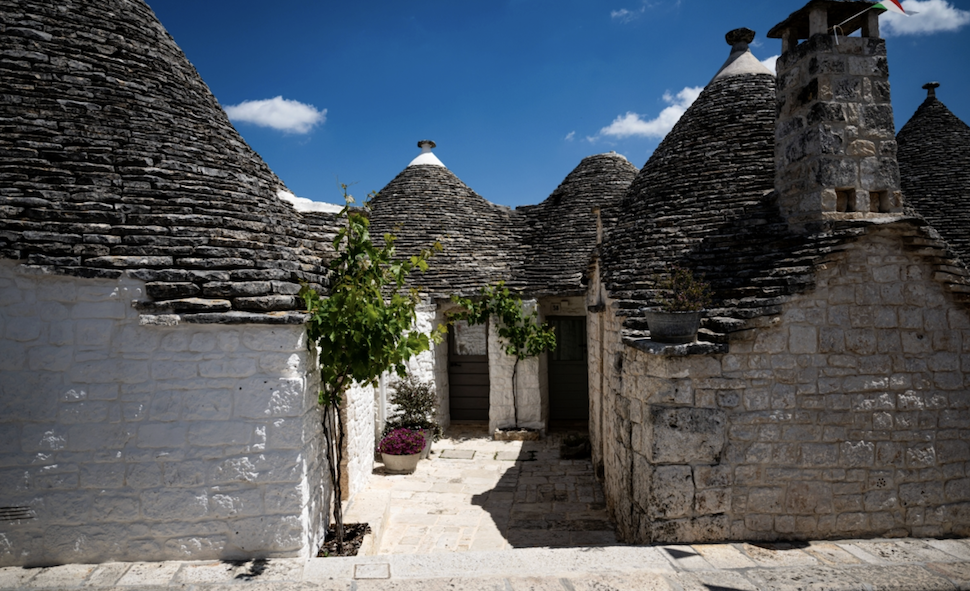
Then, in the afternoon, drive inland. The flat olive groves turn into green hills that are sprinkled with trulli (conical-roofed houses) and verdant vineyards. This is the Valle d’Itria, where you’ll find Locorotondo, home to the Cardone family winery. The historic center is lovely, but the soul, Cardone says, lives in the surrounding contrade, the rural hamlets where the countryside is “like one great, scattered garden.”
Wine is her throughline: her family has been making it for three generations. Cardone Vini is one of Puglia’s most historic wineries and is across from the Locorotondo train station. Get a glass of the local white — Verdeca and Bianco d’Alessano — before heading back to the coast. By the time you return to Savelletri, you’re ready for dinner on the water. Seafood restaurant Albachiara sits right on top of the coastline’s ancient limestone.
Day Two
Puglia’s great trick is its narrowness: in about an hour you can cross from the Adriatic clear to the Ionian. Today’s first stop is Grottaglie, the region’s ceramics capital, where the Quartiere delle Ceramiche packs more than 50 workshops into its historic center. Several branches of the Fasano family keep ateliers here, with the one behind Ceramiche Nicola Fasano counting for 18 generations of potters.
The traditional style is schizzato: earthenware flecked with lively splatters that began as a practical way to finish everyday plates and ended up as the region’s calling card. Alongside the customary pieces, plenty of studios turn out sleek contemporary pieces and one-off art, so you can leave with something rustic, something gallery-ready or one of each.
From Grottaglie, it’s about a 20-minute drive to Taranto, the “city of two seas.” Its old town sits on an island between the Mar Grande and the Mar Piccolo and connects to the mainland via the Ponte Girevole, an exceptionally photogenic swing bridge that opened in 1887, was rebuilt in 1958 and still pivots.
Stroll the winding old town, look for the Doric columns from an ancient Greek temple, a reminder of the city’s earliest settlers, and then explore the Castello Aragonese. Cross back to the mainland and go to the Museo Archeologico Nazionale di Taranto, the national archaeological museum. Its “Ori di Taranto”is a collection of beautifully intricate Hellenistic gold filigree jewelry from the fourth to second century B.C. You also don’t want to miss the Zeus of Ugento, an Archaic bronze statue caught mid-wind-up. The thunderbolt Zeus once held is lost, but he still looks ready to smite.
When you get hungry, make your way to Piazza Garibaldi for sweet treats like tette delle monache (dome-shaped, soft sponge filled with pastry cream) and pasticciotti leccesi (crumbly shortcrust pastries stuffed with thick custard) with a caffè leccesi (espresso poured over ice with almond syrup) to wash them down. Properly wired from noshing, you’re ready for the hour-long drive back to Savelletri.
