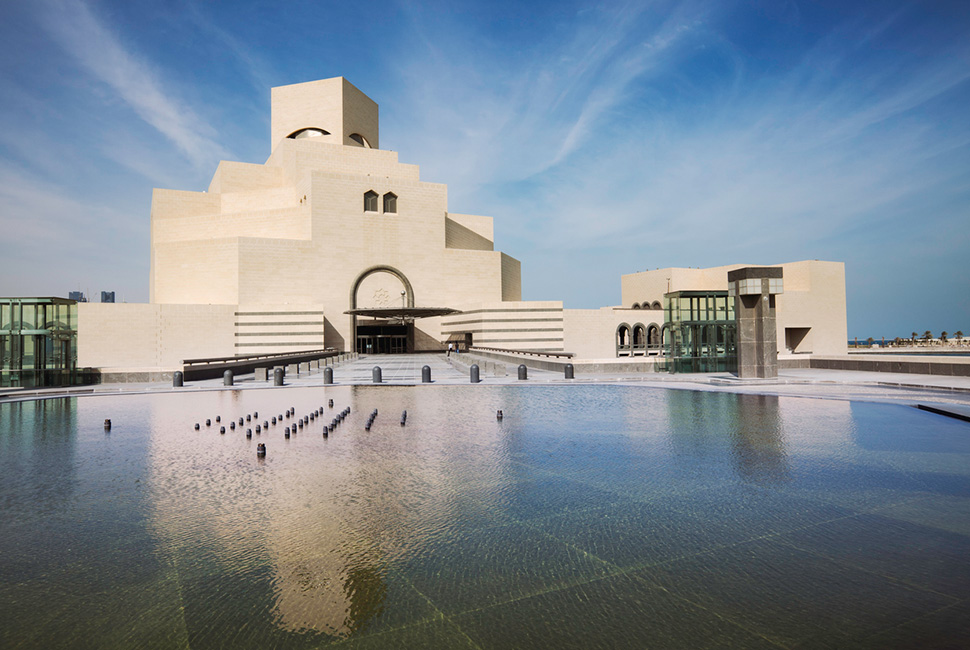
At the intersection between the Middle East and Asia, Qatar has long been a melting pot of cultures. That tradition continues in its internationally acclaimed museums, heritage sites, public art spaces, cultural attractions and major global events.
The bedrock of Qatar’s cultural capital is the striking Museum of Islamic Art designed by the late Pritzker Prize-winning architect I.M. Pei, who came out of retirement for the project. It houses a collection of Islamic art — one of the most comprehensive in the world — spanning 1,400 years. Free guided tours of the permanent collection are available weekly in English and Arabic. Among its most famous pieces are two folios from the 1,000-year-old Abbasid Blue Qur’an, considered one of the finest and rarest manuscripts in the Islamic world. Visitors can also see rotating special exhibitions.
Across the Corniche is the equally impressive National Museum of Qatar, which traces the peninsula’s history from prehistoric times to the diverse, modern country you see today. The building, which seems to be made of precariously stacked discs, is shaped like a desert rose, the flower-like crystals that form naturally in Qatar’s arid areas. At the museum’s center stands the restored original palace of Sheikh Abdullah bin Jassim Al Thani. Among the exhibits is the stunning Pearl Carpet of Baroda, encrusted with roughly 1.5 million natural Gulf pearls and gemstones.
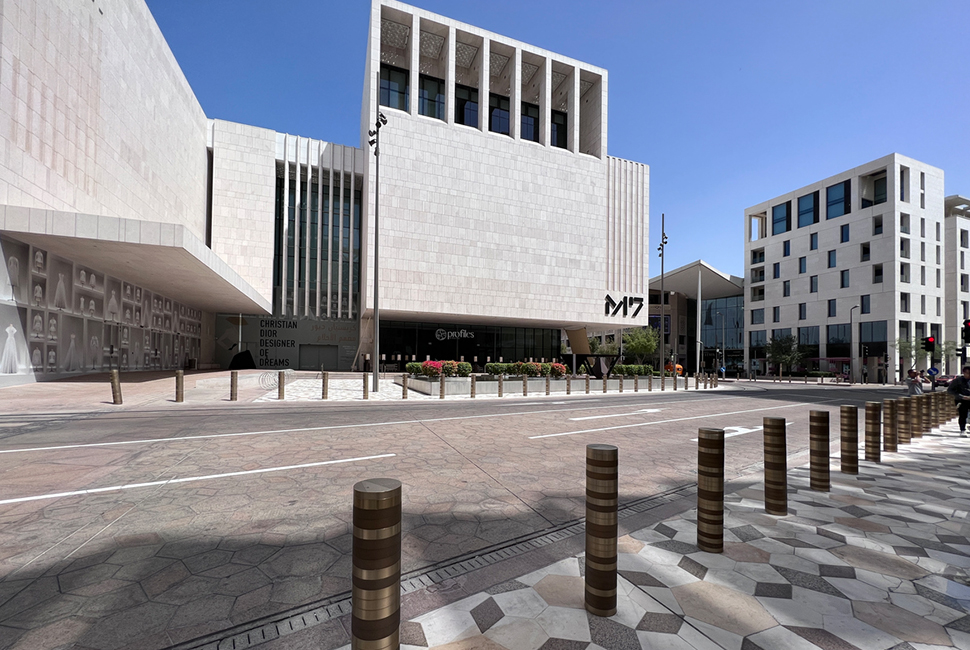
Inland, the narrative shifts from ancient history to contemporary design in Msheireb. Here, M7 — billed as a startup hub for local fashion, design and tech entrepreneurs — also hosts some of the country’s most crowd-pleasing displays. On view until December 26, “Around the World in Jewellery” features more than 500 pieces from different cultures and periods. Alongside it, “ERDEM: About Time, About Her” is a retrospective celebrating 20 years of designer Erdem Moralıoğlu, bringing together more than 150 garments, sketches, personal ephemera and atelier materials shown alongside paintings, sculptures and decorative arts from the Museum of Islamic Art.
Steps away within the Doha Design District, the newly debuted MIHAD adds an exciting contemporary art and design gallery to Msheireb’s historic center. Its opening program includes three exhibitions by Qatari, regional and international artists and designers.
Over in the Education City precinct, a 20-minute taxi ride away, you will discover two of Qatar’s most distinctive cultural experiences. Mathaf Arab Museum of Modern Art offers a contemporary Arab perspective on modern art. Visitors are greeted by imposing monochromatic portraits of Sheikha Moza bint Nasser, the late Father Amir Sheikh Hamad bin Khalifa Al Thani and the Amir Sheikh Tamim bin Hamad Al Thani, all by Chinese painter Yan Pei-Ming. The permanent collection holds more than 9,000 works by notable Arab artists dating from the 1840s to the present day.
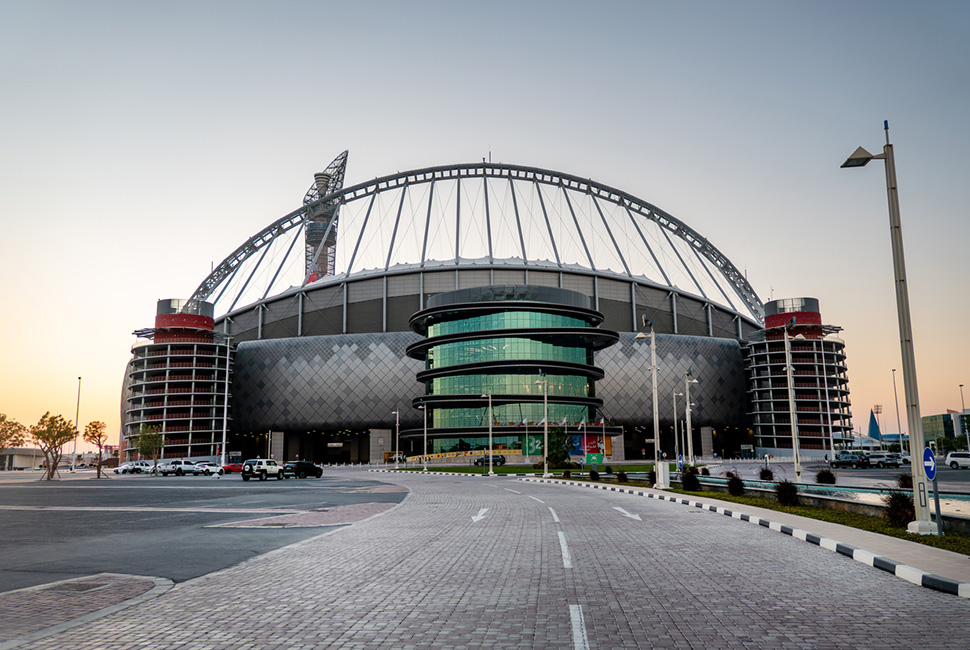
Also in Education City is Lawh Wa Qalam, which highlights the work of legendary Indian artist Maqbool Fida (MF) Husain. The building is based on a sketch by the artist himself and it contains more than 150 paintings, sculptures, films, tapestries and photos, even his passport. A companion exhibit, “Seeroo fi al ardh,” is Husain’s final project, presented as a 20-minute show that examines the progress of humanity on land, in air and at sea.
Culture in Doha extends well beyond gallery walls. A short drive from the Corniche, the 3-2-1 Qatar Olympic and Sports Museum celebrates another national passion in a country that famously hosted the FIFA World Cup in 2022. As the name suggests, it’s dedicated to sports and the Olympic Games. At its heart is The Hall of Athletes, a multi-floor gallery honoring 90 global sports icons and legends, including Muhammad Ali, Pelé, Lionel Messi and Kylian Mbappé, through personal memorabilia like signed gloves and jerseys.
But you don’t need a museum ticket to experience Qatar’s art scene. Monumental public installations pepper the country, from Gekröse, a striking pink aluminium sculpture by Austrian sculptor Franz West on the Doha Corniche, to Pouce, French artist César Baldaccini’s iconic giant thumb marking a crossroads in the tourist magnet Souq Waqif. Outside Doha, American artist Richard Serra’s astonishing East-West/West-East rises from the desert landscape.
While those institutions anchor Doha’s year-round appeal, the city’s cultural calendar particularly fills up between November and May, when cooler temperatures usher in a slate of international festivals and events.
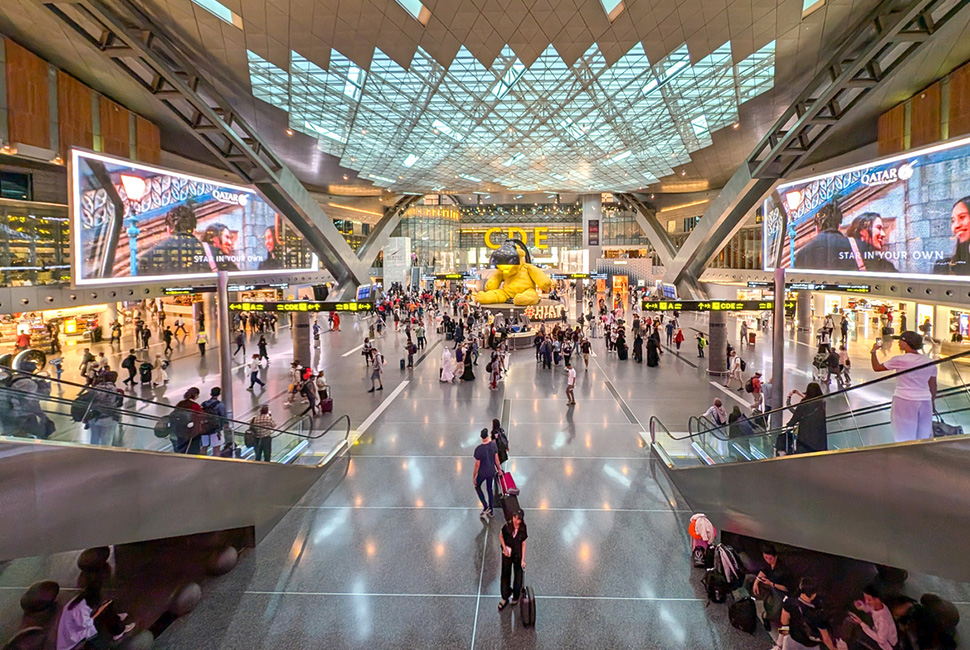
The Design Doha Biennial, which runs until January 31, 2027, is Qatar’s bid to establish itself as a design capital. Now in its second edition, the Biennial brings together artists, designers and more from the Arab world, the wider Middle East, North Africa and South Asia (MENASA). Most of the Biennial is held in the “living heritage” area of Fereej Al Asmakh, one of Doha’s oldest neighborhoods. Fereej Al Asmakh alone is worth a couple of hours of wandering, but it’s where more than 60 historic houses have been opened up for Biennial exhibits, pop-ups and other events. The Biennial also features five public design commissions and 20 exhibitions from more than 20 countries, including the headline show, Arab Design Now 2026, at Msheireb Downtown Doha.
Cinema steals the spotlight during the Doha Film Festival, running through November 27. The festival curates an engaging program of features, shorts and documentaries from Qatar and beyond, including new releases and cherished classics. Screenings are held at venues such as Katara, the city’s “cultural village,” and the Museum of Islamic Art. The festival opened with The Station, about a women-only petrol station in Yemen. DFF Music runs in parallel, alongside a series of talks and panels with industry experts and directors.
Even travelers on a layover can tap into film festival programming at Hamad International Airport, where the Made in Qatar Screening Room in Concourse D is showing shorts by Qatari-based filmmakers until December 27.
The cultural season reaches its peak from January 28 to 30, 2027, when Art Basel Qatar returns to Msheireb Downtown Doha with 80 new single-artist presentations by 82 galleries spanning 37 countries and territories. Art Basel made its Middle East debut in Doha this year, and for the second edition, expect half of the featured artists to hail from the MENASA region, including Ibrahim El-Salahi, Monir Shahroudy Farmanfarmaian and Hassan Hajjaj.
