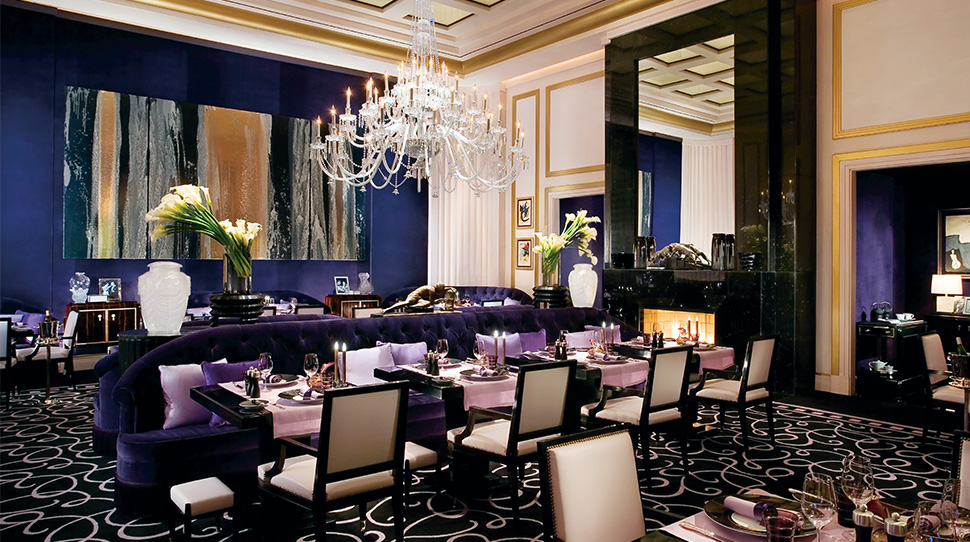
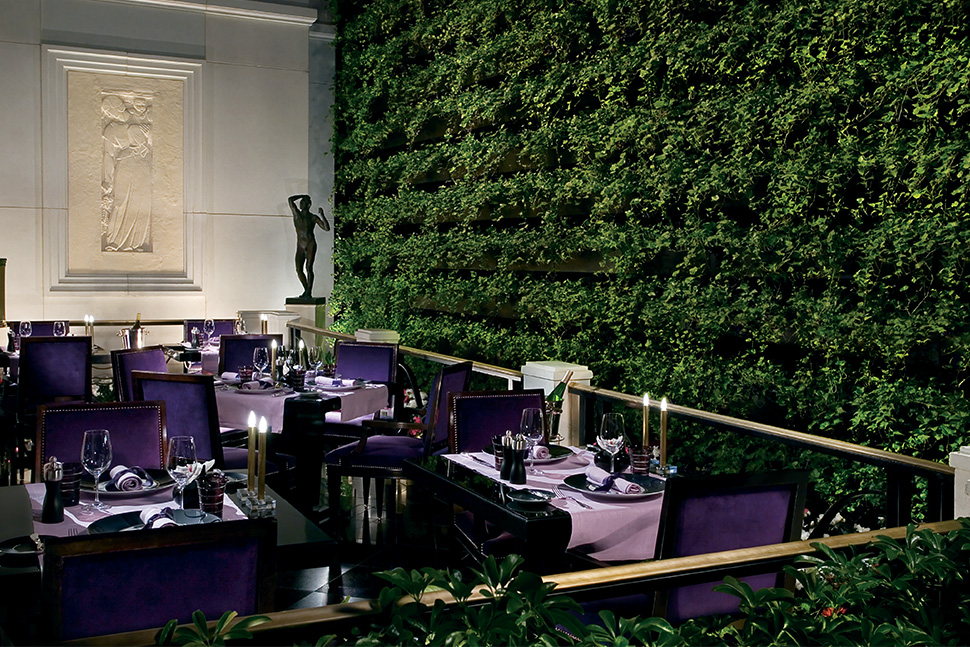
Dining at Joël Robuchon, an MGM Grand Las Vegas restaurant that celebrates its 20th anniversary this year, feels like stepping into a fairy tale. The art deco townhouse, cloaked in the deepest royal purple, glows beneath a cascading chandelier, while Lalique vases, immaculate linens and polished service set an unmistakably elegant tone.
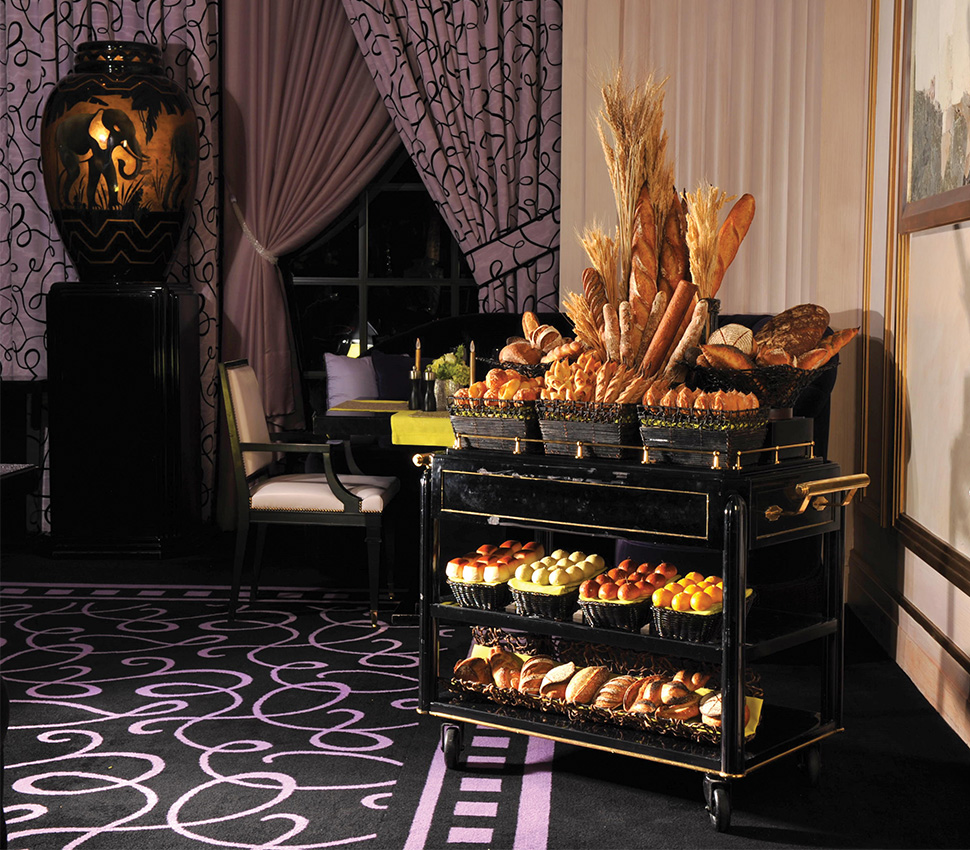
Carts glide through the room, lavishly stocked with artful breads, perfect wheels of cheese and jewel-like desserts. Each plate on the seasonally constructed menu follows a cinematic narrative in both presentation and flavor profile, defined by the simplicity and beauty that is distinctly Robuchon.
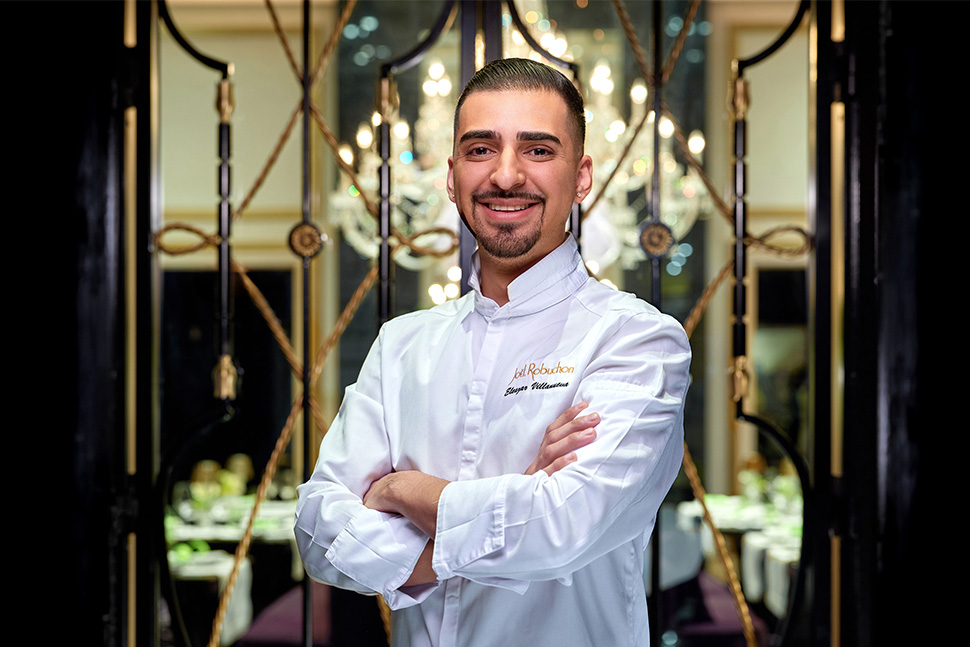
Behind the curtain, executive chef Eleazar Villanueva, entrusted with the keys to the castle since 2023, works tirelessly to honor the legacy of one of the world’s most influential chefs, Joël Robuchon, who died in 2018, re-creating beloved dishes while evolving the menu to stay competitive in Las Vegas’ fine-dining landscape.
For Villanueva, walking into the kitchen of the Forbes Travel Guide Five-Star restaurant also feels like a dream. He has been part of the team for nearly 10 years, ascending steadily through the ranks.
“It has been quite a journey,” he says. “I started off not wanting to work here.”
In 2015, Villanueva was a master cook at Five-Star Le Cirque Las Vegas, having discovered his passion for a culinary career as a student at East Career and Technical Academy in Las Vegas and later at the College of Southern Nevada. One of the chefs he worked with at Le Cirque was pushing him to take the next step.
“I visited Robuchon for the day, intending not to take a job,” Villanueva says. “I just wanted to see what it was all about. And sure enough, when I was done, the chef came up to me and said, ‘Hey, we have a position open, do you want it?’ And I said yes right away.”
Immediately impressed by the pedigree of those who worked there — from restaurants such as Five-Star Le Bernardin, Forbes Travel Guide Recommended Bouchon and other Robuchon locations worldwide — Villanueva became a sponge, absorbing everything from everyone.
“The menu changes so often that you’re never doing the same thing,” he says. “You’re in a constant state of learning.”
After joining as a cook, the role of sous chef followed within three months. A week later, the corporate Robuchon team visited.
“That was maybe one of the most stressful times of my life,” he confesses. “After a whole week with them, you go through your notes and try to transcribe those into recipes. I learned so much. They would come in and say, ‘Grab me this,’ ‘Grab me that, this protein, three or four vegetables, that wine.’ And they would just start making recipes and weighing everything out. But they wouldn’t write anything down.”
Mentored by Robuchon and his team, and through extensive research and development, Villanueva began mastering the art of French cuisine while upholding Robuchon’s core tenets of excellence, simplicity and consistency.
“I remember chef Robuchon walking in for the first time, and it’s like seeing your idol,” Villanueva recalls. “He would come in and say hi to every single person inside the kitchen, and if he were leaving, he would say goodbye to every single person inside the kitchen, too.”
In May 2022, Villanueva was appointed executive sous chef under the leadership of executive chef Christophe De Lellis. Following De Lellis’ departure, he assumed the role of executive chef.
Villanueva’s first order of business was restructuring the kitchen and bringing back many of the classics so that the entire team could be trained on a shared foundation.
“These classical dishes are very intricate and very sauce-oriented — they sometimes take three to four days to make. When we come up with a new recipe, or when we [research and develop] an old one, we try it six, seven, eight times, and once we get it right, we pass it down to our sous chefs, and then the sous chefs train the cooks,” Villanueva says, describing the French brigade kitchen system. “I made sure everyone was building a good foundation with their stocks, their sauces, the jus, the breaking down of the proteins.”
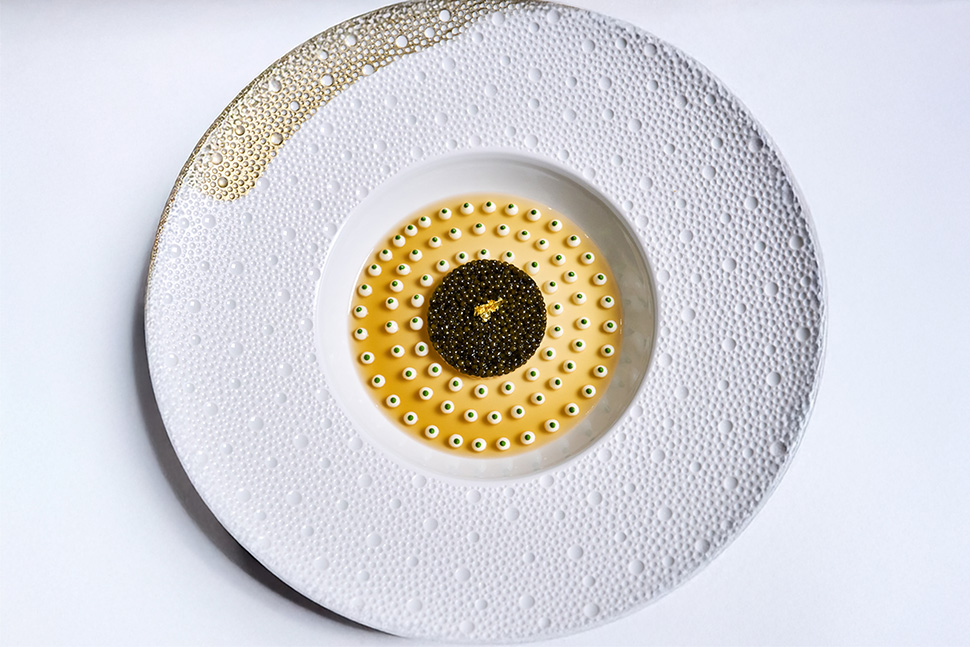
At the top of the list was Le Caviar Impérial, a dish where Ossetra caviar is served atop crab in a crustacean gelée dotted with cauliflower purée. “It is one of the most complicated we have,” he says.
Another priority was sourcing the freshest ingredients possible, including new proteins and fish.
In honor of the restaurant’s 20th anniversary in October, Villanueva re-created the 16-course degustation menu chef Robuchon prepared on opening night in 2005, reaching out to former team members to ensure every item was executed precisely as initially cooked, plated and presented.
One that proved especially challenging was La Tomate, fresh tomato and king crab with a verjus coulis. No matter how many times the team made it, the dish was missing something.
“I ended up reaching out to one of the former chefs and asked [for help],” he says. “These recipes are not very easy to replicate, and they shouldn’t be.”
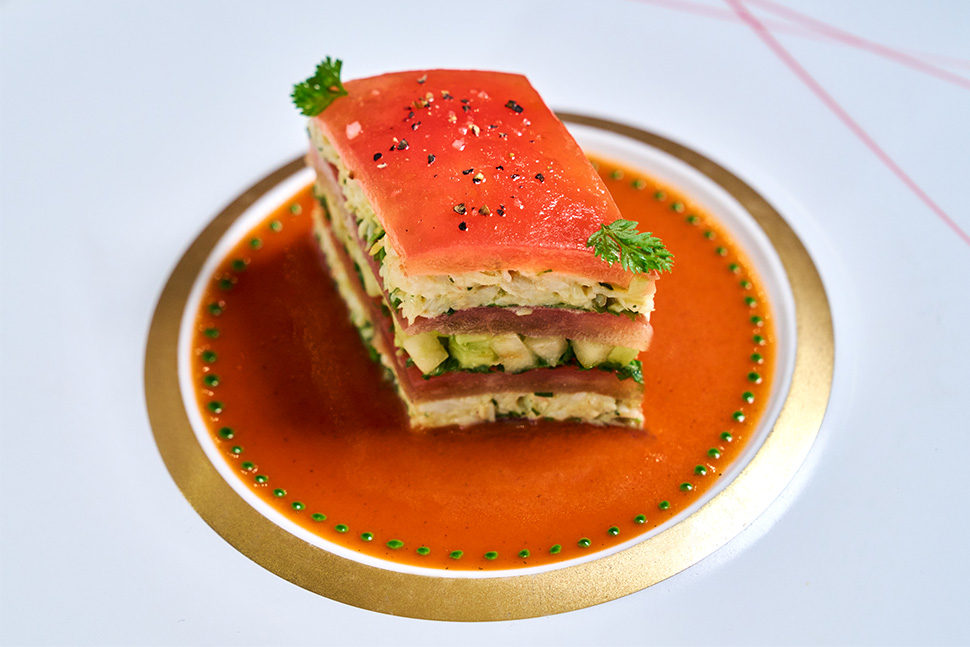
But the team managed to pull it off. “We actually had a few people come in who have been with us since opening day, and they said it was exactly as they remembered it,” he says.
Another standout is le chevreuil d’Écosse, walnut-roasted Scottish venison with black truffle and a sweet-and-sour sauce — a classical preparation with a progressive twist.
“It starts with venison bones, roasting them and soaking them in red wine for about three days,” he says. “We took that recipe, and we added two different kinds of wines. We cut it with some beef bones as well and added a port reduction.”
The cooking method also had to change to accommodate increased demand in the dining room.
“When this restaurant first opened, they were doing about 15 covers, 20 covers at most,” he says. “And now we’re doing about 60, 70 a night, and we’re having about 40 tasting menus a night. We need to find methods that are going to be consistent at this level.”
Villanueva studies Robuchon cookbooks from throughout the years and says he has noticed how everything continues to evolve. “A dish you plated in 2000 is not going to look the same in 2025,” he says.
That evolution, he explains, demands an even sharper adherence to structure. “There are strict rules for how dishes should be composed,” ensuring that every element serves a purpose. “You can’t have things that don’t make sense on a plate. If you’re going to use a radish, make sure it is used in maybe three or four different ways. You don’t have 20 different flavors. You need to know what you’re eating. You look at it, you’re eating venison. You need to taste venison.”
That same philosophy extends to sourcing. “We take months to find quality spices from all parts of the world,” he says. “These small things do matter.”
Those details ultimately shape how a menu comes together — and how it performs over time.
“We look at all these things: consistency, quality of ingredients,” he says. “We don’t want you to come in at the beginning of the season and then at the end of the season and not get the same menu, or the potatoes not taste the same, the bok choy, the green asparagus, the snap peas not be the same.”
Each dish is then evaluated not just on its own, but in relation to the larger arc of the meal.
“Does this make sense?” Villanueva says. “Is it too much food? Too light, too heavy? Is this too early at the beginning of the meal? Can we move it forward?”
Ultimately, that constant calibration serves a single goal: preserving the unmistakable identity of Robuchon.
“We’re able to create anything we want, but when the guest sees and tastes the dish, they should identify it as Robuchon food,” he says.
“I hold myself accountable, too, because it’s easy to step into a role like this and say we’re going to change it,” Villanueva says. “I started working here because it’s Robuchon’s food, and I wanted to learn the Robuchon way and what Robuchon was all about. And now that I’m here, I want to be able to show people — especially those who have not eaten here — and [ensure] the Robuchon legacy lives on.”
