It’s 8:45 a.m. in Mexico’s Riviera Maya, an area where Indigenous peoples worshipped the sun, but we’re shivering in primordial darkness, half-submerged.
We’re some 20 feet below ground, exploring tunnels that connect to cenotes (sinkholes) within the Yucatan Peninsula’s limestone aquifer. There’s not even a glimmer of light, and we can’t see our hands even when we wave them in front of our eyes.
The quiet is so consuming that tiny water droplets sound like the plucked tines of a thumb piano. We saw fish earlier, in a cavern with sunlight, but it’s hard to imagine how anything besides bats can live down here. One of our guides switches his headlamp back on, and the subterranean chamber snaps into sparkling focus. He scoops something from the water, a wriggling cave shrimp. It’s blind, he tells us.
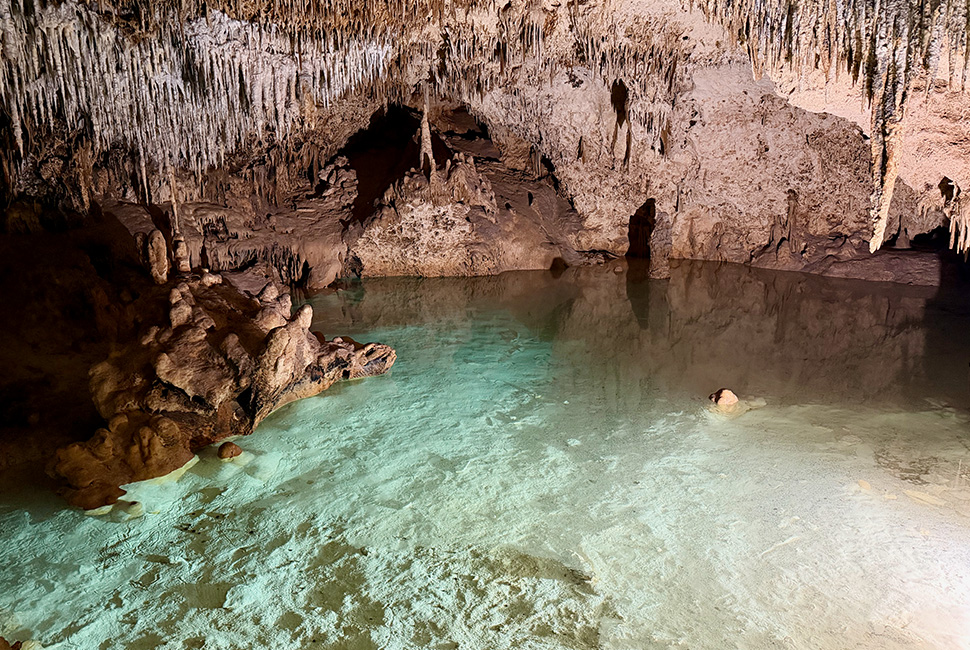
We’re the only guests on this morning’s Xpeleo (“speleology” is the study of caves) tour at Xplor, one of six theme parks run by Xcaret, the resort complex often described as “the Mexican Disney.” This isn’t just any tour, either. It begins more than an hour before the park opens to the public, and it’s restricted to guests at the Forbes Travel Guide Five-Star La Casa de la Playa, the most intimate of Xcaret’s three hotels. The experience is a perk for the hotel’s VIPs. The guides said only nine visitors are allowed each day, and they prove the significance of that small number by showing us broken stalactites, explaining that a single human touch can damage them.
Following our private tour, we emerge into the bustling park, where large groups of people pick up helmets and water shoes for the day’s adventures. Xplor bills itself as the world’s most-visited zipline park and boasts two seven-line circuits. We join day trippers and hotel guests to climb towers and wait in line before stepping into the void and flying at hair-raising speeds above the forest below. The final leg of the circuit drops us in the water of another cenote, a spectacular contrast to the Xpeleo tour. Neither activity is better than the other, and we later realize our experiences at Xplor mirror La Casa de la Playa’s role as the smaller, quieter piece of the larger resort.
Hotel Xcaret Arte and Hotel Xcaret México, the complex’s two Four-Star properties, run on an “All-Fun Inclusive” concept. Guests at La Casa de la Playa can also use their restaurants and activities. Key bracelets serve as passports, and only our red-colored ones, which signal our status, grant entry to La Casa de la Playa.
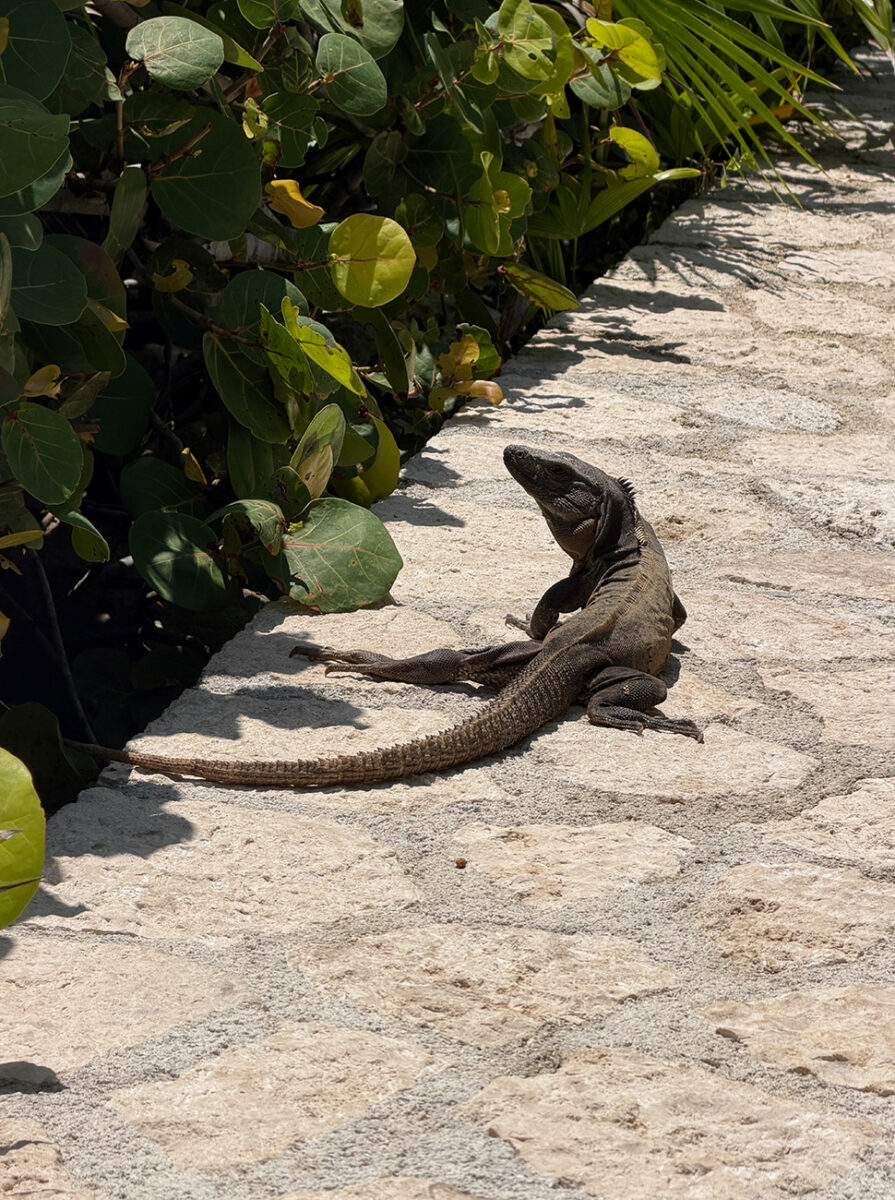
If you fancy lunching at a buzzy surf-and-turf buffet, waltz into Xcaret Arte, find your way to Cayuco, flash your bracelet and load up on freshly shucked oysters, fish tacos or grilled chicken dusted with Tajín seasoning. Sit next to the pool and join the party scene, where guests drink margaritas at the swim-up bar. Afterward, a short walk along Arte’s interior beach grotto leads back to a gate, where you leave that boisterous world behind and return to the sanctuary of your “home.” Look closely near the rocks and bushes along the way, and you’ll spot black spiny-tailed toloc iguanas.
Forty-plus years ago, Xcaret was undeveloped land with a cenote where people could pay five pesos to swim. Then in 1984, Mexico City furniture retailer Miguel Quintana Pali visited Cancun at the behest of a supplier who needed an introduction to a former classmate of his, Román Rivera Torres. They met and closed the deal. Afterward, Rivera Torres offered to trade some land for more furniture. After looking at a few lots, Quintana Pali settled on Xcaret. In his memoir, Xueños, he recalls how Rivera Torres was surprised since there were only rocks there. “I told him it had a mystic feel to it that I could not describe, something that I had always liked,” he wrote.
Initially, Quintana Pali planned to build a dream home, but as he cleared his new property, he unearthed more natural features, caverns and Mayan ruins. He concluded that he could not convert the land into a private residence. “The project had to be open to the public; it would be wrong and a misuse of the land’s unique features to build only houses,” he wrote. “And so, the idea of building a park was born.”
His mother was Hawaiian, and Quintana Pali fondly remembered a park in her home state, the Polynesian Cultural Center on Oahu. He decided to build something similar, a destination to celebrate the nature, heritage and flavors of Mexico. He partnered with the Constandse brothers, who owned 148 abutting acres, and they opened Xcaret Park in 1990. The following year, he sold off his other stores. “There was no turning back,” he wrote. Hotel Xcaret México opened in 2017 with 900 rooms, evolving the park into a full-fledged resort. Hotel Xcaret Arte followed in July of 2021 and La Casa de la Playa that December.
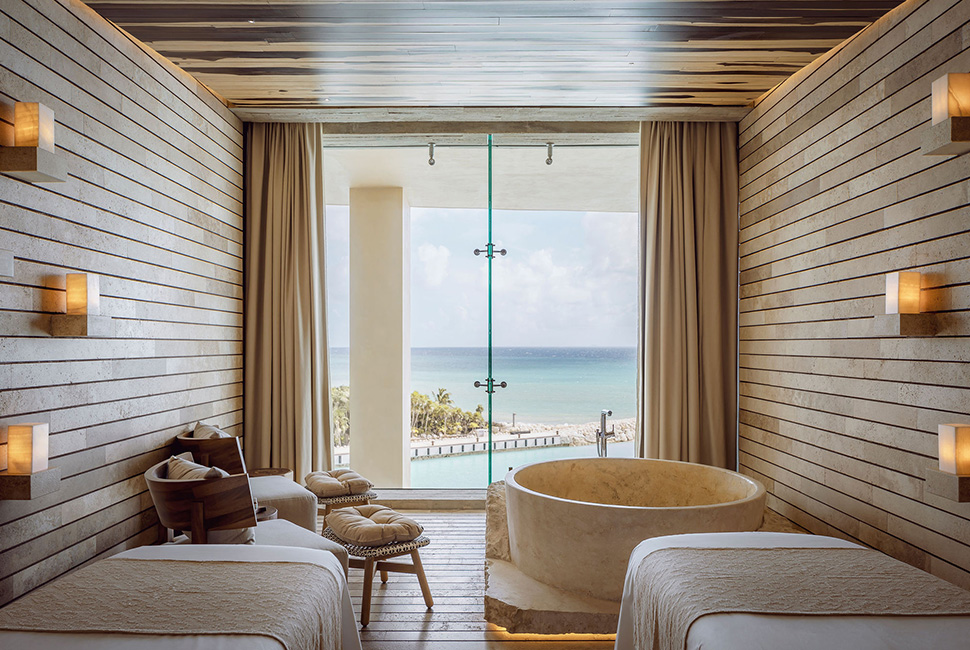
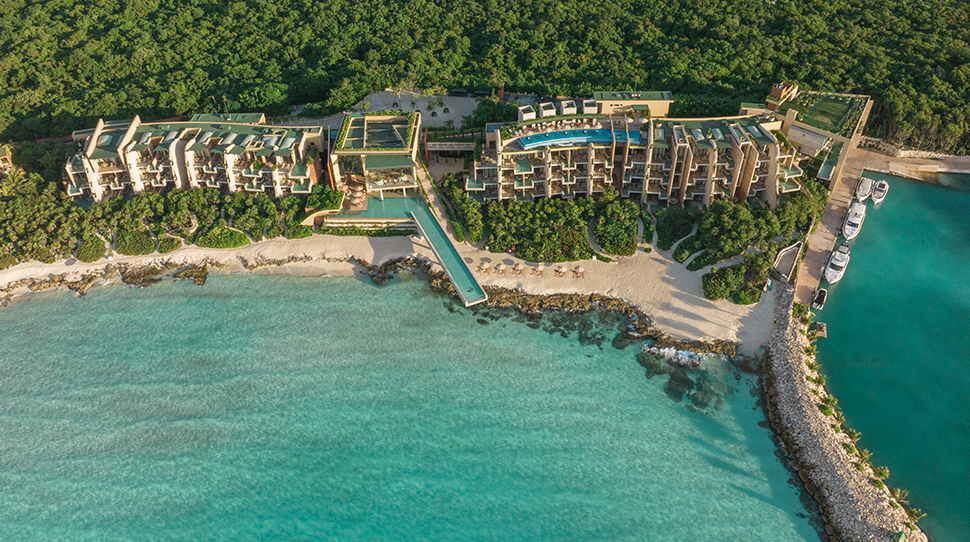
Quintana Pali’s son, David Quintana, led the architectural team that designed the 63-suite La Casa de la Playa as an eco-integrative sculpture in contemporary Mexican style. Most rooms face the Caribbean and the white-sand beach, and concrete corridors connect the three main buildings. The Natural structure has the highest concentration of guest suites, Fiesta is home to most of the eating and drinking establishments, and Wellness is where you’ll go for treatments at the Five-Star Muluk Spa at La Casa de la Playa or to relax in the outdoor hydrotherapy pool overlooking Xcaret’s private marina.
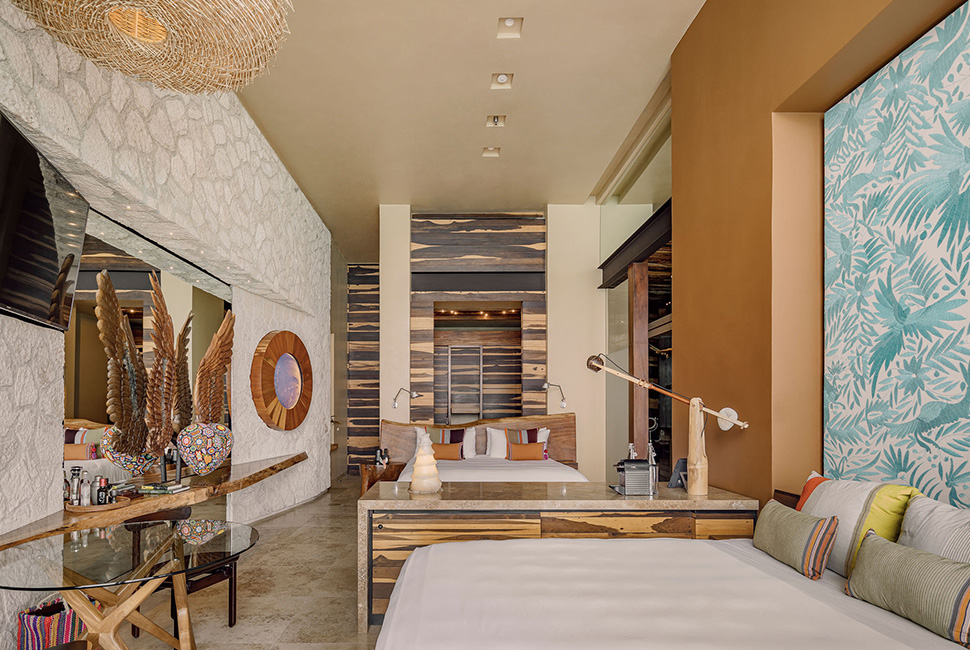
Each suite features an outdoor bathtub, a plunge pool with a hammock, and a balcony or deck. Inside, there are high ceilings, top-to-bottom windows and a blue-lit jellyfish tank built into the wall, stocked with moon jellies bred in an onsite lab.
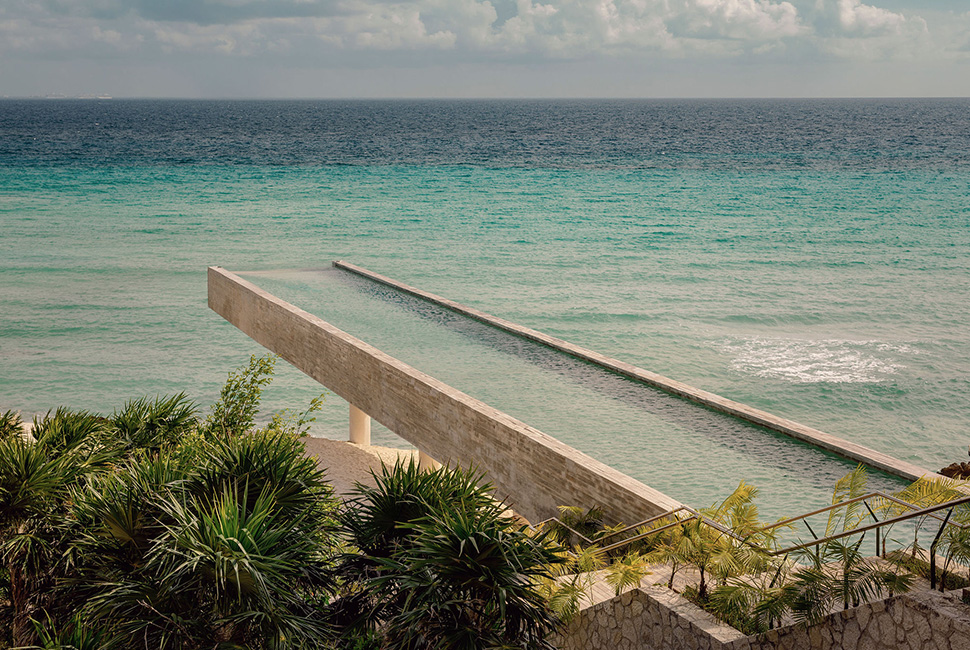
Aside from the natural beauty of the beach and ocean, the most dramatic feature of David Quintana’s design is the swimming pool, which extends out from the Fiesta building for 40 meters. It looks like a massive diving board, and the sea below is so tempting that you might need a reminder not to take the plunge.
Restraint can come in handy in other locations throughout La Casa de la Playa, as well. La Chocolatería is always open, so you can easily fill up on confections and ice cream, but La Cava, the communal wine cellar, is infinitely more dangerous. Our butler told us we could take bottles back to our room.
And then there’s La Bodega. Styled as a cantina, this windowless cavern is chock-full of mezcals and myriad varieties of blanco, reposado and añejo tequila. After dinner at one of the hotel’s contemporary Mexican restaurants or a multi-course tasting journey at the Four-Star Xal, La Bodega is the spot for an exquisite nightcap.
